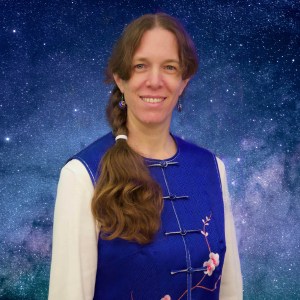
Interview with Author Silvia Villalobos

I haven’t blogged for quite a long time, but I’m excited to have author Silvia Villalobos with us today to discuss her writing, in particular her new short story collection, Start Again, and the re-release of her novel Stranger or Friend.

Author Silvia Villalobos

LC:    Welcome, Silvia! Before we get into Start Again, please tell us a bit about yourself: When did you first start writing, and what drew you to the craft?

SV:   I grew up in a large family, a small house, with little space of my own. So, I created my inner path to space through reading, then came the writing. There was a lot of French Revolution crime fiction and tragic romance in our local library. Everything was shrouded in secrecy and mystery and tragedy. Looking back, some of my first story ramblings had a lot of tragedy in them. Maybe over the top. Then again, the idea of tragic has permitted European literature for a long time given the continent’s history.

My first story was a school project on Romanian poet Mihai Eminescu. We were dissecting his poem, Luceafarul (Evening Star). Then, fifteen years ago, I joined a writers’ group and that broadened my writing horizon with prompts and feedback that eventually made my writing publishable. As the saying goes, the journey is the adventure. I loved every step along the way.  

LC:   And what an interesting journey you’ve had so far!

Do you write full or part time?

SV:   I fight to make writing time as life gets in the way. So, I don’t write full time in the sense of number of hours, like at a job, but I push and demand time, even if that means: pizza for dinner, everyone.

LC:   Do you have a special place where you like to write?

SV:   Anywhere I can sit with my laptop. Most often that’s at home, just me and the words on the computer screen. The sense of familiarity helps. So does the comfort of home.

LC:   Music or no music while writing?

SV:   I really love the silence. Noise makes creativity go on its own tangent, no easy way to reel it back. I recently read that silence is one of our most underappreciated productivity tools, particularly with all the interruptions and beeps and tech sounds that make concentrating nearly impossible. So, I love my silence.

LC:   Do you have writing partners who critique your work before submission? If so, why do you think this is important?

SV:   Oh, yes on the critique partners. Not so much today, but I used to belong to a critique group for years. My writing was taken apart, sometimes excessively so. I remember when working with my editor, many things she suggested I add or remove were parts I removed or added as a result of those critiques. That said, having a piece of writing critiqued is immensely important. I was no longer able to judge objectively after writing and reading scenes to the point I had them memorized. It’s impossible to set aside prejudices and interpretations. Having the manuscript evaluated is important. Then comes the time to learn what critique to take and when to politely say no, thank you. 

LC:   Short stories can be difficult to write, to get across the characters, their emotions, their relationships, in a few pages. And you have succeeded brilliantly. Besides these stories, you’ve published your novel Stranger or Friend. Do you find either genre—short story or novel—easier to write than the other?

SV:   Short stories are infinitely harder to write than novels. However, a writer would come out a better crafter, better artist, after writing short stories, I think. As Tobias Wolff said: Everything has to be pulling weight in a short story. There is not much room for exposition, backstory, internal thought.  There are fewer words with which to set the scene, describe the characters, weave an engaging plot. As a result, the language must be tighter. Yet details need to be preserved. Can’t have subplots, not many, so important parts must be in the main plot. Description, setting, conflict, they all cross into one another’s territory as a result. Short stories must be concise but also contain a narrative that satisfies the reader.

Novels, on the other hand, give the writer time to ponder to reflect to get to know characters and places. Novels can take years to complete, and take detailed planning or no planning at all, depending on the writer.

LC:   I would classify your work in Start Again as literary fiction versus, for instance, chick lit or some other mainstream genre. (And some reviews for Stanger or Friend put that novel in the literary fiction genre as well.) Do you agree that your work is “literary”? Is this a style that comes naturally to you?

SV:   Start Again is literary fiction — women literary fiction as the stories focus on women centered issued. But more than that, I would say they are life issues.

Writing short stories comes naturally now, but it took years to get to this point. Anything that doesn’t take years and drive you crazy hardly seems worth doing in writing, right?  

The novel, Stranger or Friend, falls under the umbrella of mystery as a literary mystery, rather than police procedural or whodoneit. The difference, I think, is in more character development, a storyline that reaches for broader emotional development — all elements surrounding the murder, and at its heart, the mystery.

The novel’s inspiration was a long-departed family member. Since I am an immigrant, the main concept running through the novel is the idea of leaving home. Then, the question: Can you go home again? Return to a place from the past and expect it to be the same as we remember it? Interesting concept to explore for me, and in Stranger or Friend for the main character, Zoe Sinclair. 

After Start Again, I am going to devote my time to writing mystery novels. I need breathing room in writing, and novels offer that in spades. I am forever grateful for having had the inspiration and impetus to write Start Again.

LC:   Start Again is filled with such interesting characters, all with their own unique struggles or dilemmas, and all somehow managing to “start again.” For our readers, here are brief synopses of the stories about five different women who go through the unpredictable moments that make life extraordinary. 

1. An Affair of the Heart.

Tess, a young wife, is thrown a curveball when her well-constructed plan goes awry. As she unravels a host of secrets, a new and different life opens up before her.

2. Survivor, flash fiction.

Paige, a young professional who is only happy when she is unhappy, discovers a few important things about friendship when she needs it the most.  

3. Ioana

Ioana, and indirectly Wayde, learn to deal with different heartaches while on a beach in a foreign country for Wayde and home for Ioana.

4. The Friend

Eve had put her trust in the wrong ‘friend’ and must do everything in her power to save her family.

5. Games

Mia fights back an abusive partner in the game of her life.

Where did you find inspiration for these characters and their stories?

SV:   Every story in Start Again is inspired by someone I know closely or distantly (Survivor, Ioana), a story that was relayed to me (Friend, Games) or mixtures of stories told around me (An Affair of the Heart). There was a great deal of attachment to the stories. In Survivor – for example – Paige (based on a friend) can be viewed as only happy when she is unhappy. She is hardly approachable, yet her friend finds a way to the real Paige in her most vulnerable time. By the end, Paige is viewed in a surprisingly different light.

Each story goes through that transformation to some extent. They are short stories full of surprises and unexpected character development. Short stories of the human kind. 

LC:   For me, the stories’ topics and themes seem to build from ones that most readers will relate to, to ones that are sure to surprise, if not shock, the reader. And I mean this in a good way, with each story grabbing your attention from the beginning. Did you consciously arrange the stories in the order as they’re presented in the book?

SV:   Each story was originally published by literary magazines – on their own, not together. This is the first time they appear as a collection. So, there were several things to keep in mind: order of publication, how they build on one another, and also the power each story has.

An Affair of the Heart comes with a certain immediacy, then takes half a step back to tell the story before boom, we see a transformation. Survivor is short – a flash. The Friend, while on the longer side compared to other stories, has a sense of immediacy – first person point of view—while it takes the time to quickly look at the past in order to make sense of the present. A balancing combination. Ioana is the only story to start and finish in a man’s point of view. It is also the only story set in Romania, my native country, and as a bonus by the Black Sea. A whole different vibe to shake things up right before The Games, a story of surprises to conclude the series.

LC:   When you wrote the stories, did you have a target audience in mind? Do you think these are stories for women readers, or do you see men enjoying them as well?

SV:   They are stories about women, but all have male characters either present or implied. They are stories dissecting important aspects of life: marriage, illness, family, relationships. They are stories that touch on some of the most difficult parts of life and show that no matter what we can Start Again. In that respect, they are stories for women and men.

LC:   I love many of your descriptions. A couple examples:

“His new friends cleansed their souls of stress hard, like one might scrape off dirt. They brandished worries aside, but only for the night. A volcano very much alive.”

“The place conjures up memories as fuzzy as an old TV.”

When we write, there’s always a first draft (at least) that will need editing. But do you take the time to find the right words and phrases as you write, or do you “pound out” the first draft then fill in the details?

SV:   Good question. I pound out the first draft. The story takes many forms until it reaches the final product. I definitely don’t plan it out much. The deeper narrative you point out comes out at times immediately – the expression just there for me to grab — other times I write and rewrite until it sounds like beautiful music. My favorite mysteries are more than questions surrounding a murder. They bring the characters and the places close to the reader through depth of narrative.

LC:   You are re-releasing Stranger or Friend December 15, 2021. Please tell us about that, and if you have any other works in progress.

SV:   Stranger or Friend was originally published by Solstice Publishing in 2015 and the contract renewed. The novel did very well. Now, we are coming up on another contract renewal. There is no substitute to working with a publisher, to being accepted in an industry where it’s so hard to get past the first query letter. To then go through the editing process, pre-release and release, marketing. Through it all, my publisher set the course and led the way. An invaluable lesson and a great relationship. Now, we’ve reached past that point with Stranger or Friend. I don’t know what the future holds with other novels, but we’ve agreed I can take it from here with this one. So, I am re-releasing Stranger or Friend under new cover and with addition (not major to the storyline) in October or November. 

Next year, I will be releasing another Zoe Sinclair mystery novel. Since it’s been in the works for some time, I’m looking forward to sharing all the details, and looking forward to bringing the reader to California, where this story is set. Hope to see you soon.

Thank you for having me, Linda. Solitary figures behind a keyboard that we are, it’s nice to talk to another writer. Here is to reading and writing.

LC: And thank you, Silvia. Such an interesting discussion! Best of luck with your writing.

Author Profile:

Silvia Villalobos is a native of Romania who lives immersed in the laid-back vibe of Southern California. She writes mystery novels and short stories. Her debut novel, Stranger or Friend, was published by Solstice Publishing in 2015. Her short stories have appeared in The Riding Light Review and Red Fez, among other publications.

Start Again, a short-story collection, is her newest publication.

Visit Silvia here:

Blog  Silvia Writes: https://wordpress.com/view/silviatomasvillalobos.wordpress.com

Facebook  https://www.facebook.com/SilviaWrites01

Twitter  @SilviaWriter01
Posted in Uncategorized | 11 Comments

10 Questions with Author Sylvia Patience

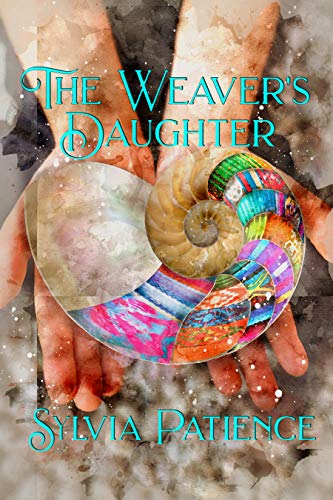
I’m winding up Hispanic Heritage Month (September 15 to October 15), with an interview with fellow Santa Cruz author Sylvia Patience about her new novel The Weaver’s Daughter. Sylvia writes her novel with understated passion and emotion that drew me into The Weaver’s Daughter’s story. Continue reading to learn more about Sylvia and her timely novel that honors immigrants and the Hispanic/Latinx community.

Linda Covella: Welcome, Sylvia! Please tell us what The Weaver’s Daughter is about.

Sylvia Patience: Ixchel (Chel) is a young Maya girl from Mérida whose mother, a weaver, has a vision. The goddess of weaving commands her to send Chel across the border to el Norte in search of her father. Chel tells how she decides to go, how the money is saved, and about her sometimes frightening and dangerous journey to Los Angeles. Finding her father, she learns he has a new wife and child. She must decide whether to stay.

LC: You spent some time living in Mexico, which brings an authenticity to the main character, twelve-year-old Ixchel, as well as other characters and the setting. How did you come to live there? In what part of Mexico did you live, and how long were you there? Please tell us a little about your experience living there.

SP: I lived in Mexico for three years after I married a man whose family lived there. My daughter was born there. We lived in the D.F. (capital) except for a few months in Cuernavaca. I learned a lot about the culture and learned to speak Spanish during that time. I didn’t work but attended the University for a year.

LC: Was your time spent in Mexico part of the inspiration for writing The Weaver’s Daughter? If so, how?

SP: A more recent trip to the Yucatan was my initial inspiration to write The Weaver’s Daughter. There I learned more about the Maya culture and language and the history of that area. Two young girls I met, who were selling their mothers’ weaving, inspired Chel and her friend Rosa. I also spoke to a man who had traveled back and forth to California to work.

LC: Why did you choose to write from the perspective of Ixchel rather than an adult?

SP: The Weaver’s Daughter is written for children ages 10-13. My young readers would relate to Chel more than to an adult. And this is her story, for her to tell.

LC: Besides your personal experience of living in Mexico, what type of research did you do, including some of the harrowing details of Ixchel’s crossing the border?

SP: Much of my research was done online and through reading books about immigration from Mexico. I also have many years’ experience working with immigrants from Mexico and Central America. I hired two sensitivity readers/culture consultants to read the book for language and appropriate cultural information. One reader is a young woman who crossed the border with her parents as a child. The other is a Yucatec Maya and an expert on the language.

LC: Immigration is currently an important topic in our country (and in many others). Was this also part of your inspiration for writing The Weaver’s Daughter? How does Ixchel’s story reflect the current state of immigration?

SP: Definitely! Although news of the pandemic and climate related fires and hurricanes has displaced stories about immigration lately, it is ongoing and a major issue. People are fleeing north to the U.S. and to Europe because of climate change related crop failures, hunger, poverty, and increasing violence.

Many children in our schools are immigrants. I believe it’s important to tell stories like this that these children can relate to and to educate others about the immigrant experience. Since I started writing this book, immigration has only increased and become a larger issue.

LC: Yes, I’m seeing the younger generations wanting to be informed on immigration and other important issues, which is encouraging since they will soon be our leaders.

It’s always interesting to learn about an author’s writing process. How long did it take you to write this novel? Do you have a writing/critique group to review your progress? Beta readers?

SP: It’s always hard for me to say how long it takes me to write a book. I believe I started this one around ten years ago. It’s been through many drafts. I’ve written other things and come back to it. I kept pursuing it because I believe it’s an important story to tell. I belong to two writing critique groups and they read the whole book in various installments and gave me invaluable feedback. I also had a few people, including my brother and daughter, read the book as well as the two culture consultants I hired.

LC: As a dog lover, I enjoyed the addition of the little dog Box ni (Black Nose) that Ixchel takes under her wing. What does Box ni represent in the story? What does he mean to Ixchel, how do they help each other?

SP: I’m a dog lover too. My other published book is the Wizard of Oz told from Toto’s perspective (Toto’s Tale and True Chronicle of Oz). I gave Chel the little dog, Box ni, as a companion after her friend Rosa surrendered to the border patrol. In addition to the immigration issue, the book addresses issues of family, friendship, and love. Box ni helps Chel understand some of these issues.

LC: I like that you didn’t end the story at a predictable place. (I won’t go into details because of spoilers!) Do you have plans to continue Ixchel’s story in a sequel?

SP: I hadn’t thought of a sequel, but another writer who recently read the book suggested one. It’s something to think about.

LC: Anything else you’d like to add?

SP: I’d just like to thank you, Linda, for this opportunity to answer questions about The Weaver’s Daughter and to discuss the immigration issue with readers of your blog.

LC: I really enjoyed learning more about The Weaver’s Daughter, your background, and your thoughts on immigration. Thanks so much, Sylvia!

Author Bio:

Sylvia Patience has written several middle grade novels. Toto’s Tale and True Chronicle of Oz was published in 2015. Her poems have appeared in journals and anthologies and her professional articles in The Journal of Midwifery and Women’s Health. Sylvia’s short fairy tales have received prizes in the international Hans Christian Andersen contest. Her latest book, The Weaver’s Daughter, came out from Desert Palm Press in August 2020.

In her non-writing life Sylvia is a nurse practitioner and midwife. She lived in Mexico for several years. She speaks fluent Spanish and works with immigrants from Mexico and Central America.

She is currently working on The Double Crossing, a middle grade historical fiction about the 1939 voyage of the MS St. Louis carrying over 900 Jews fleeing Nazi Germany.

Connect with Sylvia:

Website

To be on Sylvia’s email list for book news, please her at email.

Posted in Uncategorized | 1 Comment

UPDATE: 10 Questions with Author Connie Goldsmith

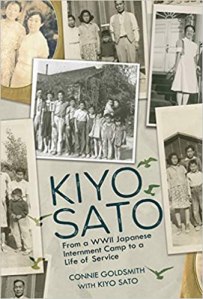
Last year, I interviewed award-winning author Connie Goldsmith. Today I’m pleased to share the release of her latest book for grades 6 – 12, Kiyo Sato: From a WWII Japanese Internment Camp to a Life of Service.

While working on the manuscript, Connie said it’s “my first ever biography – a living person with an amazing life. I’m spending many hours with face-to-face interviews because I’m lucky enough to live close to her. A bio is so different from my previous books – I’m enjoying every minute of it.”

From the book description on Amazon: In this moving account, Sato and Goldsmith tell the story of the internment years, describing why the internment happened and how it impacted Kiyo and her family. They also discuss the ways in which Kiyo has used her experience to educate other Americans about their history, to promote inclusion, and to fight against similar injustices. Hers is a powerful, relevant, and inspiring story to tell on the 75th anniversary of the end of World War II.

Connie, congratulations and best of luck with Kiyo Sato, a timely, important, and heartbreaking, but ultimately uplifting, story, one not only for young people, but for adults as well.

Learn more about Connie and her other books in the 2019 interview:

Today, award-winning author Connie Goldsmith joins us to answer 10 Questions about her writing. Connie writes nonfiction for middle grade and young adult readers with twenty-four published books. She also writes magazine articles for children and adults.

Linda Covella: Welcome, Connie! When and why did you decide to become a writer?

Connie Goldsmith: I was a nurse long before I was a writer. There was no particular time when I decided to “become a writer.” My first writing was continuing education articles for nurses. I’ve written for NurseWeek, RN, American Journal of Nursing, and others, as well as for health care professionals such as physical therapists and dental hygienists.

An article in my local paper—the Sacramento Bee—about a man who was recreating a trek through Death Valley with his daughters, inspired me to write my first book for young people. After much research and interview with descendants of several families, I wrote, “Lost in Death Valley: the true story of four families in California’s Gold Rush,” published in 2001 by Lerner’s imprint, Twenty-First Century Books.

LC: What is your writing process: where do you write, how often do you write, are you a full-time or part-time writer, do you outline or do you plot as you go, etc.?

CG: Where do I write? I write on my desktop PC in my living room. Gauzy curtains hang over three glass doors to the front porch so I can see outside, but no one can see inside. I’m more of a part-time writer than a full-time writer, averaging 3-4 hours per day in research and/or writing and/or interviewing.

I write only nonfiction, so there is no plotting! Nonfiction books are generally approved by the publisher/editor/acquisitions committee based on a detailed proposal. My proposals are about 15 pages long and include chapter outline, overview, comparable works if any, and why I am the person to write the book.

LC: The proposals obviously involve a lot of work before you write the actual book!

Where do you find your inspiration for your books? Do you draw from your own experiences?

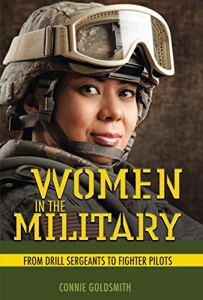
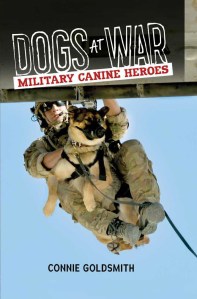
CG: I’ve worked with the same editor for the nonfiction teen imprint at Lerner for nearly ten years. We both propose ideas to each other. She may hear an interview on NPR and be so intrigued that she asks if I’d like to write about it. For example, my most recent book, “Women in the Military: From Drill Sergeants to Fighter Pilots,” was my editor’s suggestion after she heard an NPR interview of a female military pilot who had written her memoir. My book, “Dogs at War: Military Canine Heroes,” started with a Facebook entry I read about war dogs. So, about half of my books come from my own ideas, and half from my editor’s.

LC: Plot and character are important aspects of fiction. How do those translate to nonfiction?

CG: I don’t write stories, but to translate this question into nonfiction – I’d say my narrative is part of the “story” and the people I interview are the “characters.” In writing nonfiction it’s not enough to do a good job of collecting interesting information. Interviews with people who have experience in the topic and with experts are equally important. For example, in my book, “Dogs at War: Military Canine Heroes,” I interviewed numerous military dog handlers as well as the head of dog training at Lackland Air Force Base. These were the “characters.” The “story” is the history of war dogs, details about their raising and training, and retirement, and so on.

LC: Can you tell us about your research when writing a nonfiction book?

CG: I do a lot of research in preparation for writing the proposal, which I then use as the outline for my book. I search for books old and new on my topic, and tend to buy a lot of used books online which I can then mark up as I want. One of the most helpful things is setting up a google alert on my topic. I receive relevant info from newspapers daily via the alert. Of course, I search online for relevant articles and stories.

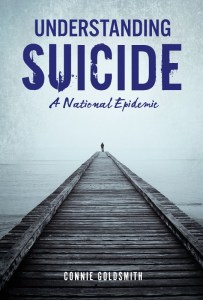
I often ask SCBWI members if they know someone I can interview. For example, my book about suicide opens with the true story of an SCBWI member’s teen daughter taking her own life, while my book about addiction opens with the accidental overdose death of a nephew of an SCBWI member. She contacted her brother and sister-in-law who agreed to talk to me about the horrendous ordeal.

LC: I imagine discussing such heartbreaking situations with interviewees would be difficult. You must have a compassionate, special way in approaching them.

Did you read much as a child?

CG: Like most writers, I was an avid reader as a child. My parents never censored my reading. This will date me, but I remember reading Pearl Buck books at ten years old, and those were often very “earthy.” My favorite birthday present ever was a box of ten books for my tenth birthday. All were adult books, such as Gone with the Wind. I still have my copy of Heidi with my name written inside. I must have been four to five years old. Still have my copy of Arabian Nights and the Jungle Book.

LC: I liked Pearl Buck’s books as well. “Back then” 🙂 there weren’t books specifically marketed as young adult, so middle grade and teens often read adult books.

How important do you think reading is for writers?

CG: Reading is vital for writers, both those who write fiction and those who write nonfiction. Reading books in the genre you write for can keep you current in trends in children’s literature. It can help you know what kids and teens are reading these days. Reading also is an ongoing source of ideas for nonfiction writers.

LC: Who are some of your favorite authors and/or books? What draws you to them?

CG: Because my working time involves constant research and reading of nonfiction sites and books, my free reading time is always fiction. Barbara Kingsolver, Elizabeth George, and Jo Nesbo are some of my favorite adult authors. My children’s/YA favorite writers include Philip Roth, Blue Balliett, Francisco X. Stork, Cassandra Claire, Maggie Stiefvater, Laini Taylor, and Holly Black. There are dozens more! This is always an impossible question. I love fantasy and there is so much good YA fantasy out there.

LC: What advice do you have for aspiring authors?

CG: The Institute of Children’s Literature published an article I wrote several years ago on this subject. Tips included: Join SCBWI early in your writing career, attend conferences, and volunteer to help. Remember writing may be a new career for you and that you didn’t become a teacher, a librarian or in my case a nurse, without investing time and money in learning the ropes. Consider writing nonfiction as opposed to only fiction – the vast majority of published material is nonfiction. Try writing for magazines – dozens of magazines have hundreds of pages to fill each month. If you have an existing career, consider writing for one of your professional magazines. It’s easier than you may think to get published if you consider options other than that picture book or middle grade novel that you want so much to write!

LC: Great advice!

Anything new in the works?

CG: Always something new in the works! However, my editor doesn’t allow us to talk about WIP [Work in Progress]. I can say it’s coming out spring 2020, and is my first ever biography – a living person with an amazing life. I’m spending many hours with face-to-face interviews because I’m lucky enough to live close to her. A bio is so different from my previous books – I’m enjoying every minute of it.

LC: Now I’m very curious who the bio is about. 🙂 We can all look forward to its publication!

Connie, thank you again for talking with us about your writing. Your answers were very insightful, and it was a pleasure having you!

Author Bio:

Connie Goldsmith has written twenty-four nonfiction books for middle grade and young adult readers and has also published many magazine articles for adults and children. Her books include Women in the Military: from Drill Sergeants to Jet Pilots; Pandemic: How Climate, the Environment, and Superbugs Increase the RiskAnimals Go to War: from Dogs to Dolphins; Addiction and Overdose: Confronting an American Crisis; Dogs at War: Military Canine Heroes; and Bombs Over Bikini,” also a Junior Library Guild Selection, a Bank Street College Best Children’s Book of the Year, and an SCBWI Crystal Kite winner.

Connie is a member of SCBWI and the Authors Guild. She’s a registered nurse with a Bachelor of Science degree in nursing and a Master of Public Administration degree in health care which gives her the creds to write her health and science books. When she’s not writing, she visits with friends and family, pounds out the miles on her treadmill, plays with her crazy cats, and hikes along the American River near Sacramento California where she lives.

Contact Connie:

Websites: www.conniegoldsmith.com and www.bombsoverbikini.com

Posted in Uncategorized | 3 Comments

Giving Thanks

I have a lot to be thankful for this Thanksgiving (and always!). I have close and loving family and friends. And though I don’t have children of my own, there are many kids in my life who I adore–most of these “kids” are now grown, and some with children of their own. A new generation that I welcome and love having in my life!

I might get stressed at times, unhappy with the way this or that is going in my life. But I always stop and remind myself what a comfortable life I have compared to most of the people in the world.

I try to help others when I can, but there are some real heroes in the world, and for these people, I’m also thankful.

I read or hear of so many stories of people and organizations putting their time, energy, and expertise into helping others. Here is one I recently came across; you can read the short article at this link Class in Session

Students play in the Mwabwindo School’s covered courtyard.Photo: Chosa Mweemba / Courtesy of Selldorf Architects

An architect was enlisted by the 14+ Foundation, whose mission is to build schools and orphanages for African children in rural communities, to build a school in a remote area in Zambia. So remote they had to build roads to get to the community.

They used materials that made it possible for locals to help with the construction. Getting locals involved is one of the “key components of the foundation’s broader social and economic mission.”

A construction manager on the project said of the school’s design: “The point of the structure is to be inspirational.”

Constructed from mudbricks, the buildings are sheltered by a single metal canopy.Photo: Chosa Mweemba / Courtesy of Selldorf Architects

The 14+ Foundation and the professionals and local community members who work to make these schools for children who are otherwise isolated are truly inspirational.

They and other heroes around the world will be in my thoughts as I give thanks this Thanksgiving!

May you all have a very Happy Thanksgiving!

Posted in Uncategorized | 8 Comments

Interview with Feliciana Arballo Descendant

On this last day of Hispanic Heritage Month 2019, I’m very excited to interview Gil Morales, a direct descendant of Feliciana Arballo, the subject of my picture book The Power of a Dream. Feliciana is also a character in my young adult novel Yakimali’s Gift.

Gil contacted me several months ago when his daughter discovered my novel while researching their history for a family reunion. He and his children, through their education and work, are carrying on Feliciana’s dream and legacy.

Gil, now retired, has served in the U.S. Air Force and the RAF; has BA, MBA, and MIM degrees; and ran his own business for many years, which his son now presides over.

His four children all have law degrees. Besides his son’s work with the family business, his three daughters’ careers include a college professor, an FBI Special Agent, and pro bono work for an abused women’s refuge.

I’m sure Feliciana would be quite proud of them.

I hope you enjoy the interview and learning more about Gil’s connection to Feliciana!

Linda Covella: Welcome, Gil. I’m so appreciative and very honored to have you on my blog today.

At what age did you discover you were descendants of Feliciana? How did you learn of your relationship with her?

Gil Morales: It wasn’t until recently (2018) that my daughter, Kari, began researching our origin for a family reunion. She has the advantage of being a trained investigator. Your Yakimali’s Gift and Esther Comstock’s Feliciana’s California Miracle were key.

LC: Has the relationship with Feliciana influenced or informed your life in any way?

GM: Obviously, it has made us all very proud to be descendants of such a butt-kicking lady. I can see Feliciana’s traits in my three daughters. (They make me relate to Capt. De Anza and the poor friar who didn’t want Feliciana on their expedition.) My girls can be an insisting pain-in-the-ass when they set their sights on anything!

LC: And obviously you’re very proud of them. 🙂

How are you passing on Feliciana’s legacy to your children and/or other family members? How important is it to you to that future generations preserve her legacy, and what do you want them to carry on about Feliciana?

GM: My daughters produced Flash Drives containing [a family history] Power Point to distribute to all the attendees at our family reunion. There will always be new frontiers for Feliciana’s progeny to conquer carrying on her spirit of adventure, determination and hard work.

LC: Is anyone in your family named after Feliciana, Francisco, or any other of their descendants?

GM: No Felicianas. Only one of my mother’s cousins enjoyed the name, Francisco. I believe it was coincidental though. Until Kari’s research our history experience didn’t go back past my great, great, grandfather, Jesús María Andrade. Unfortunately, all that he could have contributed died with him in 1945.

LC: Have any stories come down to you about your ancestors who are related to Feliciana?

GM: There is an unfortunate gap in Kari’s research from Feliciana and Francisco to when our branch of their descendency appears in The Arizona/Mexico, Sonora Desert. Most family’s histories then were passed on by word-of-mouth and tended to fade in their progress. In California, our lineage stops with Secundino Andrade, the father of Jesús Maria. Certainly, Jesús María, Secundino’s son, had much of Feliciana’s kick-ass. Why else would he leave the relative “comforts” of home and family in California to venture to the still-wild, Arizona/Mexico, desert full of rattle snakes, Apaches and pistoleros [gunfighters]. Included in Kari’s Power Point is an old obituary indicating his service as a scout for the U.S. Cavalry in territorial Arizona. Only in Hollywood are army scouts depicted as tamed “Indians.” They overlook the fact that the Spanish had for years fought and survived Apache raids in the area. They knew the country, the native ways and some even spoke their language. It is said that at the age of 100 Jesús María still got up at 4:00 AM to milk 10 cows.

LC: Are there any heirlooms, photos, or other memorabilia relating to Feliciana that have been passed down in your family? Any special traditions related specifically to her, or to the Hispanic culture, that you think she would approve of/enjoy? What do these memorabilia and traditions mean to you?

GM: Only a portrait remains of Jesús María’s first daughter, my grandmother. Now that we know our trait source of steadfastness (Feliciana) we shall endeavor to pass it on in her name.

LC: Besides Feliciana, is there a descendant of hers who you’re especially interested in, feel an affinity with, admire, etc.? Why?

GM: Besides Jesús María, I remember and admired his sons, my great uncles. Jesús and his wife Angelita produced 9 children, 7 males and 2 females. As a child I looked up to my great uncles as tough cowboys who could ride, lasso, work cattle, shoot and hunt. They also pulled a cork to break the monotony whenever time and an occasion allowed. The youngest of the group became an early alumni of Fort Grant, a correctional institution in Arizona for young delinquents. I loved him!

LC: Do you hold family reunions? Have you met any other descendants of Feliciana? Have you, or do you intend to, research a family tree, showing the lineage from Feliciana to your family today?

GM: As indicated, we distributed Flash Drives containing our line to Feliciana and Francisco Lopez. We will be happy to produce more for any others who find their roots back to them; or even for anyone who may just be curious. I am in possession of a board depicting our family tree. [See below.] We would be delighted to make contact with anyone proceeding from any of Feliciana’s and Francisco’s other branches.

LC: It’s believed that one reason Feliciana decided to join the Anza expedition was to escape prejudices she experienced for marrying a man of mixed Spanish and Indian ancestry. What are your thoughts on her decision? How do you feel this is related to racism in our country today? What would you say is the most commonly held misconception about people of the Hispanic/Latino culture? Or, in a more positive light, what contributions from the Hispanic/Latino culture (persons, beliefs, traditions, etc.) do you think have particularly enriched the United States?

GM: Growing up in Arizona anyone with a Latino surname was a “Mexican,” (often preceded with an expletive), not withstanding that many of our histories in Arizona go back to before the U.S.A. was even a country. Only once in third grade a bully chased me after school to “scatter my frejoles all over the road home.” When I turned on him, it was enough to convince him and others that friendship was much easier. As such we learned to defend the label. Our family grew up living and enjoying the culture: the food, the music, the language, the prose and poetry. We have passed it on.

LC: If Feliciana were alive today, what do you think she would be doing? What would you like to say to her or ask her?

GM: There is a very sage, Native American concept:  “A person in not dead until he/she is no longer fondly remembered.” I want to tell her how happy we are to have found her and that we pray for her and all her progeny.

LC: What a wonderful concept, Gil. I’m happy and proud to be a part of keeping Feliciana’s memory alive. I wish the best to you, your family, and all Feliciana’s descendants. Thanks so much for this interview!

Posted in Uncategorized | 8 Comments

Guest Post: Once Upon a Bowl of Oatmeal

From Annie Douglass Lima:

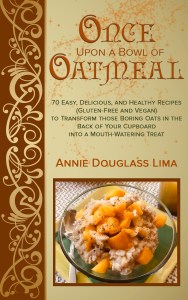
My latest writing project is very different from anything else I’ve written. It’s a cookbook! But those who know how much I love fantasy might not be surprised that this cookbook ended up with a fantasy theme. Many of the recipes have names inspired by fairy tales or fantasy stories, and I love the hints of fantasy in the two covers designed by the awesome Savannah Jezowski.

Why two different covers? The paperback version of the cookbook is an unusual shape, due to the unusual recipe format (more information about that below), so it couldn’t share a cover with the ebook.

Kindle Cover

Some people might be surprised, though, that the whole book is focused on oatmeal. After all, isn’t oatmeal that boring goop that nobody really eats if there’s anything else available?

NOT ANYMORE! In this book, you’ll find recipes for delectable dishes like creamy mango coconut spice oatmeal, cinnamon almond oatmeal, blueberry cream cheese oatmeal, and (my personal favorite:) caramel banana oatmeal with peanut butter. (Okay, so that one is a little closer to the dessert end of the spectrum than the porridge end!)

Oh … and no more math! Whether you’re cooking just for yourself, for a family of six, or any number in between, every recipe comes in the form of a handy table that shows exactly how much of each ingredient you’ll need for however many servings you want.

Tasty enough for kids to crave, but wholesome enough to appeal to health-conscious parents, these mouth-watering recipes will give you plenty of energy for your day while pleasing your taste buds too. Download Once Upon a Bowl of Oatmeal now and say goodbye to artificial breakfasts that don’t fully satisfy.

And now for an oatmeal recipe in the unique format I use in Once Upon a Bowl of Oatmeal:


Book Blurb:

Are you tired of high-sugar, low-health-value instant oatmeals in tiny serving packets full of artificial colors, flavors, and preservatives? Once Upon a Bowl of Oatmeal contains 70 hearty recipes packed with natural ingredients and brimful of vitamins, minerals, fiber, and antioxidants. All are gluten free, assuming you use gluten-free oats, and vegan (or they come with a vegan option). Most require no salt so are perfect for a low sodium diet. Almost all of these recipes can be prepared in ten minutes or less, saving you time in your busy morning.

Purchase the book here. If you enjoy the recipes, please consider leaving a review on Amazon, Goodreads, and/or Bookbub!

About the Author:

Annie Douglass Lima considers herself fortunate to have traveled in twenty different countries and lived in four of them. A fifth-grade teacher in her “other” life, she loves reading to her students and sparking their imaginations. Her books include science fiction, fantasy, YA action and adventure novels, a puppet script, anthologies of her students’ poetry, Bible verse coloring and activity books, and now a cookbook. When she isn’t teaching, writing, or experimenting with new flavors of oatmeal, Annie can often be found sipping spiced chai or pomegranate green tea in exotic locations, some of which exist in this world.

Connect with Annie Douglass Lima Online:

Facebook: http://www.facebook.com/AnnieDouglassLimaAuthor

Amazon Author Page: https://www.amazon.com/author/anniedouglasslima

Goodreads: http://bit.ly/ADLimaOnGoodreads

Blog: http://anniedouglasslima.blogspot.com

Twitter: https://twitter.com/princeofalasia

Email: AnnieDouglassLima@gmail.com

Sign up for her mailing list so she can let you know when new books are available. When you sign up, she’ll send you a free copy of one of her fantasy books! http://bit.ly/LimaUpdates

Posted in Uncategorized | 4 Comments

10 Questions with Author Deb Hunter

Author Deb Hunter joins us today to answer 10 Questions about her writing. Besides writing, Deb is also a historian and brings some of that knowledge into her books. Her latest book, Magic and Mystery in Tudor England, releases tomorrow, September 26th. Deb writes under the name Hunter S. Jones.

Linda Covella: Welcome, Deb.

Deb Hunter: Hi Linda! Thanks for having me today.

LC: When and why did you decide to become a writer?

DH: I’m not sure there was a certain moment that I decided to write. It’s something I’ve always done.

LC: What is your writing process: where do you write, how often do you write, are you a full-time or part-time writer, do you outline or do you plot as you go, etc.?

DH: Great question. It starts with a thought, like most things, I guess. The thought either takes off or lies dormant for a while. Once The Muse takes over, it’s as if the story takes over and you just write it down. I do always have an outline but I don’t follow it most of the time. Generally, I’ll know how a story ends and tend to write the last chapter first. I don’t keep to a writing schedule or write every day.

LC: Where do you find your inspiration for your stories? Do you draw from your own experiences?

DH: I really don’t know where all that stuff comes from. My imagination has always been vivid, and I’m open to creative ideas. In my newest book, Magic & Mystery in Tudor England, I briefly mention what it’s like for a creative to develop a story-all the research that goes into an idea. In the past, I’ve studied history, lit, and acting so I use a form of character analysis like an actor would. In my career, we were trained in the psychology of dealing with people on a daily basis – that experience teaches you a lot as to how and why people will react to situations.

I don’t really believe I’ve ever based a character on a person or on myself. They’re just characters in differing experiences.

LC: Who is one of your favorite characters from your story(ies), one that you enjoyed creating and writing about, and why?

DH: Another fab question! Answering this is probably like asking a person who their favorite child is. It’s difficult to name just one. But, if I did have to name one, it would be Dallas Fortune from my Fortune Series. She’s insecure, neurotic, has a great career, a heart of gold, and she loves men. She’s fun!

LC: Do you incorporate (or inadvertently find) any of your own personality traits into your characters?

DH: Well, please see the previous answer. I can neither confirm nor deny that I share her traits though.

LC: We’ll let that question slide, then. 😀 Do you find your stories are more plot driven or character driven? Please explain.

DH: Characters, characters, characters.

LC: Did you read much as a child?

DH: Always.

LC: How important do you think reading is for writers?

DH: The answer to that may depend on the writer. I read all the time but can’t speak for everyone.

LC: Who are some of your favorite authors and/or books? What draws you to them?

DH: I have a few Heroes and they know who they are. I love to read and feel the honesty in the words. Some people simply have a way to create worlds, and I love them.

LC: Anything new in the works?

DH: Yes! My newest release is a blend of history and historical fiction-Magic & Mystery in Tudor England. Then, in October, I’m part of a paranormal anthology by Witching Hour Press. The antho is based on the zodiac, and I’ve written a short story set in Atlanta called Club Coven. May 2020 sees another anthology-it’s a gothic historical fiction collection of short stories called Anne Boleyn: Rota Fortunae. Both anthologies have a fantastic group of authors and I am so excited to be working with them!

LC: Good luck with all those projects! It was a pleasure talking with you today.

DH: Thank you again for featuring me!

Preorder Magic & Mystery in Tudor England for only 99c

https://www.amazon.com/dp/B07Y2BFFB3

About the Author

Author and historian Deb Hunter writes as Hunter S. Jones. She publishes independently as well as through traditional platforms. Recently she revealed that she is a Stage IV cancer warrior. She is passionate about the history of romance, science and music, a.k.a. sex, drugs and rock & roll. She is also a historian for Past Preservers Casting. When she isn’t writing, talking or tweeting about kings, queens and rock stars, she’s living the dream in Atlanta, Georgia with her Scottish born husband.
She has been involved in academic projects at Harvard University, The University of Texas, UCLA, Vanderbilt University, University of The South, University of Notre Dame, the University of Tennessee, and the University of Edinburgh, Scotland. She has been associated with the prestigious Society of Authors founded by Lord Tennyson, Royal Historical Society, Atlanta Historical Society, American Historical Association, Organization of American Historians, Society of Civil War Historians (US), Dangerous Women Project, Romance Writers of America (PAN member), and Historical Writers Association.

Connect with Deb:

www.AllThingsTudor.com

https://www.facebook.com/TheDebATL

https://twitter.com/TheDebATL

https://twitter.com/ThingsTudor

https://www.instagram.com/thedebatl/

https://www.instagram.com/officialallthingstudor

https://www.goodreads.com/author/show/6561688.Hunter_S_Jones

https://www.bookbub.com/profile/hunter-s-jones

https://www.amazon.com/Hunter-S.-Jones/e/B009SLNLKS

Posted in Uncategorized | 4 Comments

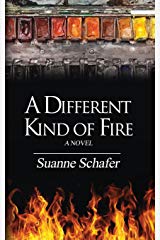
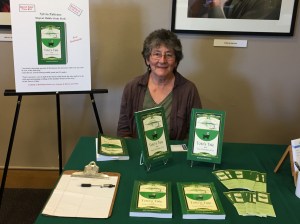
10 Questions with Author Suanne Schafer

Today, author Suanne Schafer joins us to answer 10 Questions about her writing. Suanne has published magazine articles and books in a variety of genres and belongs to several professional writing organizations, including Romance Writers of America and the Historical Novel Society.

Linda Covella: Welcome, Suanne. Thank you for joining us today.

When and why did you decide to become a writer?

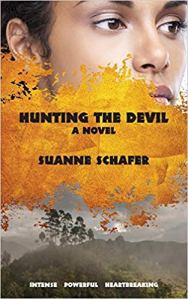
Suanne Schafer: I was facing retirement from my medical practice as well as an empty nest (divorced husband, son moved out), and wanted something to fill my time. I decided to take up writing. After cranking out one long, dreadful novel, I decided to take some classes. I was still a full-time physician with an erratic schedule and couldn’t rely on attending a class with a set schedule, so when I stumbled on Stanford’s novel writing program, I jumped at the chance. The novel I wrote for that program was published as A Different Kind of Fire. My second novel, Hunting the Devil, is due out 9/15/19.

LC: Congratulations on your new release!

What is your writing process: where do you write, how often do you write, are you a full-time or part-time writer, do you outline or do you plot as you go, etc.?

SS: I write daily, though without any set word counts or anything. I have a desk in a spare bedroom that serves as an office. The walls are lined with books which share space with my sewing and knitting storage. I retired a few years ago, so consider myself a full-time author. I’m a total pantser. If I take the time to plan out a novel, it feels like it’s already written, and I lose interest in them. I write and edit on computer, rarely printing out a copy of whatever I’m working on until the bitter end—I don’t want a tree chopped down unnecessarily.

LC: Where do you find your inspiration for your stories? Do you draw from your own experiences?

SS: So far, I’ve pull ideas from my world travels and my ancestors, but I have a pile of ideas filed away like a “Cupid Is Stupid” poster I saw for getting a free drink at a bar if you bring a picture of your ex- and post it on the Wall of Shame. And a post I found somewhere, “There’s nothing sadder than an unemployed stripper at Christmas time.” Also, there’s no time limit on my sources of inspiration: in Santa Barbara, California, I saw a beat-up old pickup driving down the road with a bumper sticker reading “Frankentruck”—that’s made it into my third novel after being carried around in my brain for 40 years.

LC: Inspiration comes from many places. 🙂

Who is one of your favorite characters from your story(ies), one that you enjoyed creating and writing about, and why?

SS: Ruby Schmidt, from A Different Kind of Fire, was loosely based on my grandmother. It was challenging to incorporate the feistiness of my grandmother and still have Ruby have her own personality. Jessica Hemings, the heroine of Hunting the Devil, was also challenging. I had to give her the emotional stamina to spend years searching for the man who murdered her children.

LC: Do you incorporate (or inadvertently find) any of your own personality traits into your characters?

SS: I think it’s inevitable that authors implant their own personalities into their characters—after all, we are pulling from our innermost selves to write, to create. I have Ruby’s artistic talent and Jessica’s idealism.

LC: Do you find your stories are more plot driven or character driven? Please explain.

SS: Definitely character driven. I usually create the character, then the situation, then the mechanism to get her/him where they need to be in the story.

LC: Did you read much as a child?

SS: I loved reading as a child, and it has carried forward into adulthood. I’ve read 138 books so far this year and generally read at least 150 books a year. That figure doesn’t include those I read as a beta reader, mentor, or editor. One year, I maxed out at 276 books.

LC: I believe you are what is called a “voracious reader”!

How important do you think reading is for writers?

SS: Reading is crucial. It helps hone your craft, provides guidance and inspiration. I also think critiquing other writers’ works is vital. Flaws are easier to see in someone else’s work. And once you’ve seen them, you can apply that knowledge to your own work. You learn what works/what doesn’t work from both reading and critiquing.

LC: Who are some of your favorite authors and/or books? What draws you to them?

SS: The Kite Runner by Khaled Hosseini—I was in Afghanistan during the time described in the beginning of the book. It is so evocative of that time for me, plus has such a gut-wrenching story.

Ahab’s Wife by Sena Jeter Naslund—exquisite prose and a feminist heroine

The Gabriel Allon spy series by Daniel Silva—a great spy series with a hero with morals

Brokeback Mountain by Annie Proulx—spare terse prose and a wonderful story

The Wild Birds by Emily Strelow—a new author to watch, exquisite prose

Winter Loon by Susan Bernhard—another new author to watch with exquisite prose

LC: Anything new in the works?

SS: I’m doing the edits on book #3. I move the setting back to Texas and have a happily-ever-after ending. I’m also starting book #4 about insane asylums in the 1890s.

LC: You do write on some interesting topics! Thanks again for sharing your writing life with us. Best of luck with your current and new works.

Author Bio:

Suanne Schafer completed the Stanford University Creative Writing Certificate program in 2014. Her short works have been featured in multiple magazines, literary journals, and anthologies. Her debut women’s fiction novel, A Different Kind of Fire, explores the life of a nineteenth century bisexual artist living in West Texas and was released in 2018. Coming September 2019, Hunting the Devil explores the heartbreak and healing of a biracial American physician caught up in the 1994 Rwandan genocide. Suanne is a member of San Antonio Romance Authors, Romance Writers of America, Women’s Fiction Writers Association, the Historical Novel Society, and the Association of Writers and Writing Programs. She has served as an editor for a mainstream/romance publishing house and as fiction editor for an on-line literary magazine.

Connect with Suanne:

suanneschaferauthor.com/

https://www.facebook.com/SuanneSchaferAuthor

https://twitter.com/SuanneSchafer

https://www.goodreads.com/author/show/7703847.Suanne_Schafer

https://www.pinterest.com/suanneschaferauthor/

https://its-suanneschafer-author.tumblr.com/

https://www.instagram.com/suanneschafer/

https://www.youtube.com/channel/UC_aXDsvlIOaW2NSWu_P2EMA/featured?view_as=subscriber

Posted in Uncategorized | Leave a comment

10 Questions with Author Sylvia Patience

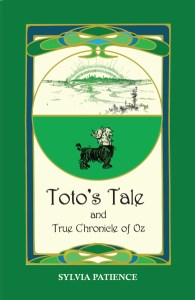
Today I’m pleased to welcome fellow Santa Cruz author Sylvia Patience. Sylvia is also a poet and has published four middle grade novels, including Toto’s Tale and True Chronicle of Oz, in which Toto tells his version of what happened in the beloved story The Wizard of Oz.

Linda Covella: When and why did you decide to become a writer?

Sylvia Patience: I never really “decided.” I began to write poetry as a child and short fiction in college. But I didn’t begin writing middle grade novels until around 2004. I’ve always loved reading in that genre and had been in a critique group for my poems together with other poets and novelists. I got an inspiration for what I thought was going to be a short story but became my first middle grade novel. After that I was hooked. I enjoy it.

LC: What is your writing process: where do you write, how often do you write, are you a full-time or part-time writer, do you outline or do you plot as you go, etc.?

SP: At first, I wrote with pen and paper. Now I write on the computer. My process is pretty informal. I don’t outline. I have an idea in my head for the book and how the story will progress. I usually resolve plot issues when my mind is unfocused. When I’m swimming, taking a walk, or lying in bed after waking up in the morning.

I usually write or revise some most days, but I’m not a full-time writer and I don’t have a schedule.

LC: Where do you find your inspiration for your stories? Do you draw from your own experiences?

SP: My inspiration for stories has come from a variety of sources: a certain piece of furniture, my dog, people I met while travelling. I wrote one story based on a popular Russian folk tale character. Mostly I write about people whose experiences or situations are very different from mine, but at a deeper level everything comes from my own experience.

LC: Who is one of your favorite characters from your story(ies), one that you enjoyed creating and writing about, and why?

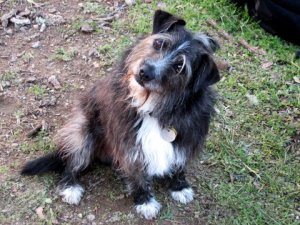
SP: I adopted my dog Toto from the local shelter eleven years ago. He looks like the character in the Wizard of Oz and was my inspiration for writing Toto’s version of the classic. He turned out to be a spunky, independent pup who, unbeknownst to L. Frank Baum (who wrote the original book), played a major role in the adventures.

Sylvia’s Toto, too.

LC: Writing the adventures of The Wizard of Oz from Toto’s perspective is such a darling and creative premise.

Do you incorporate (or inadvertently find) any of your own personality traits into your characters?

SP: Definitely. Most of my protagonists are girls and most tend to have a lot of my personality traits.

LC: Do you find your stories are more plot driven or character driven? Please explain.

SP: I don’t think I can say one or the other. Some of my stories start with a character or characters, but others start with a plot idea. Either way, I feel both are essential and intertwined.

LC: Did you read much as a child?

SP: My parents read to me and my brothers when we were young and instilled in me a love of reading that has lasted all my life. I read to my children and grandchildren.

LC: How important do you think reading is for writers?

SP: You have to read a lot in order to write. Reading develops vocabulary and understanding of story and character development. You need to know very well the genre in which you write. Reading is an immersion course in writing.

LC: “Reading is an immersion course in writing.” Such an insightful line worth repeating!

Who are some of your favorite authors and/or books? What draws you to them?

SP: Laura Resau, Ursula Le Guin, Gary Schmidt, JRR Tolkien, and Ann Patchett are some of my many favorite authors.

Favorite books include: All the Light We Cannot See (Doerr), Lizzie Bright and the Buckminster Boy (Schmidt), The Secret Life of Bees (Kidd), Red Glass (Resau). The list goes on and on. I’m more of a reader than a writer. I just checked my history at the Santa Cruz Public Library System. Over the past four years I’ve checked out 464 books. This includes reading for research on my books.

LC: And if I’m not mistaken, that calculates out to reading approximately two books per week. Impressive! I also loved All the Light We Cannot See and The Secret Life of Bees.

Anything new in the works?

SP: I’m currently rewriting one of my books in the form of a graphic novel script. This is completely new to me. I thought it would be fun to try and this book lends itself to that form.

LC: Interesting; good for you for trying something new.

Bonus question! Do you have anything you’d like to add?

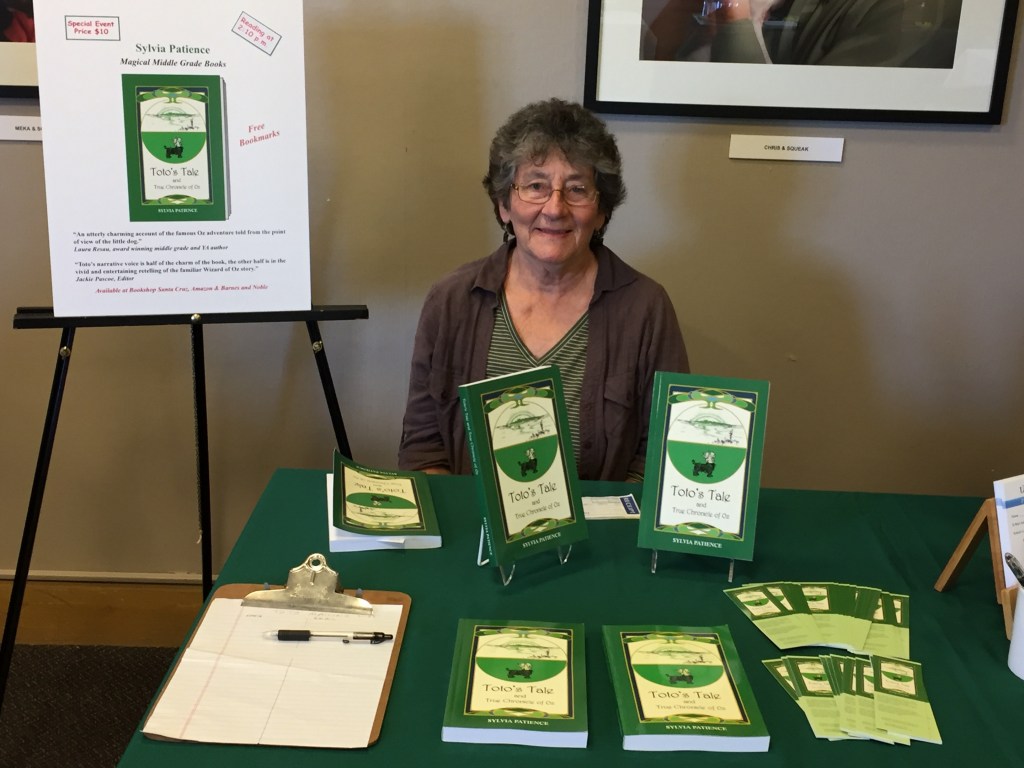
If you’d like to read Toto’s Tale and True Chronicle of Oz, you’ll find it at Bookshop Santa Cruz, online at Amazon, and in the Santa Cruz Public Library.

LC: Thank you, Sylvia. It was fun learning more about you and your writing!

Author Bio:

Sylvia Bortin Patience is a long time Santa Cruz resident, mother, grandmother, nurse, and midwife. She began writing poetry as a child, inspired by her mother’s poems. She’s written professional journal articles and short fairy tales. She currently focuses on writing middle grade novels, for eight to twelve-year-olds. She loves playing with words, imagining stories, and expressing herself through writing. Her middle grade retelling of the Wizard of Oz from Toto’s point of view, Toto’s Tale and True Chronicle of Oz, was published in 2015. She has four other books in the works, including a border crossing story, The Weaver’s Daughter.

Connect with Sylvia:

https://sylviapatience.com/

https://www.goodreads.com/book/show/27241720-toto-s-tale-and-true-chronicle-of-oz

Posted in Uncategorized | 3 Comments

10 Questions with Author Annie Douglass Lima

Today I welcome back to my blog author Annie Douglass Lima who’s celebrating the release of Book 5 in her Annals of Alasia series, King of Malorn. Besides writing her adventure/fantasy novels, Annie teaches fifth grade. She lives in Taiwan.

Linda Covella: Annie, congratulations on your new release! Before we talk about King of Malorn and the Annals of Alasia series, let’s start at the beginning: When and why did you decide to become a writer?

Annie Douglass Lima: I’ve been writing for as long as I can recall. When I was seven years old, I had a sudden inspiration for what I thought was an amazing story and decided then and there that I was going to write a book and be the world’s youngest published author. I ran to my room in great excitement, found an old notebook and a pencil, and started in. Well, that first little science fiction novel was never actually finished, let alone published, but it got me started. After that, I can’t remember a time that I wasn’t working on at least one book.

LC: What is your writing process: where do you write, how often do you write, are you a full-time or part-time writer, do you outline or do you plot as you go, etc.?

ADL: I’m actually a fulltime teacher.  While I love my day job, unfortunately it doesn’t leave me with nearly as much time for writing as I’d like.  I mostly write on the weekends and during school vacations, plus sometimes in the evenings if I don’t feel too brain-dead after a long day of teaching. My usual writing spot is at my dining room table at home. I always outline my books very thoroughly and plan out my characters in multiple ways before I start drafting. I’ve got to have it all organized in my head before I begin a new book!

LC: Did you read much as a child?

ADL: ALL the time. All my friends knew me as a bookworm. Back in elementary school, I used to read not only at recess, but as I walked around campus. When I was ten years old, my dad told me he was pretty sure I had read more books in my life so far than he had in his.

LC: Please tell us briefly the storyline of the Annals of Alasia series and particularly King of Malorn. What age group are these books for?

ADL: There are five main books in the series so far, but each of them can stand on its own. Each of the first four books deals with events surrounding the same major political incident: the invasion of the kingdom of Alasia by the neighboring kingdom of Malorn. Prince of Alasia begins on the night of the Invasion and describes what happens to twelve-year-old Prince Jaymin after he is forced to flee for his life. In the Enemy’s Service features a girl as the protagonist and tells the story of those who were not able to escape from the Alasian palace when the enemy invaded. Prince of Malorn begins several months earlier and focuses on the Malornian perspective of the events leading up to the Invasion. The Nameless Soldier shows how a young Alasian soldier lives through the Invasion but then has to survive and make a name for himself in enemy-occupied Alasia. In each of the books, main characters from the others make brief appearances and interact with each other at the point where the timeframes and settings overlap.

I also have a short ebook of “interviews” that I conducted with the characters in the other three books. Annals of Alasia: The Collected Interviews is not available on Amazon, but I send a free copy to anyone who signs up for my mailing list (to receive updates when I release new books or occasionally offer them for free).

King of Malorn takes place five years later and features characters from all of the other books, but it’s not necessary to read the others in order to understand the story. Here’s the back cover blurb:

Life as the king’s younger sister should be exciting.

Not for Princess Kalendria. She’s sick of the dissent and of constantly having her family undermined by those who think they could rule Malorn better than King Korram.

Hoping to lighten the mood in the palace, Kalendria plans a ball to celebrate her seventeenth birthday. It doesn’t hurt that their handsome Alasian ally King Jaymin has promised to attend, and she’s been waiting for him to notice her for as long as she can remember.

But unfriendly forces have their own party plans. When Kalendria, Korram, and Jaymin barely survive an assassination attempt, their only recourse is to flee into the wilderness. Tracked by unknown assassins, they must figure out whom they can trust and who is behind the plot. Can Kalendria help her brother reclaim his throne – oh, and catch Jaymin’s attention while she’s at it – before they are all killed and war destroys both kingdoms?

The series is designed for teen and preteen readers, but I’ve had readers as young as 7 and as old as 80 tell me they enjoy them. I’ve read all of them to my 5th grade class, and they’re always a hit with the students.

LC: What inspired you to write these stories? How did you come up with the ideas?

ADL: The inspiration for the first one, Prince of Alasia, came from a dream I once had about a prince who was forced to flee from invaders and live in disguise in a poor neighborhood.  I wrote the next three books to tell different sides of the same story. King of Malorn came later, to bring all the characters together and show what happens to them a few years after the other events.

LC: As a fantasy writer, you had to create some unusual character and place names. How do you generate those names?

ADL: I don’t consider myself very good at coming up with names, to be honest. It’s usually a struggle. Occasionally they just come to me, but sometimes I create them from variations or combinations of other words or names. There have been times when I’ve described a character or place on Facebook and let my friends give suggestions for names.

LC: How much world building did you do for this series? Did it require research, or did it all come from your imagination?

ADL: Most of it came from my imagination, but I did do some research for a couple of the earlier books. Even though they’re set in a different world, I wanted to make sure it was realistic. Prince of Malorn, in which Prince Korram spends several months in the wilderness, required the most research. I learned all about edible plants in the mountains, how to start a fire without matches, how to fire-harden a handmade spear, and even what grubs taste like!

LC: Who is one of your favorite characters from King of Malorn, one that you enjoyed creating and writing about, and why?

ADL: That would probably be Erik. He’s King Jaymin’s bodyguard and close friend, and he prefers to stay in the shadows and out of the spotlight. He comes out of his shell when he and Jaymin are alone, but otherwise he doesn’t talk much – just keeps an eye on everything that’s happening, prepared to leap into action at any hint of danger. In this book (actually, in some late revisions I made long after the first several drafts), Erik ended up stepping forward and showing me more of his personality. Now I know what he longs for, what keeps him awake at night, the feelings he doesn’t share with Jaymin or anyone else. So far, a few early readers have also told me that Erik is their favorite now. Ironically, he wouldn’t like that. Erik hates being noticed!

LC: Do you incorporate (or inadvertently find) any of your own personality traits into your characters?

ADL: Not so much in this series. In my science fiction novel Heartsong, I made the main character, Liz, a serious bookworm like I am. Otherwise, my characters are their own people.

LC: Is King of Malorn the final book in the series, or are more forthcoming?

ADL: Just in the last couple of weeks, I’ve started coming up with ideas for another book in the series. It will probably be the last one, but who knows?

LC: We’ll look forward to that! Thanks again for joining us today, Annie, and best of luck with your new release!

Author Bio:

Annie Douglass Lima considers herself fortunate to have traveled in twenty different countries and lived in four of them. A fifth-grade teacher in her “other” life, she loves reading to her students and sparking their imaginations. Her books include science fiction, fantasy, YA action and adventure novels, a puppet script, anthologies of her students’ poetry, and Bible verse coloring and activity books. When she isn’t teaching or writing, Annie can often be found sipping spiced chai or pomegranate green tea in exotic locations, some of which exist in this world.

Connect with Annie:

http://anniedouglasslima.blogspot.com/

Posted in Uncategorized | 6 Comments