A School Designed For and By Homeless Kids #WATWB

With the short month of February, here we are again at the last Friday of the month and time for another round of good news with the We Are the World Blogfest #WATWB. The blogfest is the brainchild of Damyanti Biswas to highlight a news story that “shows love, humanity, and brotherhood.”

My blog today is about a school designed for, and by, homeless children.

Architect’s rendering of the school for homeless kids in Oklahoma City.

Homelessness is a huge issue throughout the country, and nothing is more heart wrenching than the thought of children having no place to call home—living in shelters, cars or vans, or worse, on the street.

Positive Tomorrows, a nonprofit organization whose mission is to end homelessness, asked homeless children in Oklahoma City to submit drawings of what their ideal school would contain. The most common wish among the kids was to have “a place to spend quality time with other kids, and additional rooms to serve as their own personalized spaces.”

As the article states, “Although these requests may seem relatively simple, they indicate the students’ need for both community and consistency – two things that they rarely experience when they are having to constantly move from one shelter, couch, garage, or basement to the next.”

Construction on the school has begun, and it will provide a refuge for approximately 200 underprivileged children. Besides classrooms, the school will include a living room, family room, a gym, and a stocked kitchen.

You can read more about this wonderful project here https://www.goodnewsnetwork.org/new-school-designed-for-homeless-kids-in-okc/

Also, check out the following bloggers and any blog with the #WATWB.

Belinda WitzenhausenEric LahtiInderpreet UppalMary GieseMichelle WallacePeter NenaRoshan RadhakrishnanSimon FalkSusan ScottSylvia McGrath, Sylvia SteinAndrea MichaelsPeter NenaDan Antion, Shilpa Garg

You’re welcome to join the blogfest and “speak for peace.” Blogs are posted the last day of each month. Read the details here.

Please tell us in the comments what good news you have to share!


Posted in Uncategorized | 16 Comments

10 Questions with Author Elizabeth Varadan

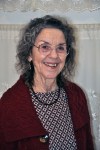
Today, I’m happy to welcome author Elizabeth Varadan to answer 10 Questions about her writing life. Elizabeth writes for both children and adults. Her works for children include magazine articles, novels, and a recently released picture book, Carnival of the Animals.

Linda Covella: Thank you for joining us today, Elizabeth.

When and why did you decide to become a writer?

Elizabeth Varadan: I never really “decided” to become a writer. I’ve just written all my life – stories, playlets, poetry in high school and college; stories and poetry while working in the insurance world to pay off college loans, and summers and vacations when I taught school full time. For a career, I wanted to be a teacher. I knew I wanted to do something both practical (i.e. steady income) and also something that would be of service to others. In my own family, love of the fine arts and literature was high, but practical skills were low. I knew that, as much as I loved writing, I didn’t want a hand-to-mouth existence on “the fringe”. (There really is a reason they say “Don’t quit your day job.”) What I also knew was that I would always write, and that whenever I decided to retire, I could make that full time.

LC: What is your writing process: where do you write, how often do you write, are you a full-time or part-time writer, do you outline or do you plot as you go, etc.?

EV: In theory, I’m a full-time writer, now that I have the time. However, if you are talking about hours of the day strictly applied to writing, I’d qualify as a part-time writer. Of course, in one sense, a writer is always writing. When I’m reading, my mind is taking note of things like good plotting, wonderful turns of phrase, compelling description, what makes a character grab you, etc. When I’m not reading, half my mind is plotting and sketching in scenes of my current WIP, whether I’m taking a walk, poking around in the garden, taking a shower, or cooking. I do spend perhaps more time than I should on social media, but even as I say that, so many of my online friends are writers that my writing life as well as my personal life has been enriched by the interactions, so I can’t really call it wasted time.

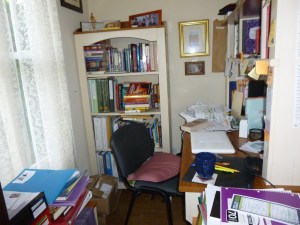
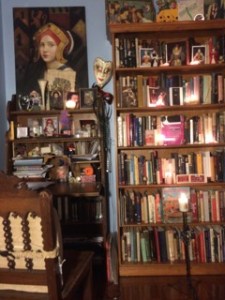
Elizabeth’s writing space.

To get back to your question, I probably do put in two or three hours a day, writing in some form. Once I get going on a WIP, though, it can be more, because I tend to become a bit obsessed then, and everything else goes out the window.

LC: Where do you find your inspiration for your stories? Do you draw from your own experiences?

EV: Sometimes a character will just pop into my mind, or a phrase that haunts me, or a poem I’ve read. Or an idea: “Wouldn’t it be interesting if X met up with Y and . . .” (That’s how Imogene and the Case of the Missing Pearls came about. I thought, “What if a young girl met up with Sherlock Holmes while he was solving a mystery for her parents, and she ended up helping him solve it . . .?”) One story came to me in a dream, which has been more complicated to write. (It’s my current WIP, and it’s taking forever!) In Carnival of the Animals, the tales are all about animals and are character driven, but the inspiration is more from folk and fairytales I read and enjoyed as a kid. In more contemporary adventures like The Fourth Wish, my first book and a self-published one, I drew on what I observed in students while I was teaching 6th grade. It really is a wonderful grade, and students are so rich and complex at that age. They did inspire me.

LC: I can imagine the kids would be a great source of inspiration.

Who is one of your favorite characters from your story(ies), one that you enjoyed creating and writing about, and why?

EV: I would have to say Imogene and Rusty in Imogene and the Case of the Missing Pearls. Imogene is a young Victorian girl from a middle-class family and Rusty is a “mudlark” from a penniless family. It was great to bring them both to life and create an occasion for them to meet and end up working together to solve a mystery. I enjoy writing about characters that make me learn something. All I had previously glimpsed of the Victorian Era in England were the London fog and streetlamps and the carriages rattling down cobblestone streets in Sherlock Holmes mysteries. Oh, yes, and the clothing of the rich: top hats and bustles. So, it was interesting to explore the era and find out what life was for children of every class and what the Victorian world was really like.

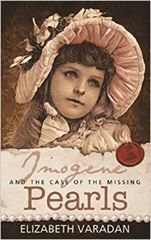
LC: Darling cover for Imogene.

Do you incorporate (or inadvertently find) any of your own personality traits into your characters?

EV: I’m sure I do. For instance, Imogene doesn’t want to end up being a proper lady who just plays the piano after dinner and embroiders and goes to balls. She wants to be a detective. When I was her age, I loved Nancy Drew mysteries, and I wanted more than anything to be a detective when I grew up. I even wrote a story called “Imogene’s Detective Ring”. (I guess Imogene was hovering in my subconscious for a very long time.)

LC: Do you find your stories are more plot driven or character driven? Please explain.

EV: I was more of a “panster” than a plotter when I started out with stories. Now that I’ve finished a few books, I’m veering more and more toward plotting first, particularly since I think of two of them as “Book One” in a series. Both are mysteries, and I think with mysteries, you really do have to work out the plot first before you try to write the story.

With my current WIP, though, the character came first, and the plot came about as a series of “what if” questions. I don’t want to say too much about it at present, but it’s definitely a character-driven book, and driven by more than one character.

LC: Did you read much as a child?

EV: I have been an avid reader all my life, and I thank my mother for starting me down that road. It’s probably cliché to say this by now, but writing is a way to travel, and it only costs you the price of a book, or, in fact, a library card. You can go anywhere in time or place via a book. You can learn anything you want to know about from reading. It’s a great enricher of life, and I applaud parents who make reading a priority experience in their home.

LC: How important do you think reading is for writers?

EV: One of the most important things a writer can do is read. Reading a good book is, in addition to personal pleasure and entertainment, the best kind of writing education: You can learn through reading good books what makes for compelling characterization, mesmerizing plot, rich scene-setting, original imagery, good syntax, even good spelling and punctuation.

LC: Who are some of your favorite authors and/or books? What draws you to them?

EV: I love the mysteries of Terry Shames, Cara Black, Catriona McPherson, Rhys Bowen, M. C. Beaton. I’ve always liked a good mystery, and these are some of the best mystery writers. Their books have endearing main characters, masterful plots, and M. C. Beaton’s Hamish Macbeth series is humorous as well. For young readers, I so enjoy Barbara Mariconda and her Lucy series, T. A. Barron’s Merlin series, Ellen Marie Wiseman, Meg Medina, Rachna Chhabria, Mark Noce. For the very, very young, (picture books), JaNay Brown Wood, Kimberly Gordon Biddle.

But really, there are so many I like, this is just the tip of the iceberg. I haven’t even gotten to the poets I like!

LC: Anything new in the works?

EV: Yes! My current WIP, Granny’s Jig. And a second book in my (as yet unpublished) mystery series for adults set in Braga, Portugal. I’m quite excited about both and will probably be working on both this year.

LC: Bonus question! Do you have anything you’d like to add?

EV: Only a big thank you for this interview. I have enjoyed reading your interviews with other authors. It’s always so interesting to see how others pursue this wonderful world of writing.

LC: I enjoy these interviews, too. All the different perspectives are so interesting. As was yours, Elizabeth! Thanks so much for joining us today.

Author Bio:

Elizabeth Varadan is a former elementary teacher. She and her husband live in Midtown Sacramento, California. In retirement, they divide their time between Sacramento, Braga, Portugal, and Monforte, Galicia (an autonomous region in Spain.)

She is the author of a self-published MG fantasy, The Fourth Wish, an MG mystery, Imogene and the Case of the Missing Pearls (MX Publishing, 2015), a picture book, Dragonella, (Belanger Books, 2016; Spanish Edition, 2017), and a collection of stories for children, The Carnival of the Animals (Belanger Books, 2018). Her poetry and adult flash fiction have appeared in several online and print magazines, and her poetry has been anthologized in Vine Leaves Journal and The Stray Branch. She is currently working on an MG novel with a ghost, and a chapbook of poems about Galicia.

Connect with Elizabeth:

http://elizabethvaradansfourthwish.blogspot.com/  (Varied topics)

http://victorianscribbles.blogspot.com/ (Victorian Era/Gilded Age)

https://elizabethvaradan.wordpress.com/   (Travel blog)

Facebook Author Page: https://www.facebook.com/ElizabethVaradanAuthor

Twitter: https://twitter.com/4thWishVaradan

Book Links:

The Carnival of the Animals https://www.amazon.com/Carnival-Animals-Elizabeth-Varadan/dp/172581546X

Dragonella https://www.amazon.com/Dragonella-Elizabeth-Varadan/dp/1978037821

Imogene and the Case of the Missing Pearls TheStrandMagazine BookDepository Amazon Kobo

Posted in Uncategorized | 2 Comments

Release Day Coming! The Power of a Dream

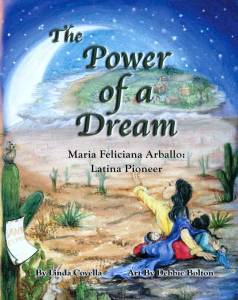
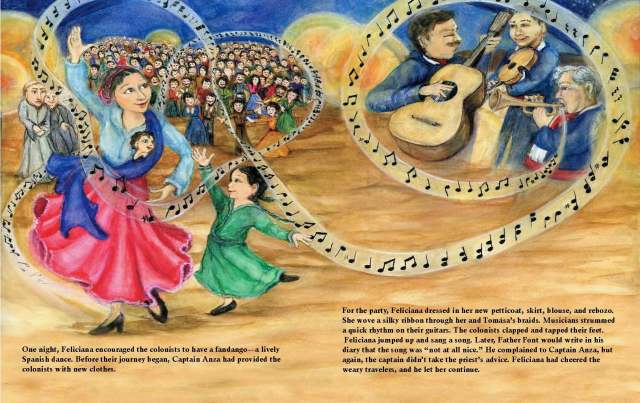
My nonfiction picture book THE POWER OF A DREAM: MARIA FELICIANA ARBALLO, LATINA PIONEER will be released on Tuesday, February 26. The beautiful illustrations are by Debbie Bolton.

I first learned about Feliciana Arballo when I was doing research for my young adult historical novel Yakimali’s Gift, in which fifteen-year-old Fernanda, of Pima Indian and Spanish ancestry, joins a colonization expedition from Mexico to California. On the journey, she discovers not only romance, but truths that change the way she sees herself, her family, and her ancestry.

Feliciana is a fictionalized character in that story, but I wanted to write a nonfiction book solely about her.

I chose to write it as a picture book because, since I’d written the novel for teens, I wanted younger children to know not only about the 1775 expedition (a little-known part of U.S. history), but also about Feliciana and the power of her dream that brought her to California.

Though Feliciana’s husband died before the journey began, Feliciana still chose to make the arduous four-month journey with her daughters: the infant Estaquia and four-year-old Tomása.

Feliciana is referenced in the diaries of Captain Juan Bautista de Anza, who led the expedition, and Father Pedro Font, who also went on the journey. Feliciana was an inspiring, brave, and remarkable woman, especially for the time in which she lived. She loved music and dancing, and she helped distract the colonists from the hardships they faced.

She hoped to find a life free of discrimination in California. Just as there are prejudices today, so there were in the society of 1775 New Spain. Everyone wanted to be known as Español, meaning you were of “pure” Spanish descent. You were looked down upon if you had mixed ancestry. Many historians believe Feliciana was born into a wealthy Spanish family. Defying her parents and society, she married José Gutierrez, a man of Spanish and Indian descent. People with this particular mixed ancestry were labeled “mestizo,” making Tomása and Estaquia mestizos as well.

In California, Feliciana would leave a legacy of the power of a dream not only for her family, but for California itself: Many of her descendants, showing the same courage and conviction as Feliciana, became important figures in California history. My author note discusses these descendants, and another note provides a background of the expedition itself.

If you read the book once it’s published, I’d appreciate your review. I’ll post the Amazon link here once it’s available. Contact me if you’d like a signed copy!

Professional reviewers: If you’d like a review copy (available now), please contact me.

Posted in Uncategorized | 2 Comments

10 Questions with Author Kimberly A. Gordon Biddle

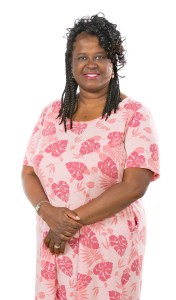
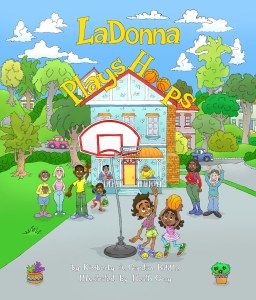
Today, author Kimberly A. Gordon Biddle joins us to answer “10 Questions” about her writing. Kimberly recently published her first picture book, LaDonna Plays Hoops. She’s a professor of Child Development at Sacramento State and has co-authored textbooks on that subject. Kimberly received Excellence in Education and Career Achievement awards from her alma maters: Stanford University and University of Redlands, respectively.

LC: Welcome, Kimberly. And congratulations on your recent publication, and on your career awards. I understand you just found out about the Career Achievement Award yesterday!

Please tell us, when and why did you decide to become a writer?

KB: I decided to become a writer when I was in Graduate School at Stanford University. I wanted to write with a mission in mind – to appreciate, celebrate, and respect our differences.

LC: What is your writing process: where do you write, how often do you write, are you a full-time or part-time writer, do you outline or do you plot as you go, etc.?

KB: I write mostly in an office in my house. I write every other day or so in long concentrated periods of time. I have a full-time job as a college professor at Sacramento State. Therefore, I am a part-time writer. I get an idea in mind. I plot as I go and then revise, revise, revise. I have a critique group and some more experienced friends that aid in the revising process with their suggestions.

LC: For your children’s stories, where do you find your inspiration? Do you draw from your own experiences?

KB: Yes, I draw from my own experiences. It can be my childhood or my son’s childhood. It can be my friends or my son’s friends. It could be a request from a friend or a walk in my neighborhood. All of the experiences are inspirational.

LC: Who is one of your favorite characters from your story(ies), one that you enjoyed creating and writing about, and why?

KB: I guess it is a tie. I like LaDonna’s mom in my second book, LaDonna’s Easter in Paris. (This book is in production and will be released in about a year.) I also like Sharlene in a book that is still in development.

LC: Do you incorporate (or inadvertently find) any of your own personality traits into your characters?

KB: My characters are usually a compilation of real people in my life. For instance, LaDonna is a combination of various friends and cousins from my childhood. The two characters who are most like me are my favorite characters. Sharlene is more like me in my childhood and LaDonna’s mom is like me as a mother.

LC: You’ve also written nonfiction books on the Early Childhood Development profession. Please tell us more about these books, how they came about, are they college textbooks, etc.

KB: I have been the lead author on two college text books, namely Early Childhood Education: Becoming a Professional (2013) and Careers in Child and Adolescent Development: A Student’s Guide to Working in the Field (2018). The first book on Early Childhood Education I was actually asked to write by a publisher through one of my friends at Sac State. The second book on Careers in Child and Adolescent Development was an original idea of mine.

LC: Did you read much as a child?

KB: I loved reading as a child and I still love reading. Reading was my way of experiencing the world when I was little, as we did not travel much. We mostly visited relatives and went to family reunions.

LC: How important do you think reading is for writers?

KB: Reading quality books improves the writing of writers. So, it is quite important to read.

LC: Who are some of your favorite authors and/or books? What draws you to them?

KB: For myself, I read a lot of picture books. I guess my favorite picture book author is Matt de la Pena. I also read some YA and I like Nikki Grimes and Jackie Woodson and Sharon Draper. I like Matt de la Pena because he writes prose stories in his picture books. For my son who is eleven, I like Kwame Alexander and Varian Johnson. For the most part, these are good clean books for middle grade.

LC: Anything new in the works?

KB: I have a contract for LaDonna’s Easter in Paris and it will be out next year (2020) in the Winter or Spring. I wrote this book to introduce LaDonna’s mother and more of LaDonna’s family life.

LC: Bonus question! Do you have anything you’d like to add?

KB: Thanks for choosing me for this interview. I really appreciate it. You have asked me questions that my readers sometime ask me. I also want your readers to know that I love reading engagements for children and that my website has educational materials for teachers.

LC: Thanks so much for joining us today, Kimberly. I enjoyed learning more about you. You have a lot to be proud of with both your writing and your teaching!

Author Bio:

Kimberly A. Gordon Biddle is a lover of books. Her nose was always in a book, when she was younger. She still loves to read, when she gets the chance, and she also loves to write. She has co-authored a textbook on early childhood education that published in 2013 and one about child development careers that published in 2018. LADONNA PLAYS HOOPS is her first book of fiction. This picture book was born in the 1980’s and has grown and matured. Seeing the book come to life in 2017 is a realized dream for Kimberly. She is under contract for her second book LaDonna’s Easter in Paris that should release in 2020. For her day job, she is a professor of child development. Kimberly is also a member of the Society for Children’s Book Writers and Illustrators (SCBWI). She is also a loving wife to her husband and a loving mother to her son. She currently lives in the Nor Cal area of California. She has a BA in Psychology and Music from the University of Redlands and a PhD in Child and Adolescent Development from Stanford University. In 2018 she won the Stanford Graduate School of Education Alumni Award for Excellence in Education and in February 2019 the University of Redlands awarded her the Alumni Career Achievement Award. Her website address is www.pinkpearlwriting.com . Her email address is magenta65@msn.com . Educational materials for teachers can be found on her website. She loves reading to children in libraries, book stores, and at elementary schools.

Posted in Uncategorized | 4 Comments

10 Questions with Author Maureen Fisher

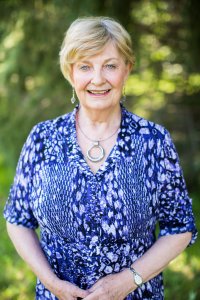
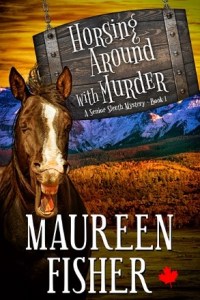
My guest today is author Maureen Fisher. Maureen writes romance novels and cozy mysteries from her home in Ottawa, Canada. Today is release day for her latest novel, Horsing Around with Murder.
Linda Covella: Welcome, Maureen. Thank you for joining us today and answering “10 Questions” about your writing. And congratulations on your new release!

When and why did you decide to become a writer?

Maureen Fisher: For many years, I was a management consultant. The profession was good to me, yet something was missing. Fun perhaps? Over time, I grew tired of wearing little business suits, struggling with panty hose, and fighting rush hour traffic. I still didn’t know what I wanted to be when I grew up, but I was certain of one thing—it wasn’t a consultant. One sunny day in June 2003, a good friend and primo energy healer called up our spiritual guides, guardians, and gatekeepers to channel an unforgettable session during which I made a life-changing decision. I walked out of her house knowing that I wanted to write books. Not dry, boring, technical treatises, but fresh, funny romance and mystery novels.

LC: That’s certainly a unique way to discover your calling!

What is your writing process: where do you write, how often do you write, are you a full-time or part-time writer, do you outline or do you plot as you go, etc.?

MF: I’m fortunate to have my own home office. There’s a good-sized desk, lots of bookshelves, a bay window overlooking the front yard, and a door I can close when I need to concentrate.

I confess I’m a part-time writer. My intentions are good, but now that I’m retired, I find myself busier than ever. Each book takes me three years to write.

I’m a plotter, not a pantster. I couldn’t write a book without an outline. I tried ‘pantsing’ a couple of times, and the results weren’t pretty. Of course, the outline changes as I learn more about the characters and the plot, but I know the key plot points and the ending before I start writing. The one exception was Fur Ball Fever. I had a vision for a funny scene, and wrote it before I had the outline. It gave me a better idea of the conflict and characters, helping me flesh out my outline.

LC: Where do you find your inspiration for your stories? Do you draw from your own experiences?

MF: I have a difficult time getting started. I find plotting to be extremely difficult, hence the length of time it takes for me to start a new novel. For the senior sleuth series, I came up with a number of ideas for a series of cozy murder mysteries. One of them involved a dude ranch. And Horsing Around with Murder, set on a dude ranch, was born.
LC: Who is one of your favorite characters from your story(ies), one that you enjoyed creating and writing about, and why?

MF: I loved writing Auntie Beth, a secondary character in Fur Ball Fever. She is sixty-something, outrageous, lippy, and up for just about anything. I liked Beth Donnelly so much in fact, I decided to write an entire series of cozy mysteries featuring a similar character as the protagonist. Once I got started, however, I discovered I needed my zany character to be the foil to my more serious protagonist. Hence in Horsing Around with Murder, the first book of my Senior Sleuth Mystery series, my protagonist, Abby Foster, is a former accountant with strong analytical skills, and her sister, Dodie Foster is my quirky secondary character.

LC: Do you incorporate (or inadvertently find) any of your own personality traits into your characters?

MF: I confess to having an inappropriate sense of humor. This trait migrates into my main characters, particularly the quirky ones. Here’s an example from Horsing around with Murder:

Bending over to scrutinize the plate, Dodie presented me with a disturbing view. She’d encased her plump legs in black leggings, a feat as miraculous as stuffing a bucking heifer down a drainpipe. Her queen-sized butt-cheeks bulged, straining the wafer-thin fabric in an alarming manner.

LC: You definitely paint quite a picture with your descriptions!

Do you find your stories are more plot driven or character driven? Please explain.

MF: Mine, even my romance novels, which are romantic suspense, are a combination of both. Since romance novels are about emotions, my main characters are often influenced by (and must overcome) past emotional traumas. The growth and change is known as the Character Arc.
All my novels, even my romances, have plots involving suspense, intrigue, and mystery. For that reason, I’m a big believer in Goal, Motive, and Conflict (GMC). Each of my main characters must have an urgent NEED for something (not just a WANT), a strong motive for needing it, and obstacles to overcome in order to obtain the goal.

For example, in Horsing Around with Murder, my protagonist needs to attract more guests to Grizzly Gulch (her goal) or the ranch will fold and she and her sisters will be penniless. The obstacle to her success is a suspected murder in the barn.

LC: Some great advice for aspiring writers. I think “GMC” is important in any fiction writing.

Did you read much as a child?

MF: Reading was my refuge, my escape, my haven from a tumultuous childhood. At age seven, my mother re-married (not happily), and we moved to Canada, away from extended family, especially my beloved grandfather, away from Scotland, away from my friends and home and everything familiar. Shy to begin with, I became paralyzed with the shock of the change, and immersed myself in books. The Enid Blyton Adventure series was my favorite. I read each of those books over twenty times.

LC: How important do you think reading is for writers?

MF: I can’t imagine anything more important than reading for a writer. A writer who doesn’t enjoy reading would be like a kindergarten teacher who dislikes children.

LC: Who are some of your favorite authors and/or books? What draws you to them?

MF: That’s a tough one as there are so many. My favorite romance authors are Jill Shalvis, Kristan Higgins, and Susan Elizabeth Phillips. I love Diana Gabaldon’s Outlander series and Louise Penny’s Inspector Gamache novels. Barbara Erskine has time travel books. Steven King and Dean Koontz are my favorite horror authors. Sue Grafton and Janet Evanovitch (someone compared my heroine in Fur Ball Fever to Stephanie Plum) are fun reads. And so, so many more.

LC: Anything new in the works?

MF: I’m so glad you asked. Today (February 1, 2019) is the day Horsing Around with Murder goes live. Here is the back cover blurb:

With horses, and goats, and a llama, oh, my!

There’s secrets, and intrigue, and someone must die.

Abby, Dodie, and Clara Foster, three 60-something sisters, are astonished to find they’ve inherited a dude ranch in the Alberta Foothills. Facing financial ruin due to extensive property upgrades, the sisters decide to host a week-long horse breeding symposium to attract more guests during the off-season.

Hours into the symposium, a sudden death appears accidental. When the Mounties dismiss Abby’s suspicion of murder, she convinces Dodie and a hot cowboy to help conduct a covert investigation without alerting their quirky guests.

Problem is, the guests are their main suspects.

Chaos ensues when the senior sleuths tangle with a runaway stud, a hands-on artificial insemination demo, one seriously amorous gelding (yes, it does happen), a llama on the lam, dwarf goats in the swimming pool, a cranky stallion, drug abuse, sabotage, animal rights activism, and more attempted murders. A late-life romance adds to the complications.

Warning: This book may contain inappropriate boomer humor.

Kindle Ebook: https://www.amazon.com/gp/product/B07MDB73P9

Paperback: https://www.amazon.com/dp/1999575512

LC: It was a pleasure having you with us today, Maureen. I wish you much success with Horsing Around with Murder, and all your writing.

Author Bio

After spending eons in the I.T. consulting world, I live with my husband in Ottawa, Canada’s beautiful capital city, where I write fresh and funny novels featuring romance, mystery, suspense, and always an animal or two. I’m also a besotted grandma, a voracious reader, the Gardening & Landscaping Coordinator for our community, an avid bridge player, yoga enthusiast, seeker of personal and spiritual growth, pickleball player, and infrequent but avid gourmet cook. My husband and I love to hike, bicycle, and travel. I’ve swum with sharks in the Galapagos, walked with Bushmen in the Serengeti, sampled lamb criadillas (don’t ask!!!) in Iguazu Falls, snorkeled on the Great Barrier Reef, ridden an elephant in Thailand, watched the sun rise over Machu Picchu, and bounced from Johannesburg to Cape Town on a bus named Marula.

Connect with Maureen:

Maureen’s books are available on Amazon in Canada, Australia, the UK and the US.

Website: http://booksbymaureen.com

Twitter: https://twitter.com/AuthorMaureen

Facebook: https://www.facebook.com/MaureenFisherAuthor

Goodreads: https://www.goodreads.com/author/show/845094.Maureen_Fisher

Amazon Author Page: https://www.amazon.com/Maureen-Fisher/e/B005EOLB1Y

Other Books:

Cold Feet Fever (The Fever Series, Book 2): ‘One for the Money’ with steamy romance meets ‘The Sopranos’. A bad boy gambler and a mortician-turned-event-planner find romance while overcoming obstacles such as a goofy dog, ruthless thugs, exploding trucks, an eccentric granddaddy, disappearing corpses, an unfortunate synchronized swimming episode, and the threat of live cremation.

“An exciting novel that left me doubled over in laughter”

“a wonderful hilarious comedy … a warm and enjoyable read”

https://www.amazon.com/Cold-Feet-Fever-Romantic-Mystery-ebook/dp/B01EU99QHY

Fur Ball Fever (The Fever Series, Book 1): This romantic crime mystery features romance (sizzling hot), a second chance at love (hope and heart), crime (dastardly), an aging aunt (bawdy), dogs with personality (many), and humor (may cause mascara to run).

“It entertains, it heals, it delivers a message.”

“… hilarious, moving, and sexy.”

https://www.amazon.com/Fur-Ball-Fever-Romantic-Mystery-ebook/dp/B005LIALVE

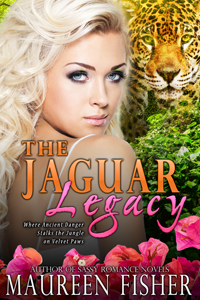
The Jaguar Legacy: Romance, suspense, and adventure explode in the steamy Mexican jungle. A secretive archaeologist guards his discovery, the ruins of a hidden Olmec city, while a journalist on the trail of an ancient Olmec curse experiences flashbacks to her past life where shapeshifting is a reality.

“…magnificent characters and scenarios.”

“An intricately woven tale of mystery, romance and occult. Definitely a keeper.”

https://www.amazon.com/Jaguar-Legacy-Paranormal-Mysticism-Reincarnation-ebook/dp/B005L40LX6

Posted in Uncategorized | 8 Comments

Anthony Bourdain Parts Unknown Hanoi #WATWB

The last Friday of the month, when the We Are the World Blogfest blogs are posted, snuck up on me. So here’s my post the last day of the month. #WATWB was started by Damyanti Biswas to highlight a news story that “shows love, humanity, and brotherhood.”

My blog today is about an episode of Anthony Bourdain’s Parts Unknown when he went to Hanoi in September 2016. You can view it here https://www.dailymotion.com/video/x6n6gmz (You’ll have to put up with some short commercials. If you have trouble with the link, go to https://www.dailymotion.com/us and search on “Anthony Bourdain Hanoi.”)

Though I urge you to watch the entire episode, there are two places in the show that I found particularly emotional and timely to our world today.

The first starts approximately 27 minutes into the video when President Obama meets Bourdain at a noodle shop where, over noodle soup and beers, they discuss food, politics, family, and the hopes and dreams of all people.

At one point, Bourdain asks Obama: As a father of a young girl, is it all going to be okay?

Obama’s response: Yeah. Progress is not a straight line. There are going to be moments where things are terrible. But I think, having said that, things are going to work out.”

Soon after that, the scene changes to Bourdain sitting with a young woman and her family. (I believe she’s a journalist.) They’re discussing the Vietnam War.

The woman says: It’s good to remember (the war) so we don’t make the same mistake. Some people choose to be angry, to hold a grudge. But some choose to let go. It’s called ‘the peace inside ourselves.’

Here, she tries to hold back tears, then continues: I think it’s important we know about history. And make sure it never happens again. I met a lot of war veterans. And surprisingly, many of them don’t have anger. That is amazing. I learn so much from them.

As Obama said to Bourdain: We make peace with our enemies.

I’ll miss Anthony Bourdain’s remarkable program that showed and taught viewers so much, bringing us to corners of cities and countries that few of us would ever have otherwise experienced. He made the world smaller for us and introduced us to amazing people from all walks of life. He brought us all closer to understanding that, really, we’re all pretty much the same: that we all wish for a peaceful, honorable life for ourselves, our family, and our community.

You’re welcome to join the blogfest and “speak for peace.” Blogs are posted the last day of each month. Read the details here along with links to other #WATWB blogs.

What is your good news?

Posted in Uncategorized | 2 Comments

10 Questions with Author Melissa Abramovitz

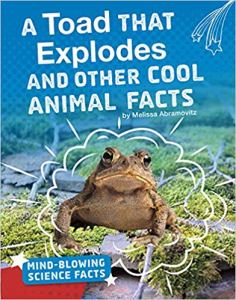
Today I’m happy to welcome author Melissa Abramovitz to my blog and to answer “10 Questions.” Melissa is a prolific author of fiction and nonfiction for children and teens. She’s also published a “How To” book for writers.

Linda Covella: Hello, Melissa. So glad you could join us today.

When and why did you decide to become a writer?

Melissa Abramovitz: I decided to start writing professionally in 1985, when my children were little and I was a stay-at-home mom and homemaker. Much as I loved being a full-time mom, I wanted to do something just for me, and I had always loved to write. I even had some poetry published when I was in high school, and I liked to write so much that I loved writing term papers in high school and college! Weird, and so nerdy, huh! And maybe a foreshadowing of my later enjoyment of professionally writing nonfiction.

Back to 1985… I had never thought about making a career as a writer – my college degree is in psychology, and I thought I would do something related to that – but when I saw an advertisement for a correspondence course offered by the Institute of Children’s Literature on how to write for children, I decided to sign up. I loved the class, and it was perfect for me because I could fit working on my classwork around my other responsibilities. My instructor recommended that I submit a nonfiction article I wrote as a course assignment to a children’s magazine, and I did and was amazed when the magazine accepted it for publication. I had heard that many aspiring authors spent years piling up rejections before selling anything, and I thought – wow! This won’t be as difficult as I thought. Well, I was so wrong. After that initial success, I accumulated (and still do receive) more rejections than I thought possible. But I persisted, and gradually started selling more and more nonfiction articles and short stories to magazines for children, teenagers, and adults. Then I got into writing educational books, and to this day, that is still the type of work I do most often. My writing was very part-time until my kids grew up, but it is now my full-time job. And I still love it as much as ever.

LC: Congratulations on your success and hard work. Writing for publication does take persistence, doesn’t it!

What is your writing process: where do you write, how often do you write, are you a full-time or part-time writer, do you outline or do you plot as you go, etc.?

MA: I write almost every day, usually in my home office, and as I previously mentioned, writing is my full-time job. Some days I work for 6 to 8 hours; other days 10 to 14 hours, depending on how many projects and deadlines I’ve got going. I mostly write nonfiction books on assignment for educational publishers and nonfiction magazine articles (for all age groups) on assignment or independently to submit to specific magazines, with occasional fiction thrown into the mix. In addition, when I have time I write children’s picture books (fiction and nonfiction) and market them to trade publishers. Unfortunately, I have not sold three of these manuscripts, and with so many publishers no longer accepting unagented submissions, I have been trying to find an agent to represent me. But so far, this has not happened. I also recently completed my first novel (after working on it off and on for more than 20 years), and hopefully an agent will be able to help me market it as well.
I usually make a detailed outline before I start writing a manuscript; the only exception is when I write very short stories for young children. In fact, an outline is even more important for nonfiction than for fiction, and I find that having an outline helps me stay on track as far as where and when to introduce certain concepts and facts in my manuscripts. I know that some writers shudder when they hear the word outline, and some do excellent work writing “by the seat of the pants.” But I benefit from outlines, so I use them.

LC: With all your publications, I imagine you’ll find the right agent. Best of luck on that!

Where do you find your inspiration for your stories? Do you draw from your own experiences?

MA: Most of the educational publishers with whom I work regularly develop their series and individual title ideas in-house and then ask me which titles I would like to write. So in those cases, I am not responsible for generating ideas. For other types of stories, books etc. I find inspiration everywhere, by simply keeping what I call my writers’ antennae alert. In fact, when writers tell me they have trouble coming up with story ideas, I tell them that story ideas are all around them, and they just need to train themselves to notice and build on those ideas. For example, I’ve gotten many ideas and have been inspired to write many stories/articles based on something my children or grandchildren said. One such question that spurred me to write a fun poem came from my then-three-year-old son, who asked, “Mommy, where does the sun go at night?” I also derive inspiration for stories from news reports, from watching TV, from reading books and magazines, and from noticing interesting things when I travel. But I don’t have to be doing something different or exciting to find story ideas, since I’ve trained myself to be on the lookout for these ideas wherever I am, whether it’s taking a walk in my neighborhood, shopping for groceries, or spending time with family and friends. For instance, one day while I was walking my Labrador retriever, his ears perked up and his body snapped to attention as he stared at something that turned out to be a squirrel crossing the street a couple of blocks away. That got me thinking about what I had learned about animal vision in my neuroscience classes in college, and I realized that writing a children’s nonfiction article about how different animals see the same thing would be fun and interesting (for me and for readers). The article was published in Sierra Magazine (this was years ago when the magazine contained a monthly section for children). Another time, I was doing something really mundane – I was looking through my desk calendar. I noticed that it contained no pre-printed mention of holidays in August. Every other month had at least one listed holiday, and I wondered if other calendars listed any August holidays. I began my “research” by hurrying to a store and perusing a variety of desk, wall, and other types of calendars. None mentioned any holidays in August. By that time, my writer’s antennae were on full alert, and I decided to do other types of research, such as consulting books about celebrations in various cultures, so I could write a children’s article on the topic. It turns out that even though there are no major American holidays in August, there are plenty of August holidays in other countries, and there are even some “commemorative” or “honorary” days like National Ice Cream Day and Women’s Equality Day in the US. In my article, which I titled “Are There Any Holidays In August?”, I took readers on my journey to answer the question raised in the title and shared information about some of the international August holidays and commemorative days. It sold to the first magazine to which I submitted it; most probably, I believe, because most writers do not turn mundane pastimes like looking at a desk calendar into fun and interesting articles.

LC: LOL You certainly do know how to find inspiration in unusual places.

Who is one of your favorite characters from your story(ies), one that you enjoyed creating and writing about, and why?

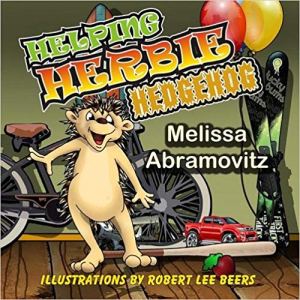
MA: That would be Herbie Hedgehog, the clueless anthropomorphized hedgehog who stars in my interactive picture book, Helping Herbie Hedgehog (Guardian Angel Publishing, 2015). I love using humor to help kids learn about various concepts, and I created Herbie to be a lovable but clueless guy who needs the reader’s help making everyday decisions. Such as, should he ride a bicycle or embark on a boat when he decides to visit his cousin who lives across an ocean? Should he visit a policeman or a doctor when he feels sick? Kids love it because they’re laughing while yelling out the correct answers and learning at the same time.

LC: Do you incorporate (or inadvertently find) any of your own personality traits into your characters?

MA: In the novel I recently finished, I noticed that the main character had some of my personality traits and even spoke the way I speak in several instances, even though she is a “Southern belle” and I am not. I changed these aspects of the story, mostly because I don’t want people who know me to think that the (fictional) story is in any way autobiographical. That’s because the main character is a psychopath who is obsessed with achieving revenge by harming a particular individual. I did not consciously intend for this character to be anything like me, but somehow the similar traits/dialogue snuck into her personality and behavior. I’m sure a psychiatrist would have a field day analyzing how and why I subconsciously allowed this to happen, but I think the important thing is that I found and changed these things.

Another character I created, in this case for a short story I wrote titled “A Hannukah Miracle,” (published in Girls’ World magazine, 2018) has a couple of my traits because the story is based on a question about miracles I asked many years ago when I was a child. The main character, Jenny, asks a similar question about what miracles are and who creates them. However, even though Jenny’s question and concerns were similar to mine, I never came up with a plan to nudge a miracle to transpire like she did, nor did I answer the question by putting this plan into action like she did. Jenny therefore became a unique character who was loosely based on my personal concerns and experience at one point in time. Indeed, this is how many fictional stories and characters are inspired by true events, but are then given a life of their own that builds on this spark.

LC: Do you find your stories are more plot driven or character driven? Please explain.

MA: I’d say more plot-driven, mostly because I tend to think of a plot first and then create characters to fit into the plot. Even though I do not write a lot of fiction, I would like to make the stories I do write more character driven because I find that I usually enjoy reading these types of stories more than those which are plot driven. As with any other aspect of writing, this takes lots of practice, so I continue to work on it.

LC: Did you read much as a child?

MA: Yes! My favorite book was Heidi. I read it hundreds of times. I also loved reading Dr. Seuss and mysteries. Until I read a couple of the really scary Sherlock Holmes mysteries (like The Hound of the Baskervilles). After that, I was too petrified to read another mystery written for adults for many years, and I stuck to reading children’s mystery series like the Nancy Drew books (fun and well-written, but not scary)!

LC: I loved Heidi and Nancy Drew. But Edgar Allan Poe was also one of my favorites. 🙂

How important do you think reading is for writers?

MA: I think it’s essential. It’s important to read books by other authors because it really helps writers analyze what these authors do, and don’t do, to make these books interesting, readable, and desirable (or not). This helps writers pinpoint what they want and do not want in their own books. Plus, it’s important for writers who want to publish their stories to know what else is available in different genres and for different age groups. So people who want to write and publish picture books should read dozens, if not hundreds, of picture books.

LC: Good advice for aspiring writers.

Who are some of your favorite authors and/or books? What draws you to them?

MA: I’ve always loved Dr. Seuss because of his fun characters and because of the fact that his books carry important messages as well as being fun. As far as novels I read, I love books by Mary Higgins Clark, Belva Plain, Robin Cook, Nicolas Sparks, and sometimes David Baldacci. Many people who know me notice that I stay away from trendy stuff like 50 Shades of Gray because I despise pornography and books that contain a lot of profanity. One thing I admire about Mary Higgins Clark, Nicolas Sparks, and Belva Plain, in particular, is that their books are exciting, interesting, emotionally compelling, and very well-written, without profanity or explicit, gratuitous sexual content that many authors include, presumably because they are either obsessed with these matters or simply think including them is necessary to sell books. I am certainly not averse to story characters (in adult material) using somewhat profane language and/or thinking/acting in ways that are sexually provocative, but these behaviors should arise from situations and personality traits that are integral to the plot, rather than being there because the author likes using bad language and sharing sexual fantasies with the public.

LC: Anything new in the works?

MA: I am always working on assignments for educational books for children/teenagers, and after I finish writing the books I’ve committed to writing this year, I plan to work on a fun picture book I started a few months ago. I also have several magazine article ideas about which I want to query some editors. And I keep promising myself I will work harder to find an agent to market my novel and the picture books I mentioned earlier, but this gets pushed to the side when I must meet deadlines on other material. Adding about ten more hours to each day would be helpful…

LC: Bonus question! Do you have anything you’d like to add?

MA: I just want to thank you for featuring me in this interview and for doing author interviews on your blog. I love reading about other authors, so I look forward to seeing the other interviews you post.

LC: Thanks so much for sharing your writing life with us, Melissa!

Author Bio:

Melissa Abramovitz is an award-winning author/freelance writer who specializes in writing educational nonfiction books and magazine articles for all age groups, from preschoolers through adults. She has published hundreds of magazine articles and more than 50 educational books for children and teenagers. She also writes short stories, poems, and picture books, is the author of the acclaimed book for writers, A Treasure Trove of Opportunity: How to Write and Sell Articles for Children’s Magazines, and does freelance editing and critiquing. Melissa graduated summa cum laude from the University of California, San Diego with a degree in psychology and is also a graduate of The Institute of Children’s Literature. She is a member of SCBWI and The Wealthy Writer’s Club.

Connect with Melissa:

Visit her website at www.melissaabramovitz.com.

Posted in Uncategorized | 12 Comments

10 Questions with Author Wendy Dunn

Happy New Year! I hope you all had a nice holiday and are looking forward to a rewarding 2019.

I’m starting the new year with an interview with award-winning historical fiction author Wendy Dunn. Wendy is also a poet and playwright.

Linda Covella: Welcome, Wendy!

When and why did you decide to become a writer?

Wendy Dunn: I wanted to write since I was eight, many, many years ago. Why did I decide to be a writer? The simple answer derives from my lifelong love of books and reading. I cannot remember a time when I couldn’t read, or did not seek out books. My own life journey has made me realize eight to ten seems the age many people feel the tug of their life’s calling. I won a poetry prize at ten, a memory I still treasure to this day, but it was a long, long time before I garnered any other writing awards. When I was sixteen, I had a go at a fantasy novel. While the novel was terrible, I had a lot of fun imagining a world with magic and dragons, doing family trees and maps, and it pushed my love affair with writing into a lifelong obsession.

But my life’s journey hasn’t involved just writing. I married at eighteen and had my first child at nineteen. By twenty-four, I was the mother of three young children and studying for my Bachelor of Arts. Completing that, I then decided to go into teaching. Because I am passionate about creativity in all its forms, I added another diploma to my Diploma of Education – a Graduate Diploma in Arts Education. It was a wonderful, life changing course which really encouraged my own creativity and provided the push I needed to get on with writing Dear Heart, How Like You This?, my first Tudor novel. By the end of the course, I had completed the first draft. I was such an innocent then; I didn’t realise how much work is still needed after completing the first draft. But even in its early life publishers looked at Dear Heart with interest.

LC: You have had quite a journey up to this point!

What is your writing process: where do you write, how often do you write, are you a full-time or part-time writer, do you outline or do you plot as you go, etc.?

WD: I believe writers are always writing, even when they are not writing. I am constantly amazed at what must be going on in my subconscious. Even though I am not aware I am thinking deeply about something, I will dream about it, and then it pops out like Athena emerging from Zeus’s head (but without the need of an axe), fully formed as a story on the page.

Do I write full-time? I wish. I am like most writers in Australia – where the average income for a writer is no more than $13,000 a year. I have had only one year in my writing life when I have earned the average – and count myself as lucky for that experience. I work as a sessional tutor at Swinburne University, the university where I gained my Masters in Writing in 2009 and my PhD in 2014, not only to sustain my fortunate First World life, but also support my writing life. I am more fortunate than many writers because my employment sees me mentoring and teaching aspiring writers. My tutoring work is what pays for an annual two week writing retreat, which helps me move forward with my novel writing. Next year, I am swapping the retreat for three weeks of field research in the UK and a week in Spain. Of course, teaching is a calling in itself, and a very demanding profession. It is always an immense challenge to find the time I need to work on my own writing projects during the university year. But I have now started my break, and have to the end of February to catch up. I do have a study to write. I regard it as my sacred place to write my novels.

Am I pantser or a plotter? Nowadays, after years being an organic writer, I am both. Completing my PhD, when I had three and half years to write a novel and my scholarly dissertation, meant staying on track – and that entailed plotting out my PhD journey, and plotting out my novel. I discovered then I can complete a novel in two years if I have a plot in place. But I construct fiction inspired by history – so history gives me a timeline for my story. I decide on a character to narrate my story through and then spend the first draft working out the heart of the story.

First drafts are always for my own enjoyment, and give me the chance to experiment. For example, writing the first draft of The Light in the Labyrinth, my young adult Tudor novel, I experimented with including an angel narrator to lead the reader through the story, similarly to how Mark Zusak used Death as a narrator in The Book Thief. But I emerged from the first draft realising the angel voice was more of a device for myself. The angel was a way to get me back into the story. I began the second draft by killing off the angel and let Kate Carey, the narrator of this novel, take control of her story.

LC: Where do you find your inspiration for your stories? Do you draw from your own experiences?

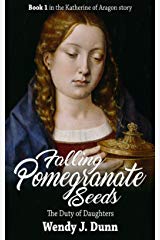
WD: I am inspired by paintings, my love of the Tudor period, little known people from the pages of history. For example, the inspiration behind Falling Pomegranate Seeds: The Duty of Daughters came from a footnote in a book of academic essays about Isabel of Castile. This footnote introduced me to Dońa Beatriz Galindo (1465/75?–1534) I– a woman who lectured at the University of Salamanca, and taught not only Katherine of Aragon, but also Latin to Queen Isabel, the mother of Katherine.

Of course, I tap into my personal experiences for the construction of my stories. The prisms of gender, class and society shape my writerly identity. Completing my PhD opened my eyes to how I use historical fiction as a way to tell my own story, a woman who has experienced oppression. But sifting my own story through the context and distance of history also separates me from my story and changes it into something new, a different substance entirely; the story of my historical people.

The end result must always be recognizable as a work of historical fiction.

LC: Who is one of your favorite characters from your story(ies), one that you enjoyed creating and writing about, and why?

WD: OMG – this is like asking a mother to name their favourite child. I enjoyed writing all my characters in my published works – if I had not enjoyed writing them, I would have stopped writing. My passion for my historical people is what drives me as a writer. I must say I have a particular soft spot for Sir Thomas Wyatt, the elder, the narrator of Dear Heart, How Like You This?. Writing that first novel affirmed me as a writer by showing me I could indeed complete a novel.

LC: Do you incorporate (or inadvertently find) any of your own personality traits into your characters?

WD: Yes – I do recognize I have done that, especially afterwards. Beatriz Galindo, the narrator of Falling Pomegranate Seeds: The Duty of Daughters, is a passionate educator, like I am. Tom Wyatt, like me, wants to make sense of life, and the nature of love.  But I constructed Kate Carey, the narrator of The Light in the Labyrinth, with the help of the diaries I kept from my teenage years.

LC: Do you find your stories are more plot driven or character driven? Please explain.

WD: Character driven. The best and most magical writing times for me is when I become but a scribe to my characters.

LC: Did you read much as a child?

WD: I was a sickly child, which meant spending a lot of time in bed. I escaped that imprisonment by reading. I have always loved books, and cannot remember a time when I did LC: How important do you think reading is for writers?

WD: I believe the old adage “we are what we eat” can also be revised to “we are what we read.” To be a good writer we need to read because reading is the huge generator of what feeds our writing. Reading is the other side of writing. For me, reading books will always return me to writing.

LC: Who are some of your favorite authors and/or books? What draws you to them?

WD: So many good novels, and writers! But I particularly like novels with a good heart – novels which leave me with hope, stay with me, make the reading experience worthwhile.

Writers who inspired me to start my journey as a writer of historical fiction include Rosemary Sutcliff, Winston Graham, Robert Graves, Margaret Irwin (loved her series on Elizabeth I), Rosemary Hawley Jarman and, of course, Dorothy Dunnet. I also love the deeply spiritual novels of Elizabeth Goudge.

LC: Anything new in the works?

WD: I am working on the sequel of Falling Pomegranate Seeds: The Duty of Daughter, which will conclude my story about Katherine of Aragon.

LC: Good luck with that and all your writing. It was a pleasure having you today, Wendy!

Author Bio:

Obsessed by Anne Boleyn and Tudor History since childhood, Wendy J. Dunn is the author of two Anne Boleyn novels: Dear Heart, How Like You This?, the winner of the 2003 Glyph Fiction Award and 2004 runner up in the Eric Hoffer Award for Commercial Fiction, and The Light in the Labyrinth, her first young adult novel. Falling Pomegranate Seeds: The Duty of Daughters, her third historical novel, was published with Madeglobal in 2016. Born in Melbourne, Australia, Wendy is married and the mother of three sons and one daughter – named after a certain Tudor queen, surprisingly, not Anne. She’s also the grandmother to an extraordinary two-year-old boy. She gained her Doctorate of Philosophy (Writing) from Swinburne University in 2014 and is a Writing tutor in their Writing Program, as well as the proud Managing Editor of Backstory journal and Other Terrain.

Connect with Wendy:

Website: www.wendyjdunn.com/

Facebook: www.facebook.com/authorwendyjdunn

Goodreads: www.goodreads.com/author/show/197156.Wendy_J_Dunn

Twitter: @wendyjdunn

Posted in Uncategorized | 4 Comments

10 Questions with Author Giselle Marks

Today author Giselle Marks answers 10 Questions about her writing. Giselle is a prolific author of historical romance, fantasy/science fiction, and poetry.

Linda Covella: Welcome, Giselle!

When and why did you decide to become a writer?

Giselle Marks: I have always written at least since I was about eight. I just wrote stuff for class but I got used to being top in the class. I was set on having a career in art – I was good at that too. I took a Foundation Course in Art. I had a place to do Fine Art at degree level which in the end I turned down. Then I went out to work. All my jobs involved writing. I wrote for a number of companies – minutes, computer programming, letters, reports, advertising material and technical manuals. I started writing stories and articles after I married and had children. I sold a number of articles to magazines and newspapers, it was money that was mine alone. I joined a local writing group and read some stories. Then a friend loaned me a couple of feminist sci-fi books by Suzette Haden Elgin, Native Tongue and The Judas Rose. I enjoyed the books but argued that if women were in charge not all of them would be sweet and kind. I said if women were in power and as strong physically as men that they would have all the same faults and strengths as men. I was dared to write a book that reflected that view. So I started the slightly spoof series of The Zeninan Saga which grew. I did not really consider publication until after my marriage failed.

I wrote the series believing that I knew how to write. Short stories are very different to novels. I wrote from a multiple POV with telepaths and a large cast of characters. I had a lot of back story and other problems.

I wrote a pair of Regency romances which I offered for publication.  I was accepted by a small American romance publisher. I put out the two books and within 3 months of the first going out the publisher went bust, owing me a little money and other writers very much more. After burning my fingers on my first outing I considered other publishers – three accepted my books but I did not like their ideas about how to package me and I was wary of making the same mistake twice. Two stories were published in anthologies while I dithered. I do not think I really realized that I was a writer until I finally published independently.

LC: That’s quite a history. You must be proud of all you’ve now accomplished.

What is your writing process: where do you write, how often do you write, are you a full-time or part-time writer, do you outline or do you plot as you go, etc.?

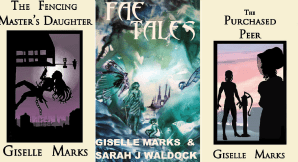
GM: These are difficult questions. I write mostly at home on a computer or lap top, but currently I have a pile of handwritten sheets to type up. So if no computer is available I still write. I do not write every day because I have been working on getting some of the books I have already written ready for publication.  So edits, rewrites, blurbs and I am updating my bio for this piece. I also edit for other independent writers which means I get to read their books first. Time is taken up with promotion which has to be done. I am gradually building up a fan base but that is complicated by my writing cross genre. I write historical romances, four of which I have published. The Fencing Master’s Daughter, The Marquis’s Mistake, The Purchased Peer and the most recent A Compromised Rake.  A Purchased Peer is Georgian was set between 1790-1800 but the others are Regency. There is also a charity novella in an anthology called the “Chocolate House – All for Love – Anthology Masqueraders,” which Francine Howarth put together. Money goes to GOSH, Great Ormond Street Hospital for Children, London, which treated me as a child.

I have a long Regency novel completed which needs editing and preparing for publication. I also however write fantasy and soft sci-fi. So I am a full time writer/editor. For my historical romances I usually have a first scene and an ending and some of the in between but my characters largely decide the action between.  I have written outlines before writing and written straight off without any plan more than a character arrives and says write. Some of my short stories have ambitions and turn into full scale novels.

LC: Where do you find your inspiration for your stories? Do you draw from your own experiences?

GM: Everything we write takes something from who we are. However I have only ever written one character based loosely on someone I have met and only from appearance because I don’t know him well enough to know what makes him tick. I do think education and wanting to learn a skill or knowledge is important and I suspect that is reflected in my writing. I write whatever comes to me, I have no idea where from, but I am not short of ideas only time to write them all. For The Purchased Peer, I had just finished writing another book and was planning a few days off writing.  However Xavier Falconer (TPP’s hero) turned up and demanded I write his story, as a very gorgeous specimen of manhood with great determination – he badgered me until I wrote the first scenes.

LC: One of those pesky characters, right?

Who is one of your favorite characters from your story(ies), one that you enjoyed creating and writing about, and why?

GM: I do not create my characters, they arrive. I thought I was creating them to start with but they impose their own ideas about who they are. I do not really have favorites, they all different and like my children all much loved.  Out of my historical romance heroines, then it will be Mademoiselle Madelaine Deschamps, who rescues the hero from footpads intent on killing him with a fine display of swords-womanship in The Fencing Master’s Daughter. She has many qualities and a great deal of determination. If you want a gorgeous hero then I can’t chose between Xavier Falconer, traditionally dark haired and Sebastian Farndon, the Marquis in the Marquis’s Mistake who is blond. Sebastian might just edge it because he is not just a pretty face. However Charles from the Zeninan Saga is probably the most complex and interesting character I have wrote.

LC: Do you incorporate (or inadvertently find) any of your own personality traits into your characters?

GM: I am sure I must I am very honest and I think my heroines and heroes are naturally honest.

They incorporate my love of the English language which is a joy forever and my love of history and knowledge.

LC: Do you find your stories are more plot driven or character driven? Please explain.

GM: They are character driven, but the characters come and drive me to write. I can plot and do sometimes in advance, there is no guarantee that my characters will agree to follow the plot though.  They will not do anything I plot out if they feel it does not fit with their ethos. We have nasty arguments about it.

LC: Did you read much as a child?

GM: Everything and anything I could get my hands on. My father did threaten to tear out two pages from Lady’s Chatterley’s Lover but I already knew all the words he was offended by. Still do when I am not writing or editing for other writers.

LC: How important do you think reading is for writers?

GM: How can you write without reading? It is paramount that writers read. I still read many genres, historical romance, history and historical fiction, fantasy, sci-fi, horror, who-dunnits and forensic murder mystery. I have probably missed some genres. Currently reading a history of the Chines players in 1920s onwards called the Shanghai Tapestry.

LC: Who are some of your favorite authors and/or books? What draws you to them?

GM: Georgette Heyer, Sarah Waldock and Stacy Reid for historical romances. Georgette is the example we all adore and learn by. Her scene setting and language are wonderful, brighten any dreary day. Sarah writes some gorgeous romances and historical mysteries, set in Regency and Tudor times. She is a brilliant historian and tireless in her research.  Stacy Reid is one of the best writers of sexy scenes which the other two do not write. I would add Bernard Cornwell, especially for both his Sharpe and The Last Kingdom series, but they are very well researched historical novels rather than romances.

Patrick Rothfuss – The Name of the Wind – fantasy writer is probably the best writer alive. It takes a long time for him to write his tomes but they are well worth waiting for. There are a lot of other writers from assorted genres that I love to read, but I could fill several pages with the lists.

LC: Anything new in the works?

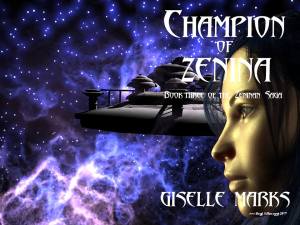
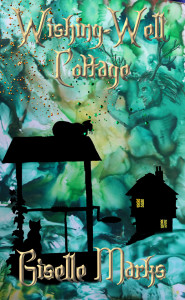
GM: I am working on bringing out imminently Wishing Well Cottage which is a magical modern romance between a white witch and a slightly tarnished wizard. It is sexy and funny. I have a draft of a poetry book which I am reducing in length and Champion of Zenina, book 3 in the Zeninan Saga is being prepared for publication.

LC: A lot for your readers to look forward to! Giselle, thanks so much for joining us today. Best of luck with all your writing!

Author Bio:

Giselle Marks is an English writer, poet and novelist, born in London, who has been writing most of her life. Currently Giselle lives in the beautiful Isle of Man. Her family is grown, contented and expanding. She spends most of her time writing.

Her historical romances ‘The Fencing Master’s Daughter,’ ‘The Purchased Peer’ and ‘The Marquis’ Mistake’ have been receiving good reviews. ‘A Compromised Rake’ is recently released; it is a light Regency romance. A Regency ‘Gypsy Countess’ series is planned with the first draft of book one already written.

Together with her fellow writer and cover artist Sarah J. Waldock, Giselle wrote and illustrated ‘Fae Tales’ an anthology of fae and mythic tales updated to modern times and intended for teenagers and adults. All three books are available from Amazon. The ‘Princess of Zenina,’ and ‘Heroine of Zenina’ are the first two books in the sci-fi / fantasy Zeninan Saga will soon be followed by ‘Champion of Zenina’. Other long- term projects include a possible book of her poetry. Her poems have been published in Female First and she has entered two of their contests, scoring a win and a commendation. Within the Isle of Man her poetry has been included in the local Lit Fest poetry trail 2016 and in a number of ’Manx Reflections’ a local poetry anthology. Giselle has had short stories and a novella published in anthologies.

Books currently available:

Fae Tales

The Fencing Master’s Daughter

The Marquis’ Mistake

The Purchased Peer

A Compromised Rake

Princess of Zenina

Heroine of Zenina

Connect with Giselle:

Website: http://ginafiserova.wix.com/gisellemarks

Twitter: @GiselleMarks1

Email: gisellemarksauthor@gmail.com

Facebook:

Giselle’s author page

Swordsmistress

The Marquis’ Mistake

Mythic Miscellany

Goodreads author page

Posted in Uncategorized | 3 Comments

Celebrating Family: Italian Style!

Holidays are a time to gather with family and friends, which usually includes a favorite feast. This is a memory I have of a time when I was young and our family was visiting the “Italian relatives”!

My brother, Mike, stuffed the second-to-last black olive into his mouth. They were the best thing on the appetizer tray, and 99% of them sat in the bottom of Mike’s stomach.

Before my other brother, A.J., my sister, Pam, or I could snatch the last olive, Uncle Tony announced, “We’re gonna have a little snack-a.”

I was eight years old, and my family was visiting my dad’s Italian aunt and uncle. Later that day, we’d gather at his cousin Lucy’s house for a big homemade Italian meal.

But first, the “little snack-a.” Uncle Tony strode into the dining room, his smiling face as pink and round as the ham he carried on a flowered china platter.

While Uncle Tony sliced the meat, Aunt Nic bustled between the kitchen and dining room, bringing rolls, mayonnaise, mustard, tomatoes, lettuce, onions, and pepperoncinis, those slightly spicy, pickled peppers.

Using a thick slice of ham as the foundation, the adults built towering sandwiches. But for us kids, simple was best. We spread plenty of mayonnaise on both pieces of the soft sweet rolls, added a couple slices of ham, a pepperoncini or two, and bit into one of the best sandwiches we could imagine.

To top off our not-so-little snack, Aunt Nic passed around a tray of pizelles: thin, delicate cookies flavored with anise, a spice that tastes a bit like licorice. The pizelles were made in a special press like a waffle iron and looked like hand-size snowflakes. I took small bites, creating my own pattern as I nibbled my way to the center of the cookie.

When we were all sufficiently full, Uncle Tony said it was time to go to Lucy’s house for dinner. Each of us took a moment to hold our stomachs and silently cry, “Already!?” Then my parents, not wanting to insult, and my siblings and I, on our best polite behavior, piled into the car and mentally prepared ourselves for another meal.

Aunts, uncles, and cousins filled Lucy’s house. We took our places around the long rectangular table. For the first course, Lucy carried a steaming terrine of soup to the table. Taking my bowl from Lucy, I breathed in the savory smell of the chicken broth. With my spoon, I bobbed the marble-size meatballs under swirls of egg and wilted endive that floated in the soup, and then ate every drop. Most people might know this as Italian Wedding Soup, but to us it was—and still is—Great-Grandma Soup.

When I thought I could not possibly eat another bite, Lucy proudly carried in a large cutting board that held the main course: polenta smothered in tomato sauce, Italian sausage, and Parmesan cheese.

A cloud of spicy smells drifted across the table, and though my stomach was full, my mouth watered.

Uncle Tony cut a wedge of polenta for each person. “Eat-a! Eat-a!” he said. “There’s plenty for everyone!”

Later, we groaned, but still we ate dessert: more pizelles along with slices of spumoni—layers of pistachio, strawberry, and chocolate ice cream filled with pieces of maraschino cherries and other candied fruit.

Meatball, egg, and wilted endive soup? Pepperoncinis? Green and pink ice cream with bits of dried fruit? Not your typical kid-pleasing food, but I loved it all.

And now, whenever I stand at the stove stirring some thickening polenta or cook up a pot of Great-Grandma Soup, memories of gatherings with my Italian relatives come to mind. Their loud cheerful discussions, speaking with voices and hands. The large portions of mouth-watering Italian home cooking. And Uncle Tony saying, “Eat-a! Eat-a!”

That dinner showed me what food is all about and what it’s meant in my life: a time for family and friends to gather for laughs, conversation, and delicious food, especially Italian style!

Posted in Uncategorized | 2 Comments