10 Questions with Author Christine Z. Mason

I’m happy to have award-winning author Christine Z. Mason here today to answer 10 Questions about her writing. Christine writes fiction for both children and adults.
Linda Covella: Welcome, Christine!

When and why did you decide to become a writer?

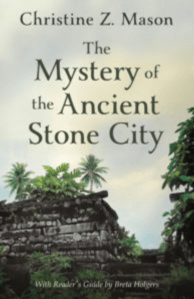
Christine Z. Mason: In junior high, I wrote a couple of stories I can still remember, and I don’t think they were too bad. I even had a couple of stories and poems published in my high school journal and in college. I was an English major with a Studio Art minor in college, and I thought I’d teach, maybe both subjects. Then I went into the Peace Corps, taught art and photography at a community college on a small island in Micronesia. Afterwards I decided to become a lawyer. Even when I was practicing criminal law, I thought I could use the material to write fiction, but I didn’t have the time to devote to it then. Just before my second child was born, I quit my job. When both kids were in school, I started taking more creative writing seminars (I’d taken some in college and English grad school). The more I wrote, the more I wanted to take it seriously. So it was an evolving process, and it wasn’t until I had a couple of short stories published in journals and then my middle-grade novel, The Mystery of the Ancient Stone City, came into print that I thought of myself as a writer.
LC: What is your writing process: where do you write, how often do you write, are you a full-time or part-time writer, do you outline or do you plot as you go, etc.?

CZM: I used to write freehand in a stream-of-consciousness style, and then transpose it to the computer and start editing, but then I went to doing the first draft on the computer. I was pretty good at doing a couple of hours before the kids got out of school. I also went to writing seminars and groups in the evening, which worked out well, and I learned a lot from other writers and from critiquing their work. With The Mystery of the Ancient Stone City, I outlined, but with the adult novels and short stories, it was a more organic process, which I enjoyed more.

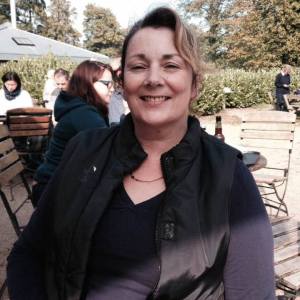
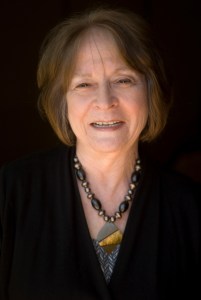
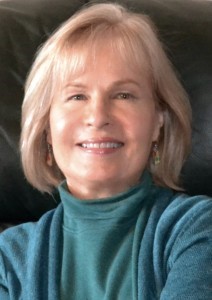
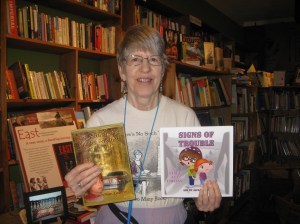
Christine at a recent book fair at King Library, San Jose, California.

LC: Where do you find your inspiration for your stories? Do you draw from your own experiences?

CZM: I often draw from my own experiences and the experiences of friends. I like character-driven stories, and I learn from the novels and short stories I read, especially in the New Yorker, that focus on people and their relationships.

LC: Who is one of your favorite characters from your story(ies), one that you enjoyed creating and writing about, and why?

CZM: I liked Kaia Matheson from Boundaries: A Love Story. It was interesting going back to what it was like at sixteen and then the subsequent ten years or so in a young woman’s life. It took me back to that time in my life.

LC: Do you incorporate (or inadvertently find) any of your own personality traits into your characters?

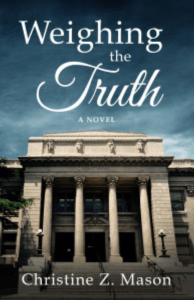
CZM: I probably tend to do that too much with some of my female characters, but in Weighing the Truth, I tried to make the protagonist taller and more outgoing and hopefully more interesting.
LC: Well, I find you an interesting person with all you’ve done so far in your life. 🙂

Do you find your stories are more plot driven or character driven? Please explain.

CZM: Character driven, definitely. But I do like a riveting plot, both in my reading and writing, as long as the story delves into personality in depth.

LC: Did you read much as a child?

CZM: Yes, I routinely took out ten books from the library every week as a ten or twelve year old and never stopped reading fiction.

LC: How important do you think reading is for writers?

CZM: Extremely important, just as studying the work of other artists is crucial for developing artists. You learn to read critically as you become a better writer yourself.

LC: Who are some of your favorite authors and/or books? What draws you to them?

CZM: Michael Ondaatje (I just finished Warlight); Tana French (especially her psychological fiction like Broken Harbor); John Banville, The Sea; Ian McEwan, Machines Like Me. They all write fascinating stories in beautiful prose.

LC: Anything new in the works?

CZM: Possibly a sequel to Boundaries: A Love Story and Weighing the Truth, with the two protagonists getting together to form a law firm to protect abandoned and neglected children.

LC: Sounds like a wonderful premise, and interesting to bring characters from two different novels into one.

Thanks so much for joining us today, Christine. I really enjoyed learning more about you and your writing!

Author Bio:

Christine Z. Mason was born in Chicago and grew up in Los Angeles, earning her B.A. in English Literature with an Art Minor at UCLA. She studied Literature and Creative Writing at UCLA English Graduate School, then served in the Peace Corps, teaching Art and Photography at the Community College of Micronesia on Pohnpei, Eastern Caroline Islands. She earned her J.D. at University of California, King Hall, and subsequently practiced constitutional and criminal law. She has also taught law classes at several universities.

Christine has published two novels: Boundaries: A Love Story and Weighing the Truth; and a middle-grade adventure story, The Mystery of the Ancient Stone City. Her short fiction has appeared various literary print journals, including in North Atlantic ReviewWhetstoneand A Summer’s Reading. She has won awards for her fiction at the California Writers’ Club Jack London Writers’ Conference, CWC Asilomar Conference, and the Pacific Northwest Writers’ Association Conference.

Christine is a member of the Pacific Northwest Writers’ Association, California Writers’ Club, and California State Bar Association. She has written articles and book reviews and is active in the literary community. She participates in various writers’ conferences, including Squaw Valley Writers’ Conference, San Diego State University Writers’ Conference, PNWA Conference, and Foothill College Writers’ Conference, and has been a speaker at the Sacramento Book Collectors’ Club and PNWA Conference. In 2016 she co-presented a workshop at the PNWA Conference with author G. Elizabeth Kretchmer on creating villains and bad guys in fiction.

Christine lives with her husband on the central coast of California; they have a daughter and a son. Christine has traveled extensively in Europe, Asia, South America, Mexico, the United States and Canada. She enjoys reading, hiking, photography, and painting.

Contact Christine:

HillrowEditions@gmail.com
www.ChristineZMason.com

Goodreads.


Posted in Uncategorized | 8 Comments

10 Questions with Author Janet Ann Collins

Today, author Janet Ann Collins joins us to answer 10 questions about her writing. Janet writes fiction for children, as well as articles in newspapers and magazines.

LC: When and why did you decide to become a writer?

JAC: I wanted to be a writer ever since I was in second grade and began reading middle grade novels. I wanted to give back some of the joy those gave me.

LC: What is your writing process: where do you write, how often do you write, are you a full-time or part-time writer, do you outline or do you plot as you go, etc.?

JAC: I’m a part time writer. I usually start with a general idea. I‘m neither a plotter nor a pantser so I call myself a framer. For articles, stories, and books I start with a general framework of where I want to go and fill in the details as I go along. Some days I write for hours and other days not at all, but the ideas are always being processed in my mind.

LC: Where do you find your inspiration for your stories? Do you draw from your own experiences?

JAC: When I was a kid my mother always told me I had too much imagination. Everything around me gives me ideas. Then I think, “what if…” and go on from there.

LC: Who is one of your favorite characters from your story(ies), one that you enjoyed creating and writing about, and why?

JAC: I love Kim from Signs of Trouble because she reminds me of kids I used to work with in Special Education classes.

LC: Do you incorporate (or inadvertently find) any of your own personality traits into your characters?

JAC: Not that I’ve noticed, but it probably does happen.

LC: Do you find your stories are more plot driven or character driven? Please explain.

JAC: They’re more plot driven, but the characters’ personalities do influence the plot through their choices.

LC: Did you read much as a child?

JAC: Oh, yes. I read about a dozen Middle Grade books every week. I had severe, chronic asthma and couldn’t climb the steep hill to my home after school. I’d hang out at the local library until my mother picked me up on her way home from work. The librarian taught me to shelve books and let me always be the first to read any new middle grade fiction that came in.

LC: How important do you think reading is for writers?

JAC: Extremely important!!! A writer who doesn’t read would be like a cook who doesn’t eat.

LC: Great analogy!

Who are some of your favorite authors and/or books? What draws you to them?

JAC: I couldn’t possibly pick favorites. I read about half a dozen Middle Grade books a week and maybe two or three Young Adult books and one book for grown-ups a month. Can you tell I’m still a kid on the inside?

LC: I think you were, and still are, what is called a “voracious reader.” 🙂

Anything new in the works?

JAC: I’m rewriting a Middle Grade novel an editor at a writers conference expressed an interest in, and I’m playing around with an idea for a YA Sci-fi book. I’ve never written anything like that before.

LC: Best of luck with those projects, Janet. And thank you so much for sharing your writing life with us.

Author Bio:

Janet Ann Collins Is the author of several fiction books for kids and has written lots of articles in newspapers and magazines. She lives in the beautiful foothills of the Sierra Nevada mountains in California. For more information about her see her webpage.

Posted in Uncategorized | 5 Comments

10 Questions with Author Paula Lofting

Today let’s give a big welcome to author Paula Lofting. Paula lives in Sussex, England, and writes historical fiction when not working at her day job as a psychiatric nurse.

Linda Covella: When and why did you decide to become a writer?

Paula Lofting: I’ve wanted to write for as long as I can remember. I used to write little stories as a child, and then as I got into my teens I started work on an ‘epic’ novel and hand wrote about 500 pages of foolscap paper. But it never got finished and other things seemed to become more important. I also believed, wrongly, that I would never be able to use a typewriter and thought that was the only way to get published so I gave up. Later in my life, I decided to learn how to use a computer so I could go to college to do a Health Studies course where my computer skills improved. It was then that I decided I could write this novel I had always wanted to write whilst I went to university to do my nurse training.

LC: Good for you! Perseverance is one of the keys to finishing and publishing a novel.

What is your writing process: where do you write, how often do you write, are you a full-time or part-time writer, do you outline or do you plot as you go, etc.?

PL: I’m currently working on the third book in a series, and because I work 30 hours a week as a nurse, time is precious, and writing has to be done after work and at weekends. Problem is I often get sidetracked by other things such as family, friends, and other commitments. The first book in the series was written very much ad hoc, in fact the story sort of wrote itself. Of course, being historical fiction, I had to use a factual timeline of events etc. The second had more of a framework but one of the minor characters asserted himself into the plot, running off with his own thread! This third one has an historical framework too, and an outline, however one of the characters is insisting on making this his own book! I’m fighting with him at the moment to give space to the others.

LC: Oh, those pushy characters. 🙂

Where do you find your inspiration for your stories? Do you draw from your own experiences?

PL: I have only written two books so far, the first and second in the series and am working on the third. I was inspired initially to write a novel set in the years leading up to the Norman Invasion of England when I attended a reenactment of the 1066 Battle of Hastings. The inspiration for the setting in which my main character lives came from a book called 1066 The Year of the Conquest.

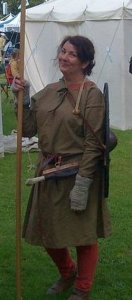
Paula in costume for a reenactment of the 1066 Battle of Hastings.

That aside, I have a whole list of titles I want to write and nearly all of them are inspired by history.

LC: Who is one of your favorite characters from your story(ies), one that you enjoyed creating and writing about, and why?

PL: I have to say Tovi, he is the son of my MC [Main Character] and he also seems to be very much a favourite with my readers too. He was ten when I first started writing about him and is now fifteen. Tovi has developed very much in his own way. He’s been molded by his experiences, most of them bad, which has changed him from being a bright soul, into an introverted lad who is quite confused by the world and the people in it, whom he has trouble understanding. There’s something quite lovable about him, he gets a terrible hand to play and none of it is his fault, but usually the fault of those who should not have, but do, let him down.

LC: He sounds like a complex, very real character.

Do you incorporate (or inadvertently find) any of your own personality traits into your characters?

PL: I don’t believe I deliberately set out to inject myself into any of my characters but I do often invariably recognize myself in some of them. I find there’s a lot of me in one particular character who many of my readers just don’t gel with, she has the sort of emotional responses that I know I would have in the same situations. Some of these traits stem from old behaviours of mine that I don’t do any more, but I think, gosh, yes, that’s what I would have done.

LC: Do you find your stories are more plot driven or character driven? Please explain.

PL: Definitely by the characters. Their decisions, attitudes, behaviours, and character traits are definitely what moves the plot forward.

LC: Did you read much as a child?

PL: Yes, loads. I was known to be a book worm.

LC: How important do you think reading is for writers?

PL: It’s definitely a must. Show me a writer who doesn’t read and I’d be very surprised. You have to read to keep up with popular writing styles, even if you don’t change the way you write, it’s good to know how the writing world evolves. In the early days it’s important to look at different styles and learn what you think is good or not so good and it helps you find your own voice.

LC: Who are some of your favorite authors and/or books? What draws you to them?

PL: I love the Saxon Warrior chronicles by Bernard Cornwell. He’s not the greatest writer in the world technically, but he just knows how to create brilliant characters and a great plotline mixed with historical events.

Of old I used to love Rosemary Sutcliff, I’m sure I still do once I get back to reading them again in my old age, and Sharon Penman. More up-to-date I am enjoying books by Anna Belfrage, and the Game of Throne books are amazing.

LC: Anything new in the works?

PL: Working on the third book in my 11th century set series, Sons of the Wolf.

LC: Bonus question! Do you have anything you’d like to add?

PL: For anyone new starting out, remember that editing is so important, but above all else, the story is king.

LC: Great advice for all writers! Paula, thanks so much for sharing your writing life with us today!

Author Bio:

Paula Lofting is the author of the historical series Sons of the Wolf author.to/SonsoftheWolf set in the 11th century in the years leading up to the Norman Invasion of England. She is currently working on book three in the series which will be released in 2020.

By day, she is a psychiatric nurse and writes in her spare time. She lives in Sussex, close to where the events of 1066 happened, and is also a re-enactor with the Anglo-Saxon/Viking/Norman living history society, Regia Anglorum www.regia.org

Connect with Paula:

Website/Blog Read the history behind the story on her blog.

Twitter @Paulalofting

Facebook

Posted in Uncategorized | 4 Comments

10 Questions with Author Susan Lowe

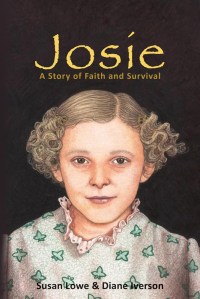
Today, author Susan Lowe joins us to answer 10 Questions about her writing. Susan’s book, Josie: A Story of Faith and Survival, is about her mother’s experience living through not only Hitler’s occupation of Yugoslavia, but also Tito’s killing of ethnic Germans.

Linda Covella: Welcome, Susan!

When and why did you decide to become a writer?

Susan Lowe: Linda, I can’t remember a time that I didn’t want to be a writer. As a small child I composed newspapers for the make-believe town that my Barbie lived in. I was frequently so involved in my news stories that there wasn’t time to play with my dolls. As an adult I toyed with the idea of writing, but was so busy going to college, raising a family, and working full-time, that I put the thought on the back burner. Around 1999, I decided to enroll in a writing course at the Institute of Children’s Literature for Writers. Although I enjoyed the course, it wasn’t until 2005 that I became serious about writing a book.

LC: What is your writing process: where do you write, how often do you write, are you a full-time or part-time writer, do you outline or do you plot as you go, etc.?

SL: I have an office in my home, but in addition to being an author, I am a licensed marriage and family therapist, and teach college level psychology courses. Writing requires me to squeeze it in wherever I can. When weather permits, I like to sit on the patio with my dogs and write. Unfortunately, my writing tends to be sporadic, as I struggle with keeping a schedule. Although I believe that outlines can be helpful in the writing process, I rarely use them, preferring to let the characters lead when working on a fiction project, and following the story line in my non-fiction writing endeavors.

LC: Your book, Josie: A Story of Faith and Survival, is about your mother’s experience in the Yugoslavian concentration camps, post WWII. Why did you decide to write this book?

SL: After my mother’s death, I was thinking about the resilience she showed in her ability to survive some of life’s most challenging circumstances. Josie was born in 1940 Yugoslavia, today that part of the world is known as Serbia. The only life she knew was one filled with the unrest of war. Hitler occupied the country from 1941 to 1944 and shortly after, Marshall Tito became the new dictator. Tito planned the annihilation of all ethnic Germans who had been loyal Yugoslavian citizens for generations. Realizing that my mother was a survivor of Tito’s ethnic cleansing, and knowing it was her faith that helped her survive, I felt prompted to tell her story. Although the book is told through the eyes of one little girl, it is really the story of millions of ethnic Germans in countries like Yugoslavia. More than seventy years after the end of WWII they are still waiting for the world to hear their plight. I felt like it was time to honor their story, so that they might feel heard.

LC: What sort of research did you have to do for the book?

SL: A lot of research went into making sure that, Josie: A Story of Faith and Survival, was historically accurate and not just a collection of family stories. Diane Iverson, Josie’s niece, collaborated with me on researching Tito’s reign over Yugoslavia from 1944-1950. During the process of writing, we had opportunities to meet with survivors and their families who shared horrendous experiences that either they or their loved ones endured. Josie’s brother, Andreas, was still alive at the time of the first draft and provided vivid details from his perspective. The pain most often expressed during interviews was not the repulsive things that they lived through, but the fact that it is rarely acknowledged. Survivors often referred to it as the forgotten history. At one point I had an email exchange with a Serbian man living in the same village where Josie and her family had lived. I was interested in obtaining a vision of what the town looked like so that my descriptions would be consistent with the area. We also vetted the manuscript through Carol Lilly, PhD, Brigitte Neary, PhD, and Alfred de Zayas, JD, PhD, as they are Eastern European historians.

LC: You certainly did your research. It must have been interesting but also very emotional to speak with other survivors.

Is your book written for an adult or children’s audience? Please explain why you chose to target that audience.

SL: It’s actually written for both. Josie tells the story through a child’s eyes; with the text written in language engaging at middle grade through adult audiences. The forward and historical background provide additional history for the more mature reader.

LC: Why did you choose self-publishing over traditional?

SL: Initially, I had planned to publish through traditional means. Unfortunately, there were several very encouraging rejection letters that implied that they didn’t publish my genre. This was confusing as extensive research was done before submitting manuscripts. Eventually someone told me off the record that the world was not ready for a German victim. One publisher did offer a contract, but he didn’t want to pay royalties, only a small one-time payout. Those experiences led to my decision to self-publish through Create Space, as the survivors themselves were aging and I wanted to honor them during their lifetime.

LC: Did you read much as a child?

SL: My mother was a single parent and didn’t have money for many extracurricular activities, so if I wanted to be transported to another place it had to be through a book. I read everything that I could get my hands on. During the school year I checked out seven to eight books a week from the school library. During the summer months, a bookmobile visited our neighborhood and my activities revolved around being available to pick up new books. I also begged my mom to make a trip to the County Library on occasional Saturday’s. Fortunately for me, she also loved to read.

LC: How important do you think reading is for writers?

SL: I believe knowing what we like to read, makes us better writers. Other authors styles can provide new ideas for storytelling.

LC: Who are some of your favorite authors and/or books? What draws you to them?

SL: It’s difficult to choose favorite authors because I love so many different genres. But to name a few, I love, To Kill a Mockingbird, by Harper Lee, Sweet Thursday, by John Steinbeck, and all of CJ Box’s Joe Picket series. I think that I am typically drawn to any book I read for either exploration of a topic or escape.

LC: Anything new in the works?

SL: Yes, thanks for asking. I have an 8 to 10-year-old picture book, Josie Dreams of Freedom, under contract with Guardian Angel Publishing, it should be out in the next couple of years. My present projects include three different genres: A fictional Middle Grade adventure story of a boy who discovers his step-father’s family has unusual powers; a fictional Young Adult story about a young woman’s endeavor to put her life back together after an attempted rape ends her relationship with her fiancé, who is the perpetrator’s best friend; and a nonfiction book of  a seventeen-year old who draws on her faith to survive a car accident that leaves her paraplegic, and threatens to turn her world upside down.

LC: Bonus question! Do you have anything you’d like to add?

SL: I have had the opportunity to share Josie’s incredible survival story through presentations at County and School Library’s, in classrooms for high school students, Fresno State’s Older Adult Program, Assisted Living Programs, women’s ministries, and book clubs. If you’d like to hear Josie’s story, I would love to share it at your event. (Please see contact info below.)

Author Susan Lowe speaking about her book: Jose, A Story of Faith and Survival

LC: Susan, thanks so much for sharing your work with us. Best of luck with your picture book and other writing!

Author Bio:

Susan Lowe was born in Fresno, California, a first generation American on her mother’s side. Lowe is a licensed marriage family therapist, with a Master of Science degree in Counseling, and a heart for victims of trauma. Lowe has taught psychology related courses at all college levels. She fell in love with books early on, and soon discovered the magic of reading multiple genres. Each book opened up new worlds to explore. Realizing her mother lived through an often-untold portion of history, Lowe wanted to honor both the living and dead of those horrific events by sharing their story. JOSIE: A Story of Faith and Survival is her first book. Lowe presently lives in Central California with her husband.

Contact Susan:

Website: https://www.susanloweauthor.com/

Email: susanloweauthor@gmail.com

Facebook: https://www.facebook.com/SusanLoweAuthor/

Twitter: @susanlowe50

Instagram: susanlowe502019

Posted in Uncategorized | Leave a comment

My Interview on NFReads

Please check out my interview at NFReads.com.

Learn the stories behind my books, what role I believe emotions play in creativity, how I balance my personal and readers’ satisfaction in my writing, and more!

Posted in Uncategorized | Leave a comment

10 Questions with Author Diane Hull

Today I’m happy to welcome author Diane Hull to answer 10 Questions about her writing. Diane, who has a degree in Early Childhood Studies from the Manchester Metropolitan University (United Kingdom), writes books for children.

Linda Covella: Welcome, Diane! When and why did you decide to become a writer?

Diane Hull: I did not make a conscious decision to become a writer. I enjoyed telling stories to the children at Shade Prinary School where I was an Early Years teacher and to my three grandchildren, so I decided to write them down. Author Pippa Goodhart encouraged me to contact a publisher which I did. I was delighted when MacLaren-Cochrane Publishers contacted me with the offer of a publishing contract.

LC: What is your writing process: where do you write, how often do you write, are you a full-time or part-time writer, do you outline or do you plot as you go, etc.?

DH: I write my stories as they come into my head, wherever I happen to be. I write part-time, returning to each story as necessary, building the original outline until I am satisfied.

LC: Where do you find your inspiration for your stories? Do you draw from your own experiences?

DH: I find my inspiration from my grandchildren, writing stories that I hope will entertain them. I have 3 grandsons: Joey aged 7, Harry 5 and George 18 months. I draw on my own experiences and those of the children that I teach.

Diane with some happy fans.

LC: Who is one of your favorite characters from your story(ies), one that you enjoyed creating and writing about, and why?

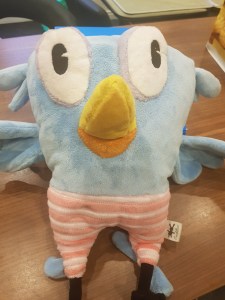
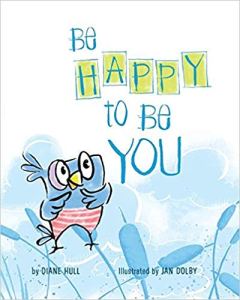
DH: Without doubt my favourite character from my stories is Baby bird. He is beginning to learn the lessons of life. In “Be Happy to Be You”, he envies the talents of his friends and his mother tries to teach him to be proud of his own achievements. It is only when he becomes ill that he sees the wisdom of his mother’s words. Many children have problems with low self-esteem and need to learn to be proud their own successes.

Baby bird from “Happy to Be You”

LC: Baby bird sounds like a character children will love, and learn from as well.

Do you incorporate (or inadvertently find) any of your own personality traits into your characters?

DH: It is not possible to write stories without inadvertently incorporating one’s own personality traits into the characters but as an author, it is possible to build on these traits to provide guidance to the readers.

LC: Do you find your stories are more plot driven or character driven? Please explain.

DH: “Be Happy to Be You”, and “Proud to Be Blue” are certainly character driven, based around Baby bird but other stories such as “On Our Way to School,” which follows the journey to school each morning, are plot driven.

LC: Did you read much as a child?

DH: As a child, I was an avid reader, enjoying “Sunny Stories” comics and Enid Blyton paperbacks. I particularly loved “Peter Pan” and “Mary Poppins.”

LC: How important do you think reading is for writers?

DH: Reading is very important for writers. By reading a wide selection of books we are exposed to other styles, other voices and other genres of writing. More importantly, in some ways, reading exposes us to work that differs from our own and may be better than our own. This helps us to improve.

LC: Who are some of your favorite authors and/or books? What draws you to them?

DH: I admire the work of Pippa Goodhart as she is not afraid to have new and different ideas and has a clear understanding of what children like to read. I enjoy books that spark children’s imaginations.

LC: Anything new in the works?

DH: I have about 12 books which have yet to see the light of day; from “Harry Has the Hiccups” to “But I hate Peas!”

LC: Twelve! That’s impressive. Cute titles on those two you mentioned.

Bonus question: Do you have anything you’d like to add?

DH: My son Peter Connor has recently put pen to paper and written a children’s picture book, “Super Rocket Shot,” aimed at reluctant readers with an interest in football. Perhaps writing is a family trait.

LC: Yes, it looks that way. 🙂 Best of luck to your son, and to you! And thanks so much for talking with us today, Diane.

Author Bio.

Diane Hull is a retired Primary School teacher, specialising in the Early Years, who lives in Todmorden in England. Known as “Grandma Duck” to her grandchildren, Joseph aged 7, Harry aged 5 and George who is 18 months, she is very much in touch with what young children like to read and have read to them. Educated at Manchester Metropolitan University, Diane graduated with a B A (Hons) First Class in Early Childhood Studies and is a member of the Society of Children’s Book Writers and Illustrators.

“A positive sense of self is, in my opinion, the greatest gift we can give any child,” explains the author, who was forced to retire prematurely by the onset of Parkinson’s Disease. “They need to be proud of their own unique achievements and embrace their strengths.”

Learn more about Diane on her website

Posted in Uncategorized | Leave a comment

10 Questions with Author DK Marley

Today let’s welcome author DK Marley who writes historical fiction with Shakespearean themes. Her deep passion for Shakespeare is reflected in her books, including the Fractured Shakespeare Novels, in which she’s adapting each of Shakespeare’s plays into a historical fiction novel.

Linda Covella: I’m so glad you could join us today, DK.

When and why did you decide to become a writer?

DK Marley: I always loved story-telling since I was very young. My grandmother was an English Literature professor and journalist, so I picked up a lot from her and she did so much to encourage me. I knew around the age of eleven that I would follow in her footsteps of being a writer.

LC: What is your writing process: where do you write, how often do you write, are you a full-time or part-time writer, do you outline or do you plot as you go, etc.?

DKM: I have a cosy little place in my bedroom, near a window overlooking my backyard, where I write. I try to write every day, but more or less set a word count goal for myself each week. One book a year is my goal for now, and I usually start in September full on writing straight through till February. Then, I use March through May to revise, with a goal of publishing by June or July. August is when I get my thoughts together for the next book. I definitely outline, making timelines and notecards to plot my novel, especially since I do historical fiction in order to keep up with dates and historical figures.

LC: Where do you find your inspiration for your stories? Do you draw from your own experiences?

DKM: All of my inspiration comes from my love of Shakespeare. Each of my novels are based on one of his plays or a character from one of his plays, may have Shakespearean themes. Again, my grandmother gave me her college book of Shakespeare’s plays when I was eleven and after that I was hooked.

LC: Who is one of your favorite characters from your story(ies), one that you enjoyed creating and writing about, and why?

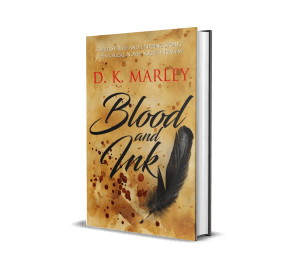
DKM: Without a doubt, Christopher Marlowe, from Blood and Ink. I learned so much about his life and supposed death during my research and felt like we became friends during the process. I think he was very misunderstood in a lot of ways and a very likely candidate for the writing or collaboration of the plays attributed to Shakespeare.


LC: He sounds like a fascinating character and subject.

Do you incorporate (or inadvertently find) any of your own personality traits into your characters?

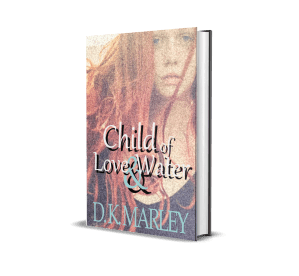
DKM: Not very often, except maybe for Muirin in Child of Love & Water. She is quite a dreamer and longs for a world of beauty and peace, so in that since, we are very much alike.

LC: Do you find your stories are more plot driven or character driven? Please explain.

DKM: I find that my stories are very character driven, and many have told me the same after reading my stories. People are such complex creatures. There is so much about the human condition, personalities, struggles, trials, emotions, pain, love, etc. that moves my characters through their lives in a way that the plot forms naturally. I love truly delving into my characters, whether made-up or actual historical figures, so much so that I have to stop and make myself start writing. The act of research and development is truly a love of mine as a historical fiction writer.

LC: Did you read much as a child?

DKM: Very much! Everything I could get my hands on. My favorite book as a child is no surprise – Alice in Wonderland.

LC: How important do you think reading is for writers?

DKM: Essential!! Like breathing. Reading teaches you to be a better writer. It teaches you about style, about craft, about yourself, and gives you direction about where you want to go (or where you do not want to go) with your own writing.

LC: Who are some of your favorite authors and/or books? What draws you to them?

DKM: First and foremost, William Shakespeare, for obvious reasons. Second, Carlos Ruis Zafon (The Shadow of the Wind) and John Steinbeck (East of Eden). I am drawn to books and authors who while creating a story also have something profound to say in the words. It might be something as simple as one sentence that strikes a chord in my heart, but once it does, I will read the book over and over. In Zafon’s books, I have taken a yellow highlighter to his words, marking the profound sentences and sometimes I will just peruse over them to remind myself of what my ultimate goal is as a writer – to reach out beyond the page and touch someone’s heart.

LC: A worthy goal, and what all writers hope to do!

Anything new in the works?

DKM: Yes, I am currently in the revision stage of my fourth novel, the next in the Fractured Shakespeare Novels, titled The Fire of Winter, which tells the story of the real Lady Macbeth, Gruah, in 11th-century Scotland.

LC: Another fascinating subject. We’ll look forward to reading that!

Thanks so much for answering the 10 Questions, DK. I really enjoyed learning more about you and your work.

Author Bio:

DK Marley is a historical fiction writer specializing in Shakespearean themes. Her grandmother, an English Literature professor, gave her a volume of Shakespeare’s plays when she was eleven, inspiring DK to delve further into the rich Elizabethan language. Eleven years ago she began the research leading to the publication of her first novel “Blood and Ink,” an epic tale of lost dreams, spurned love, jealousy and deception in Tudor England as the two men, William Shakespeare and Kit Marlowe, fight for one name and the famous works now known as the Shakespeare Folio.
She is a true Stratfordian (despite the topic of her novel “Blood and Ink”), a Marlowe fan, a member of the Marlowe Society, the Shakespeare Fellowship and a signer of the Declaration of Intent for the Shakespeare Authorship Debate.   She has traveled to England three times for intensive research and debate workshops and is a graduate of the intense training workshop “The Writer’s Retreat Workshop” founded by Gary Provost and hosted by Jason Sitzes. She is also a blogger for her blog “The Jabberwocky Blog” on WordPress. She lives in Georgia with her husband and a Scottish Terrier named Maggie.

Connect with DK:

Facebook: https://www.facebook.com/dkmarley.author 

Twitter: https://twitter.com/theRealDKMarley

Website: http://www.dkmarley.com

BookBub: https://www.bookbub.com/profile/d-k-marley

Blog: https://slayingthejabberwocky.wordpress.com

Amazon Profile: https://www.amazon.com/DK-Marley/e/B003MS4JPE

Novels:

Blood and Ink Winner of the Bronze Medal for Best Historical Fiction of 2018 from the Myths, Legends and Coffee Pots Book Blog and Winner of the Best Historical Fiction Cover for March 2019 from Discovering Diamonds Book Review. Available in ebook, paperback, hardcover and Audible.

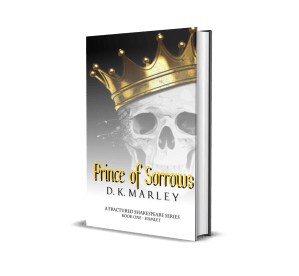
Prince of Sorrows (Book One of the Fractured Shakespeare Novels: Hamlet) Available in ebook, paperback, and Audible.

Child of Love & Water Available in ebook and paperback.

The Fire of Winter (Book Two of the Fractured Shakespeare Novels: Macbeth) Coming June 2019.

Posted in Uncategorized | 5 Comments

10 Questions with Author Shelia Watson

Today, I’m happy to have author Shelia Watson as a guest to answer 10 Questions about her writing. Among other topics, Shelia enjoys writing about WWII, in particular focusing on the German Resistance. She writes from her home in Charleston, South Carolina.

Linda Covella: Welcome, Shelia! Let’s dive right in…When and why did you decide to become a writer?

Shelia Watson: When I was 10 years old I read Valley of the Dolls by Jacqueline Susann. That’s a pretty young age for that book – and I’m pretty sure my parents had no idea I was reading it – but I was hooked. I decided then that my goal was to be a best-selling novelist. Not just a writer, a best-selling novelist, and I told everyone that’s what I was going to be.

LC: What is your writing process: where do you write, how often do you write, are you a full-time or part-time writer, do you outline or do you plot as you go, etc.?

SW: I try to write every day, though life (day job, etc.) can get in the way. I’ve been a freelance writer for many years – going on a couple of decades, actually – so I’m always at the keyboard in one way or another. It’s all about dedicating time to do it. I sometimes joke that I have to plan my headaches. Finishing a long-term project like a novel or screenplay takes a lot of “sacred space” planning.

LC: Where do you find your inspiration for your stories? Do you draw from your own experiences?

SW: It’s rarely about my own experiences. Most of the time, a scenario will pop into my head – a conversation I imagine between two people, for instance – and it won’t go away.

LC: Who is one of your favorite characters from your story(ies), one that you enjoyed creating and writing about, and why?

SW: Nick Bell, an investigator with Naval Intelligence. He’s a delightful mix of irreverent, driven, enthusiastic, cynical – and a complete hoot. He’s the protagonist in a book I started writing years ago, and he’s been living in my head all that time. He even pops into my dreams now and then (which is a weird experience).

LC: He sounds like a great character, and one obviously vying for your attention!

Do you incorporate (or inadvertently find) any of your own personality traits into your characters?

SW: Some of my characters end up with pieces of me – how I would react, the way I would approach a situation, things like that. More often, I incorporate personality traits of people in know into the characters. Look hard enough and you’ll find some coworkers, cousins, a middle school teacher I didn’t like, and so on.

LC: That could be problematic. J

Do you find your stories are more plot driven or character driven? Please explain.

SW: Plot driven at first, then the characters take over. When I first outline, it’s all about the story: what happens, how it starts, how it ends, the various elements. Then I layer in the characters who are living that story. Sometimes the story ends up changing because of things I discover about the characters as I go along.

LC: Did you read much as a child?

SW: Absolutely. As I mentioned, I was into Jacqueline Susann when I was 10. I read everything I could get my hands on.

LC: How important do you think reading is for writers?

SW: Critical. I don’t see how you can have one without the other.

LC: Who are some of your favorite authors and/or books? What draws you to them?

SW: I love Herman Wouk’s “Winds of War” and “War and Remembrance.” I’m fascinated by the time period, of course, and the way Wouk wove everything together is legendary.

Another favorite is “The Last Convertible” by Anton Myrer. His characters are so well drawn, you can feel them.

My all-time favorite writer is Ken Follett. He’s a master with historical works, and he’s never disappointed me.

When I’m in a mood for something lighter, I turn to P.G. Wodehouse.

LC: Anything new in the works?

SW: I just completed “Turning August,” a story about the German resistance movement in World War II. I have a sequel outlined, but it will come later.

Next up is the first book in a series about the Aeterni (a group of people who are eternal). This book, working title “Ebb and Flood,” takes place in Europe in the late 1400s/early 1500s. It’s one of my favorite time periods, and the research is fascinating. Sometimes I go so far down the research rabbit hole that it’s a chore to crawl back out and get writing.

LC: Bonus question! Do you have anything you’d like to add?

SW: Last year I published a book of my dad’s sea stories. The full title is: “If You Can’t Pay Attention, Take Notes: A Navy brat reflects on brathood, the first line of defense, and why you don’t wash the chief’s coffee cups.” The stories are funny – my dad was a master storyteller – and he and I put this together in the last few months before he died. Being able to talk about his life and compile the stories made those days special. It was a true labor of love.

LC: What a great legacy that is for you and your father.

Shelia, thank you so much for sharing you writing life with us!

Author Bio:

Shelia Watson is a writer/editor from Charleston, SC. She’s published articles on a wide range of topics, but her passion is World War 2 in general and the German Resistance in particular. She lives on the garden section of a former plantation (sold and divided into subdivisions long ago) with her husband and an assortment of cats and dogs. Contact her at swatson@tidalcreekproductions.com or visit her blog at www.gowriterightnow.com.

Posted in Uncategorized | 4 Comments

10 Questions with Author Connie Goldsmith

Today, award-winning author Connie Goldsmith joins us to answer 10 Questions about her writing. Connie writes nonfiction for middle grade and young adult readers with twenty-four published books. She also writes magazine articles for children and adults.

Linda Covella: Welcome, Connie! When and why did you decide to become a writer?

Connie Goldsmith: I was a nurse long before I was a writer. There was no particular time when I decided to “become a writer.” My first writing was continuing education articles for nurses. I’ve written for NurseWeek, RN, American Journal of Nursing, and others, as well as for health care professionals such as physical therapists and dental hygienists.

An article in my local paper—the Sacramento Bee—about a man who was recreating a trek through Death Valley with his daughters, inspired me to write my first book for young people. After much research and interview with descendants of several families, I wrote, “Lost in Death Valley: the true story of four families in California’s Gold Rush,” published in 2001 by Lerner’s imprint, Twenty-First Century Books.

LC: What is your writing process: where do you write, how often do you write, are you a full-time or part-time writer, do you outline or do you plot as you go, etc.?

CG: Where do I write? I write on my desktop PC in my living room. Gauzy curtains hang over three glass doors to the front porch so I can see outside, but no one can see inside. I’m more of a part-time writer than a full-time writer, averaging 3-4 hours per day in research and/or writing and/or interviewing.

I write only nonfiction, so there is no plotting! Nonfiction books are generally approved by the publisher/editor/acquisitions committee based on a detailed proposal. My proposals are about 15 pages long and include chapter outline, overview, comparable works if any, and why I am the person to write the book.

LC: The proposals obviously involve a lot of work before you write the actual book!

Where do you find your inspiration for your books? Do you draw from your own experiences?

CG: I’ve worked with the same editor for the nonfiction teen imprint at Lerner for nearly ten years. We both propose ideas to each other. She may hear an interview on NPR and be so intrigued that she asks if I’d like to write about it. For example, my most recent book, “Women in the Military: From Drill Sergeants to Fighter Pilots,” was my editor’s suggestion after she heard an NPR interview of a female military pilot who had written her memoir. My book, “Dogs at War: Military Canine Heroes,” started with a Facebook entry I read about war dogs. So, about half of my books come from my own ideas, and half from my editor’s.

LC: Plot and character are important aspects of fiction. How do those translate to nonfiction?

CG: I don’t write stories, but to translate this question into nonfiction – I’d say my narrative is part of the “story” and the people I interview are the “characters.” In writing nonfiction it’s not enough to do a good job of collecting interesting information. Interviews with people who have experience in the topic and with experts are equally important. For example, in my book, “Dogs at War: Military Canine Heroes,” I interviewed numerous military dog handlers as well as the head of dog training at Lackland Air Force Base. These were the “characters.” The “story” is the history of war dogs, details about their raising and training, and retirement, and so on.

LC: Can you tell us about your research when writing a nonfiction book?

CG: I do a lot of research in preparation for writing the proposal, which I then use as the outline for my book. I search for books old and new on my topic, and tend to buy a lot of used books online which I can then mark up as I want. One of the most helpful things is setting up a google alert on my topic. I receive relevant info from newspapers daily via the alert. Of course, I search online for relevant articles and stories.

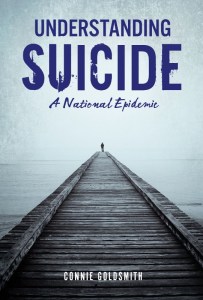
I often ask SCBWI members if they know someone I can interview. For example, my book about suicide opens with the true story of an SCBWI member’s teen daughter taking her own life, while my book about addiction opens with the accidental overdose death of a nephew of an SCBWI member. She contacted her brother and sister-in-law who agreed to talk to me about the horrendous ordeal.

LC: I imagine discussing such heartbreaking situations with interviewees would be difficult. You must have a compassionate, special way in approaching them.

Did you read much as a child?

CG: Like most writers, I was an avid reader as a child. My parents never censored my reading. This will date me, but I remember reading Pearl Buck books at ten years old, and those were often very “earthy.” My favorite birthday present ever was a box of ten books for my tenth birthday. All were adult books, such as Gone with the Wind. I still have my copy of Heidi with my name written inside. I must have been four to five years old. Still have my copy of Arabian Nights and the Jungle Book.

LC: I liked Pearl Buck’s books as well. “Back then” 🙂 there weren’t books specifically marketed as young adult, so middle grade and teens often read adult books.

How important do you think reading is for writers?

CG: Reading is vital for writers, both those who write fiction and those who write nonfiction. Reading books in the genre you write for can keep you current in trends in children’s literature. It can help you know what kids and teens are reading these days. Reading also is an ongoing source of ideas for nonfiction writers.

LC: Who are some of your favorite authors and/or books? What draws you to them?

CG: Because my working time involves constant research and reading of nonfiction sites and books, my free reading time is always fiction. Barbara Kingsolver, Elizabeth George, and Jo Nesbo are some of my favorite adult authors. My children’s/YA favorite writers include Philip Roth, Blue Balliett, Francisco X. Stork, Cassandra Claire, Maggie Stiefvater, Laini Taylor, and Holly Black. There are dozens more! This is always an impossible question. I love fantasy and there is so much good YA fantasy out there.

LC: What advice do you have for aspiring authors?

CG: The Institute of Children’s Literature published an article I wrote several years ago on this subject. Tips included: Join SCBWI early in your writing career, attend conferences, and volunteer to help. Remember writing may be a new career for you and that you didn’t become a teacher, a librarian or in my case a nurse, without investing time and money in learning the ropes. Consider writing nonfiction as opposed to only fiction – the vast majority of published material is nonfiction. Try writing for magazines – dozens of magazines have hundreds of pages to fill each month. If you have an existing career, consider writing for one of your professional magazines. It’s easier than you may think to get published if you consider options other than that picture book or middle grade novel that you want so much to write!

LC: Great advice!

Anything new in the works?

CG: Always something new in the works! However, my editor doesn’t allow us to talk about WIP [Work in Progress]. I can say it’s coming out spring 2020, and is my first ever biography – a living person with an amazing life. I’m spending many hours with face-to-face interviews because I’m lucky enough to live close to her. A bio is so different from my previous books – I’m enjoying every minute of it.

LC: Now I’m very curious who the bio is about. 🙂 We can all look forward to its publication!

Connie, thank you again for talking with us about your writing. Your answers were very insightful, and it was a pleasure having you!

Author Bio:

Connie Goldsmith has written twenty-four nonfiction books for middle grade and young adult readers and has also published many magazine articles for adults and children. Her books include Women in the Military: from Drill Sergeants to Jet Pilots; Pandemic: How Climate, the Environment, and Superbugs Increase the RiskAnimals Go to War: from Dogs to Dolphins; Addiction and Overdose: Confronting an American Crisis; Dogs at War: Military Canine Heroes; and Bombs Over Bikini,” also a Junior Library Guild Selection, a Bank Street College Best Children’s Book of the Year, and an SCBWI Crystal Kite winner.

Connie is a member of SCBWI and the Authors Guild. She’s a registered nurse with a Bachelor of Science degree in nursing and a Master of Public Administration degree in health care which gives her the creds to write her health and science books. When she’s not writing, she visits with friends and family, pounds out the miles on her treadmill, plays with her crazy cats, and hikes along the American River near Sacramento California where she lives.

Contact Connie:

Websites: www.conniegoldsmith.com and www.bombsoverbikini.com

Twitter: @conniegoldsmit


Posted in Uncategorized | 6 Comments

My Turn to be Interviewed

Thanks so much to Pam Lecky for interviewing me on her blog!

via A Conversation with Author Linda Covella

Posted in Uncategorized | Leave a comment