10 Questions with Author Riana Everly

Today, author Riana Everly answers “10 Questions” about her writing. Riana is not only an author of historical fiction, but history informs other aspects of her life: she has a Master’s degree in Medieval Studies and is trained as a classical musician, specializing in Baroque and early Classical music.

Linda Covella: When and why did you decide to become a writer?

Riana Everly: I’ve always been a writer, I think. I published my first poem in the local newspaper when I was six years old (it was about a mushroom and it was three whole lines long), and my mother keeps finding stories I wrote over the years. Most I don’t remember at all, but they are in my handwriting, so I’ll assume they really are mine! As an adult, I was involved in writers’ groups and such, which both taught me a lot and left me in awe of some of the talent around me. I never imagined I could attain those levels of excellence, but I kept writing because I enjoyed it so much.
I began to dabble in longer novel-length stories about five years ago. I set myself a dare – to carry a storyline and characters over a full arc, and see where it went – and 100,000 words later I had written my first novel. I don’t think that one will ever see the light of day, but now I was well and truly bitten, and I kept writing.
I decided to dip my toe into publishing about eighteen months ago. I had shown a novel to some authors whose work I admire very much, and both were insistent that I publish it, so I dove in head first. The result was Teaching Eliza. Spurred on by the unexpected and wonderful reception it received, I polished up another novel I had written some time before – The Assistant – and published that a few months later.

It has been such a wonderful experience, I cannot see ever stopping writing now!

LC: What is your writing process: where do you write, how often do you write, are you a full-time or part-time writer, do you outline or do you plot as you go, etc.?

RE: I am the queen of procrastination, but I also find I work well with deadlines (an interesting combination, I know). Consequently, I am dreadful at writing on a regular basis, but get a huge amount done during such intensive events as NaNoWriMo (National Novel Writing Month), where the goal is to write a certain amount between November 1st and 30th. I can usually write a full novel of around 100,000 words during these one-month writing marathons. And then I put whatever I’ve done away and let it sit for a while, from several months to over a year, before dusting off the first draft and looking at it with fresh eyes to begin editing.

What this means is that it takes a long time for a novel to go from the first word to the finished product, but I hope the process results in a better book!

Between the main NaNoWriMo activities in November, and two less intensive “camps” during the year, I can usually write three novels a year, and spend the rest of the time in various stages of editing earlier works.

I write part-time, as I have a part-time job out of the house, and I am still fairly busy with my family. Most of my writing happens at my main desk-top computer, but I also have a teeny-tiny tablet with a teeny-tiny keyboard, and many a cappuccino has been consumed at the local coffee shop as I sit there writing the next scene or making notes for upcoming chapters

As for those notes and those chapters, I tend to plot as I go. I approach a book with a general story arc in mind. I know the beginning, middle, and end, but how we get from one to the next develops as I write. As often as not, I let my characters take the lead and tell me what they want to do next. Sometimes I chastise them and drag them back to my plot, but they often have better ideas than mine!

Recently, however, I have started writing a mystery series, and these need to be plotted out a bit more carefully. I still let the details of the story develop as they will, but I need a lot more of those definite check-in places so I can drop in the clues and introduce my characters in such a way as to make what I hope is a satisfying and believable solution to my mystery.

LC: Where do you find your inspiration for your stories? Do you draw from your own experiences?

RE: I have many sources of inspiration. Since many of my novels – and all of my published ones, so far – fall under the category of Jane Austen Fan Fiction, it is a given that Jane Austen herself, and her wonderful characters, provide me with a great deal of inspiration.
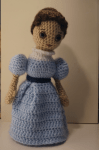
Riana’s “Jane Austen”

But, of course, that it only the beginning. Teaching Eliza was inspired by a brilliant performance I saw a few years ago of Shaw’s Pygmalion. The play was set in the modern day, and it started me thinking about how fine literature can adapt so well to different times and places. Of course, the thought of Pygmalion in a Regency setting darted into my head, followed at once by the realization that Henry Higgins bore a lot of similarities to Mr. Darcy, and Eliza Doolittle to Elizabeth Bennet!
History also provides me with a great deal of inspiration, because how people relate to each other and react to circumstances is so often dictated by the time and place in which they live, and historical events can sprout all sorts of unusual or unexpected plots. I love to travel and I love to learn about the history and little stories about places, and so often they provide me with the germs that grow into novels. Likewise art, music, specific locations, all can set off that little voice in my head that whispers, “what if….”

I do sometimes draw from my own experiences. In my upcoming release, Through a Different Lens, two of the characters have particular quirks that we would now assign to the autism spectrum. One of my children is on the edge of the spectrum as well, and so creating characters that share some of his traits – both strengths and challenges – seemed like a natural step to take.

LC: Who is one of your favorite characters from your story(ies), one that you enjoyed creating and writing about, and why?

RE: Oh, you’re asking me about Sammy! He began as a secondary character in Through a Different Lens, more of a plot device than anything, but he wouldn’t stay in the background, and he ended up becoming the hero of the story in a sense.

Samuel Gardiner is twelve years old, the cousin of Elizabeth Bennet, and a bright and curious lad, on the cusp of adolescence. He is also what we would diagnose today as high-functioning autistic. He has had a bit of a rough childhood with a series of nannies and governesses who haven’t known how to manage him, but with his parents’ love and through a lot of hard work – both on his own part and that of his new governess and his cousin Lizzy – he has made huge strides in functioning in society. But Sammy isn’t a diagnosis. He’s a really great kid, with a set of skills and talents and abilities that outshine any challenges he has.

I loved watching his friendships develop, both with a schoolmate and with the formidable Mr. Darcy, and I had so much fun learning to see the world a little bit through his eyes.

LC: He sounds like a wonderful character!

Do you incorporate (or inadvertently find) any of your own personality traits into your characters?

RE: I think it is impossible not to do this to some degree or another. After all, as much as we try to put ourselves into different heads, the only real experiences we have with how people behave are our own. We can observe how others act, but when it comes down to interpreting those actions, we only have ourselves as a measuring stick.

Of course, one of the greatest joys, and greatest challenges, of being a writer is creating characters who are not me. Whereas I am an introvert, for example, it is fascinating to try to envision how a social butterfly would act, what motives her.

LC: Do you find your stories are more plot driven or character driven? Please explain.

RE: To be honest, I find it hard to separate these out. I let my characters guide me from place to place in the story as I’m writing it, but at the same time I like to keep the plot moving steadily ahead. In my upcoming release, Through a Different Lens, the beginning is very much character-driven, but it’s all in service of the plot that builds up at the end. Does that answer the question at all, or just muddy the waters?

LC: A good answer. 🙂 Many authors I talk to say it’s a combination of the two. Plot might take precedence in certain genres such as mystery or thrillers.

Did you read much as a child?

RE: Oh my, yes! I always had my nose in a book. When I was eight, we lived in a non-English speaking country for a while, and the library had an extremely small English-language section, with very few kids’ books. One thing they did have was a multi-volume children’s encyclopedia. I read the whole thing, from A to Z. Twice. Why? Because I needed something to read! And yes, I was also an annoyingly well-informed eight-year-old.

LC: Wow, that is impressive!

How important do you think reading is for writers?

RE: As vital as air is for breathing!

LC: Another good answer. 🙂

Who are some of your favorite authors and/or books? What draws you to them?

RE: That’s like asking me which is my favourite child! Of course I love Jane Austen. Her style, her characters, her acerbic wit, are all such delights for the mind. I discovered a definite affinity for the Victorians as well, in spite of myself, and both Elizabeth Gaskell and Anne Brontë come to mind right away. I also love mysteries, especially classic whodunnits, and while I enjoy Agatha Christie’s tales, I far prefer Ngaio Marsh and her wonderful Inspector Alleyn detective stories. In that same vein of the classic detective story comes P.D. James. She had such a way with words and character! Reading one is like stepping into an entire and complete universe woven from exquisite prose.

LC: Anything new in the works?

RE: Why yes, now that you ask! I’ve already mentioned Through a Different Lens, which is set to be released on January 21 if all goes according to plan. I also have two mysteries written and waiting for editing, and plans for another four to complete the series which will take us into the worlds of all six of Jane Austen’s completed novels. In these books, Mary Bennet (of Pride and Prejudice fame) is the sleuth, teamed up with a professional investigator from London.

I also have a complete and mostly edited original novel set in Upper Canada in the immediate aftermath of the War of 1812, based loosely on a true story. (This is where history is my muse.) It involves a town struggling to rebuild after the devastation of war, former slaves fighting to retain their freedom, a visiting brigadier with tons of personal baggage, a heartbroken heroine and her mysterious lover, and a bad guy who won’t go away. The centre of the action in this one is an inn in the village of Niagara-on-the-Lake which dates from before 1813, and which is now rumoured to be haunted! Yes, I have stayed there overnight, and no, I did not meet the ghost.

LC: Bonus question! Do you have anything you’d like to add?

RE: I’m sure you hear this from most historical fiction authors, but one of the best parts of writing this genre is getting lost down the rabbit hole of research. You never know where a supposedly simple search will take you. In looking up a quick reference about the city of Halifax, Nova Scotia, in 1800, I came across all sorts of fascinating things about the Black Loyalists and early Black community in Nova Scotia. Looking up information on Regency-era timepieces led me to the wonderful world of clockwork automatons from the late 18th and early 19th centuries, including a little boy who can write what you program into him, and a young woman who plays the piano! For every single thing I go to research, I end up reading about ten completely unrelated – but endlessly interesting – others. If only there were a Regency-era version of Trivial Pursuit! I’d be sure to do very, very well!

LC: It was a pleasure having you on my blog today, Riana. Thanks so much!

Author Bio:

Riana Everly was born in South Africa, but has called Canada home since she was eight years old. She has a Master’s degree in Medieval Studies and is trained as a classical musician, specialising in Baroque and early Classical music. She first encountered Jane Austen when her father handed her a copy of Emma at age 11, and has never looked back.
Riana now lives in Toronto with her family. When she is not writing, she can often be found playing string quartets with friends, biking around the beautiful province of Ontario with her husband, trying to improve her photography, thinking about what to make for dinner, and, of course, reading!
Riana’s debut novel, Teaching Eliza, was included on a list of 2017 Favourite Books on the blog Savvy Verse & Wit, for which she is honoured and delighted and very proud. Her second novel, The Assistant, was recently granted the Jane Austen Award from Jane Austen Readers’ Awards. This is sure to make her insufferable at dinner parties.
Connect with Riana: You can follow Riana’s blog at https://rianaeverly.com/blog/ , and join her on Facebook (https://www.facebook.com/RianaEverly/ ) and Twitter (@RianaEverly). She loves meeting readers!
Posted in Uncategorized | 8 Comments

10 Questions with Author Catherine Kullmann

My guest today is author Catherine Kullmann. Catherine writes historical fiction from her home in Ireland.

Linda Covella: Catherine, thanks so much for joining us today!

When and why did you decide to become a writer?

Catherine Kullman: It was always my dream to write fiction but it was only after I took early retirement that I was able to devote my time to it.

From my earliest school days, I have loved writing and wrote a lot all through my working life. I am always flattered when someone tells me that my books are easy to read because I put a lot of effort into making the narrative flow easily.

LC: That is a compliment. With a skilled writer, readers can better immerse themselves in a story rather than be distracted by poor writing!

What is your writing process: where do you write, how often do you write, are you a full-time or part-time writer, do you outline or do you plot as you go, etc.?

CK: I spend several hours a day at my desk, although not all of these are devoted to writing. As a historical novelist, I spend a lot of time in research and have a large research library as well as a collection of prints and engravings from the extended Regency period where my books are set. In addition there is the marketing that is now almost obligatory for authors.

dav

I start with the seed of the story (see below). Then I do some work on developing the characters—who are they, what is their family history, their appearance, likes and dislikes, hobbies, habits, what drives them. I don’t overly plot in advance but plot as I write. I keep a record of chapter content—who? what? why? when?—so that I can check for continuity and also make any necessary changes. I also edit as I go. I’ll go over the completed first draft a couple of times and then set it aside for some weeks before I start the second draft.

dav

LC: Where do you find your inspiration for your stories?

CK: Generally, something triggers my imagination. I keep a notebook of ideas and possible plots where I jot down all ideas as they come to me. It is very much ‘what if?’ or ‘what then?’ I like to know what happens when life gets in the way of love. A throw-away line in Perception & Illusions led to The Murmur of Masks. I had to know what happened next. (Although there is an overlap between the books, there are no spoilers and they can be read in any order.) With A Suggestion of Scandal, the initial impulse came from a notorious Regency divorce case that was triggered when a governess surprised her employer with her lover, her hand inside his military pantaloons. These lovers made no attempt to hide their guilt but I began to wonder what if they had tried to do so. What might have happened to the inconvenient witness?

LC: Do you draw from your own experiences?

CK: Indirectly. My books are set in the early nineteenth century but in many ways, the Ireland I lived in before my marriage was closer to that of 1814 than to 2014.

I remember the drudgery of wash-day; the cold in a house that was heated only by open fires, the tang and reek of smoke in the air from all those fires; horse-drawn carts, even in the Dublin streets, with sparrows pecking at the oats spilled from the nose-bag; the meat-safe that hung outside on a north-facing wall before the advent of our first fridge. Everything was delivered from coal to groceries, with invoices sent at the end of the month when my mother did her accounts.

Dublin has a wonderful Georgian core. I went to school on one Georgian square and later managed four houses on another and the memory of those long flights of stairs with their returns and return rooms, the beautifully proportioned rooms with sash-windows, the basements and coal-holes under the pavement stays with me as much as the straight lines of Yeats’s ‘grey, eighteenth-century houses.’

LC: Well, I think you could write an interesting memoir!

Who is one of your favorite characters from your story(ies), one that you enjoyed creating and writing about, and why?

CK: That’s a terrible question, almost as bad as asking a mother which of her children she loves best. I enjoy creating all my characters, even the small walk-ons and try to make them as individual as possible. It’s fun creating the baddies—Lord Rembleton, for example, in The Murmur of Masks— is an obnoxious person who, according to his brother Jack was “proof that the family’s antecedents reached back to the brutish, British mire. Jack described him as “operating on instinct and an inchoate sense of entitlement, allied to brute strength and unrefined by even a veneer of civilisation and culture.”

I enjoy giving such a character free rein and then seeing them get their come-uppance.

LC: Okay, I won’t make you choose. 🙂

Do you incorporate (or inadvertently find) any of your own personality traits into your characters?

CK: Certainly not deliberately, although it would be interesting to see what people who know me well think.

LC: Do you find your stories are more plot driven or character driven? Please explain.

CK: About fifty/fifty, I would say. Plot is what and characters are why. Different characters would react differently to different dilemmas and so affect the plot.

LC: Great, simple explanation of plot and characters.

Did you read much as a child?

CK: I always had my nose in a book. I am eternally grateful to my parents for whom time spent reading was never wasted.

LC: How important do you think reading is for writers?

CK: It is essential. A writer who doesn’t read would be like a cook who hated food.

LC: I like that analogy.

Who are some of your favorite authors and/or books? What draws you to them?

CK: My tastes have changed a lot over the years but there are still some authors I go back to again and again. In the past I read a lot of thrillers and mystery—favourite authors included P D James, Reginald Hill, Manning Coles, Michael Gilbert, Dorothy L Sayers—but I find many of today’s thrillers too violent and depressing. I like historical mysteries and favourite authors include Barbara Cleverly and Lindsay Davis. I love Gillian Bradshaw’s novels set in ancient Greece and Rome, Naomi Novik’s Temeraire series and her more recent works that can be best described as magical, historical realism, and urban fantasy e.g. by Patricia Briggs. I also enjoy J D Robb’s futuristic crime series. Looking at this, I realise that what draws me to these and other authors is that they take me out of my own world, let my imagination take flight.

LC: Anything new in the works?

Next year I hope to publish two new Regency stories, both of which tie in to The Murmur of Masks and Perception & Illusion. The Duke’s Regrets is a novella about the Duke and Duchess of Gracechurch whom readers will know from the previous two books and The Potential for Love is Arabella Malvin’s story. Heading into her fourth season, she is ready to marry but which of her many suitors has the potential for love?

LC: Bonus question: Do you have anything you’d like to add?

CK: Just to thank you for your interesting questions.

LC: And thank you, Catherine. I loved learning more about you and your writing!

Author Bio:

Catherine Kullmann was born and educated in Dublin. Following a three-year courtship conducted mostly by letter, she moved to Germany where she lived for twenty-six years before returning to Ireland. She and her husband of over forty years have three adult sons and two grandchildren. Catherine has worked in the Irish and New Zealand public services and in the private sector.

After taking early retirement Catherine was finally able to fulfil her life-long ambition to write fiction. Her debut novel, The Murmur of Masks, published in 2016, is a warm and engaging story of a young woman’s struggle to survive and find love in an era of violence and uncertainty. It takes us from the ballrooms of the Regency to the battlefield of Waterloo. In 2017, the Murmur of Masks was short-listed for Best Novel in the CAP (Carousel Aware Prize) Awards.

In Perception & Illusion, published in March 2017, Lallie Grey, cast out by her father for refusing the suitor of his choice, accepts Hugo Tamrisk’s proposal, confident that he loves her as she loves him. But Hugo’s past throws long shadows as does his recent liaison with Sabina Albright. All too soon, Lallie must question Hugo’s reasons for marriage and wonder what he really wants of his bride.

In Catherine’s new book, A Suggestion of Scandal, governess Rosa Fancourt finds her life and future suddenly at risk when she surprises two lovers in flagrante delicto, Even if she escapes captivity, the mere suggestion of scandal is enough to ruin a lady in her situation. In Sir Julian Loring she finds an unexpected champion but will he stand by her to the end? It too

You can find out more about Catherine at her website www.catherinekullmann.com/ where, in her Scrap Album, she blogs about historical facts and trivia relating to the Regency or on her Facebook page fb.me/catherinekullmannauthor  Catherine tweets @CKullmannAuthor

Catherine’s books are available worldwide from Amazon as e-books and paperback. Amazon links include:

Amazon.com: https://goo.gl/J3hRIf

Amazon UK: http://amzn.to/2n9Ljxi

Posted in Uncategorized | 2 Comments

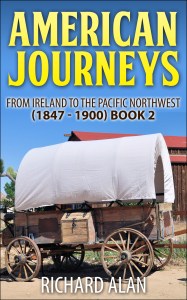
10 Questions with Author Richard Alan

Historical fiction author Richard Alan is here to answer “10 Questions” about his writing. Richard writes novels “about people striving to find their soul-mate; the person they are meant to be with for life.” Two of his novels have recently advanced to semi-finalist in the Chanticleer International Book Awards and Novel Competitions. Please read more about this in Richard’s bio at the end of the interview.

Linda Covella: Richard, so happy to have you here today. And congratulations on your recent accomplishments in the Chanticleer competitions!
When and why did you decide to become a writer?

Richard Alan: I’ve enjoyed occasional writing since I was young. For a junior high assignment, I wrote a lengthy, four-thousand word short story. It was rejected as the subject, my taking a multi-day cross-country drive included, of all things, a female companion. An angry teacher told me this was inappropriate material for a seventh-grade assignment. The offending documents were sent to my mother, an English major, who chastised me…but later the same day, I overheard her telling my father, “I had no clue he could write…let alone with such an emotive voice.” I also wrote short stories for my children where they were the heroes of some adventure. Shortly before I retired, I wrote a short article for a friend’s blog about my experience in Vietnam. The friend asked how long I had been writing. I replied, “I hadn’t.” She replied, “You should.” A history lover and lifelong learner, I decided, at age sixty-one, after a successful career in software development, to begin a new career as a novelist. After four volumes in the contemporary romance genre, I decided my primary writing effort would be directed toward historical fiction.LC: Proof it’s never too late to take up a new career!

What is your writing process: where do you write, how often do you write, are you a full-time or part-time writer, do you outline or do you plot as you go, etc.?

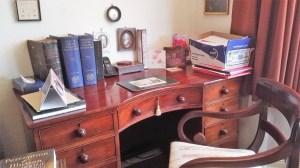
RA: My writing space is a converted bedroom with blank walls, two tall bookshelves, an electric drum set, a corner desk with two computers, an e-reader and a printer. My wife works in her home office twenty-paces away, which I find useful so I can bounce ideas off her fertile imagination. While I’m a full-time author, thirty-percent of that time is used for research on the era my characters will journey through. The only outline I use is the order of history. My characters tell me the plot as I develop them.

LC: Where do you find your inspiration for your stories? Do you draw from your own experiences?

RA: People watching fascinates me. A number of my characters were inspired from people I observed at locations such as street fairs, airports and beaches. Example: On a cool fall day in Nashville, Tennessee, I saw a little boy with a dog at his side, walking along the fence of a, closed for the season, water park. He peered through the fence, sadness in his expression. He sighed. The sounds of laughter, screams, and water splashing, a distant, summer-time memory. This brief observation inspired a short story which began with the above scene.

I certainly draw on my own experience. As a Vietnam War Combat Medic, I could easily empathize with the soldiers and medical personnel of the Civil War as portrayed in my last novel. Also, I travel to historically significant locations such as; Vicksburg, Ms. to see and walk the battle ground, and Tyler, Texas to visit a Civil War prison camp.

LC: Who is one of your favorite characters from your story(ies), one that you enjoyed creating and writing about, and why?

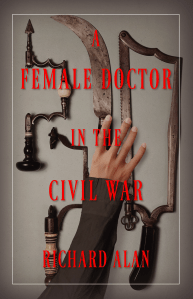
RA: In my first historical novel, I had a problem with one of my characters as he was beginning to appear flawless. I decided an illegitimate daughter would bring his character down to earth. But the more I explored the born-out-of-wedlock daughter in that and the following novel, the more her character grew such that Abbey is the major character in my latest novel A Female Doctor in the Civil War.

LC: Which is one of the semi-finalists in the Chanticleer competitions.

Do you incorporate (or inadvertently find) any of your own personality traits into your characters?

RA: If I do, I carefully consider whether they are going to advance the story. If not, out they come. Characters should be quirky. Everyone has their own daily life, full of vanilla characters. A novel should draw readers out of their own world, into a more exciting, dramatic adventure of the mind. I’m a firm believer every word that appears in my novels should only exist to create an emotional response in my readers.

LC: Do you find your stories are more plot driven or character driven? Please explain.

RA: I’ve never constructed a plot. My characters drive my stories; my imagination finds turns and twists that fit the construct of the history my characters pass through.

LC: Did you read much as a child?

RA: Voracious reader of both fiction and non-fiction. My mother read to me constantly then gave me a library card the summer before kindergarten. My father made a child sized book shelf for me. As a second grader, my mother, insisting I need more exercise, regularly ran me out of the house. Caught hell from her, when she discovered I’d run as far as our garage where I’d secretly established a reading corner.

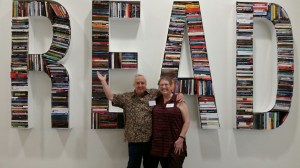
Richard and Carolynn touring publisher IngramSpark

LC: How important do you think reading is for writers?

RA: IMHO, this is overrated. It is similar to believing you qualify as a good mechanic if you’ve driven many cars. Reading and writing are substantially different disciplines. Techniques which various authors use may be interesting, but a writer’s imagination should provide his or her own set of tools and methods of implementing a story. Great writing is hard work. Reading is not. There is only one book which should be thoroughly read and understood, for every writer of fiction and non-fiction alike, and that is, “On Writing,” by Sol Stein. It provides all the tools, except imagination, for successful writing.

LC: Who are some of your favorite authors and/or books? What draws you to them?

RA: Elmore Leonard: no one, IMHO, writes better dialog or tells stories with an economy of word choice. Every line he writes, advances the story in a concise, descriptive, and engaging manner. One of my favorite lines, where he introduces a character: “The old man squinted into the distance through steel framed spectacles: a seventy-three-year-old turkey buzzard face beneath a farmer’s straw hat; tight mouth barely moving and a hunk of plug stuck in his sunken cheek.”

Leon Uris: his characters come alive as people we’d like to interact with.

James Michener: a master at combining history, people and places.

Greg Isles: action and tension are thy byline.

Steven Hawking: an expert at explaining complex science in non-scientific terms.

Shelby Foote: wrote a three-volume series on the Civil War. A peerless, non-fiction work, which draws the reader in like a great work of fiction. Truly one of the greatest non-fiction writers of my lifetime.

William Shirer: I didn’t have an adequate understanding of the Third Reich until I read his non-fiction work, “The Rise and Fall of the Third Reich.” Descriptive and engaging, if you want a thorough understanding of the Third Reich, leading up to and during World War II, this is the book to read.

LC: That’s quite a range of authors and books. And what a fantastic description from Elmore Leonard.

Anything new in the works?

RA: Currently writing and researching the fourth novel in my American Journeys series covering the period from the Civil War to roughly 1900. Also writing a few short stories.

LC: Bonus question! Do you have anything you’d like to add?

RA: I live to write is a cliché but, at seventy-years-old, I look forward to mornings to continue writing. We own a motorhome, which my wife and I both love. One of the major reasons I love our condo-on-wheels, is that it contains a writing space. My wife, a voracious reader in her own right, read seven novels during an eleven-day-trip to Nashville, TN.

LC: Thank you, Richard. I really enjoyed reading your answers and learning more about your writing!

Author Bio:

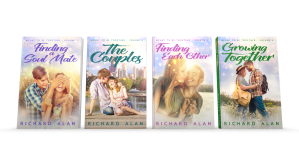
Richard is a 101st Airborne Division Vietnam veteran. After an education in mathematics, 17-years in manufacturing engineering, then 22-years as a software engineer, Richard embarked on a career in writing. His debut series, Meant to Be Together, is a heartwarming, multigenerational family saga about relationships, love and life. It is followed by a series of historical fiction novels, set in 1847 – 1865, about the predecessors to the characters in his Meant to Be Together series. Expertly researched the American Journeys series details the family’s struggles during the Great Irish Famine, emigration from Ireland to Boston, and their journey across the United States. Introduced as a little girl in Volume One of American Journeys, Dr. Abby Kaplan becomes a surgeon during the Civil War.
Being a lifelong learner, Richard loves pursuing the research for his historical fiction. It is frequently accomplished while RV traveling with his wife, Carolynn, to libraries, museums, and historical sites around the country. Having a career that is portable permits traveling to many spectacular areas of the United States. It also provides opportunities to visit our adult children, grandchildren, other relatives, and friends.

NEWS!

A Female Doctor in the Civil War has advanced from the “short list” to the semifinal competition in two categories of the Chanticleer International Book Awards; The Goethe Book Awards recognize emerging new talent and outstanding works in the genre of Late Historical Fiction set after the 1750s, and the LARAMIE Book Awards recognize emerging new talent and outstanding works in the genre of Western Fiction (Civil War).

American Journeys: From Ireland to the Pacific Northwest (1854-1900) is a semi-finalist for the 2018 Goethe Book Award for Post 1750s Historical Fiction. The Goethe Book Awards recognize emerging new talent and outstanding works in the genre of Late Historical Fiction. The next round of judging will select the limited First Place positions.

Connect with Richard:

Email: richard@villagedrummerfiction.com

Website: https://villagedrummerfiction.com

Twitter: @VillageDrummerF

Facebook: https://www.facebook.com/The.Village.Drummer/

Posted in Uncategorized | Leave a comment

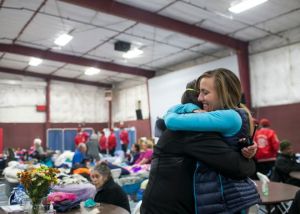
#WATWB: A Camp Fire Shelter: Nurses+Bikers+Church-goers

When tragedy strikes, it’s amazing to see volunteers selflessly step up to help those in need.

After the horrific Camp Fire in northern California, thousands of people were left homeless. Shelters were established to give these fire victims places to sleep, food to eat.

But government and private response teams were quickly overwhelmed, so at one shelter, Birgitte Randall, a nurse who had fled the fire, and other volunteers came together to create a shelter and clinic.

From the USA Today article: “‘I got to be a nurse at the beginning,’ Randall said. ‘But then, somehow, I got put in charge of everything. I don’t know how that happened.’

The short answer is she was there first. Randall said there was no medical presence before she arrived with her sister and mother, both also nurses.

One week later, that model of leadership had trickled down throughout the church. Without outside direction, housecleaners came to clean, a motorcycle club came to provide security and a group of strangers came to realize the community’s strength lay less in its institutions and more in its people.”

You can read the full article here.

Do you have some good news to share?

About #WATWB (We Are The World Blog): The blog is the brainchild of Damyanti Biswas. In light of all the tragic, political, warring news we typically hear from around the world, Damyanti asked bloggers to highlight a news story that “shows love, humanity, and brotherhood.”

You’re welcome to join the blogfest and “speak for peace.” Blogs are posted the last day of each month. Read the details here. And please visit these co-hosts and any others with the #WATWB tag.

Eric Lahti,

Inderpreet Uppal,

Shilpa Garg,

Peter Nena

Damyanti Biswas

Posted in Uncategorized | Leave a comment

10 Questions with Author Pam Lecky

Today author Pam Lecky joins us to answer “10 Questions” about her writing. Pam writes historical fiction and has published an impressive range of subgenres, including crime, mystery, romance, and the supernatural.

Linda Covella: Welcome, Pam!

When and why did you decide to become a writer?

Pam Lecky: That’s quite difficult to answer – it’s certainly back in the mists of time! My first foray into writing was poetry – angst-ridden teenage stuff which I would shudder to read now. However, I did win a prize for it, so some of it may not have been too dreadful!

There was no one moment when I thought I am going to become a writer. But I’ve always had stories knocking around in my head. While on a career break from work, I was reading a book with a very unsatisfactory ending and I remember thinking I could do better. Then someone I knew quite well suddenly announced they had a book coming out and I had never even known she was a writer. Somehow this combination of factors led to me ‘trying my hand at it’ myself. However, it was not until 2013 that a particular story seemed to be screaming to be let out into the world. Out of that came my debut novel, The Bowes Inheritance, published in 2015, a book I am very proud of. It is romantic suspense with lots of mystery and a strong Irish flavour although set predominantly in the English Lake District.

It was awarded the B.R.A.G. Medallion and was shortlisted and longlisted for awards and has received consistently good reviews on Amazon and Goodreads.

Once you’ve popped your head above the parapet, writing-wise and no one shoots you down, it gets easier. I guess I was smitten with the process too and the feedback I have received keeps me motivated. Signing with a literary agency in London this year has been the icing on the cake for me, so far.

LC: Congratulations on acquiring an agent!

What is your writing process: where do you write, how often do you write, are you a full-time or part-time writer, do you outline or do you plot as you go, etc.?

PL: I am very lucky to have my own study with room for bookcases with all of my reference books close to hand. Over the years I have had different writing companions, including a couple of dogs and cats. These days, however, my only company is some goldfish and minnows in the aquarium near my desk. I find it relaxing to watch them swimming around if mulling over a tricky impasse in my work in progress.

It is wonderful to have a quiet space in which to work. When I close the door, I am transported back in time, usually around 1880!

As I work part-time, my writing time is precious. The days I am working I tend to be too tired for creative writing, but if I have editing to do, I usually try to do some of that. A couple of times a year, I go away for a few days to concentrate on my writing. I have found this both enjoyable and very successful. When you are immersed in your story for a long period, it can become much clearer where the gaps or loose ends are lurking.

Plotter V Pantser! Well, I fall somewhere in-between these days. For my debut (which I never even thought of publishing as I wrote it), I just let the story flow. Now I am a little more disciplined and start with a loose plot outline and a rough idea of who my main characters will be. Because I write mostly historical fiction, I find my plots tend to evolve as I research and ideas pop into my head. The more subtle details tend to develop slowly over time.

LC: Where do you find your inspiration for your stories? Do you draw from your own experiences?

PL: The inspiration for my Victorian mysteries and crime novels is probably from two sources; a love of history and a love of classic literature. I read a lot as a child and teenager and it was mostly historical fiction or contemporary crime.

The Victorian era, in particular, has always fascinated me because of the rapid pace of change and the effect of those changes on society. This, combined with my love of Victorian fashion, architecture and manners, meant it was inevitable that this would be my era. However, I have set my sights on the Edwardian, WW1 and 1920s as eras I’d like to write in too.

For my short stories, much of the inspiration came from my family history. Two of the short stories in my anthology, Past Imperfect, are about true events in my family’s past, (names changed to protect the innocent, of course!) including how my grandparents ended up together.

LC: I’m intrigued about your grandparents’ story; your anthology is now in my Kindle library. 🙂

Who is one of your favorite characters from your story(ies), one that you enjoyed creating and writing about, and why?

PL: When I read, I have a preference for strong female leads and can’t bare wishy-washy women who simper and wait for the men to do all the heroic stuff. So it is important for me that the women in my stories, within the constraints of their environment and time period, get out and live life to the full.

I am currently working on a series of Victorian mysteries. Strangely enough, they started out to be about an insurance investigator and his adventures in Victorian society, but as I created the female protagonist, Lucy Lawrence, she started to outshine him completely. She is strong and feisty and not afraid to do her own sleuthing. I have a feeling the series will be all about her now! She has just been widowed, finds out some terrible things about her late husband and is thrown into the dark underbelly of Victorian London with its collection of unsavory characters. She is a delight because I can watch her evolve from being a frustrated and bored stay-at-home wife to being an independent spirt directing her own destiny. She’s incredibly brave so she gets to do all the stuff I’d like to do but won’t because I am such a coward!

LC: Do you incorporate (or inadvertently find) any of your own personality traits into your characters?

PL: I think it is impossible not to unless you are naughty and base your characters on people you know (not that I’d ever do that!!). Even then, something of your opinion of that person will colour the character. I hope none of my characters are recognizable as me, in fact, it is probably the opposite in that most of my protagonists are a complete contrast. So perhaps they are the version of me I’d like the world to see? However, it is never intentional – they emerge from the chaos of my day to day life and set themselves up in my head and keep nudging me until their story is down on paper.

LC: Do you find your stories are more plot driven or character driven? Please explain.

PL: I’d like to think my plots and characters are interlinked and drive each other, but if I have to choose I’d say I lean towards plot driven. I think most crime/mystery novels are. Since I have starting writing short stories, where every word counts, my writing has tightened up a great deal which in turn speeds up the plot to some extent – no meandering navel gazing individuals, or three page descriptions of the lush and green river valley with its gnarled oaks standing as sentinels on the gravel-strewn bank, their bare branches dipping in to the gushing water as if to stem the flow. (Sorry, couldn’t resist!).

My current work has a very fast moving plot, with many twists and turns, but through this the reader gets to know the characters well by how they act and react to people and events.

LC: Did you read much as a child?

PL: I devoured books from an early age. My mother would buy me Ladybird books in the supermarket and I’d have finished them by the time we would get home in the car. Consequently, my father got me a library card! As a shy teenager I found great comfort in books and read mostly historical romances, classics and a huge number of crime novels.

LC: How important do you think reading is for writers?

PL: I think it is vital both as a break from writing and pure enjoyment. My reading time is very limited now that I write, but it helps me relax. Now I’m part of the writing community, I come across a lot of great writers and books. My ‘To Be Read’ pile (on my Kindle) is a disgrace it is so long, but I can’t resist a good blurb! Time constraints unfortunately mean if a book doesn’t hook me in the first few chapters, I will abandon it and start something new. Reading other genres is useful too and when I come across a great read, I tend to analyse it a bit (editor’s hat goes on automatically these days!) but from doing so you can improve your own skills.

LC: Who are some of your favorite authors and/or books? What draws you to them?

PL: My all-time favourites would be Elizabeth Gaskell (North and South and Wives and Daughters), Jane Austen (Sense & Sensibility & Pride and Prejudice) and for romance, Georgette Heyer. These were fabulous writers who created memorable characters you could love and/or hate and stories that stayed with you long after you finished the books.

In the crime genre, I adore Dorothy L Sayers, PD James and Elizabeth George – what fabulously twisty minds those women had and have! Above all, they are masters of plot and again create such wonderful characters – Lord Peter Wimsey & Harriet Vane, Adam Dalgliesh, Inspector Lynley, – just superb!

LC: Anything new in the works?

PL: The first in my Lucy Lawrence mystery series (mentioned above), set in the late Victorian era in London and Yorkshire, is currently with commissioning editors. I would love it to find a publishing home soon and I am working hard on the sequel as we speak. I hope there will be at least 3 if not 4 books in the series. I also have one novelette I’d like to expand to a full novel. So, as you can see, that’s me kept busy for a while!

LC: Yes, busy but fun. And good luck with the current book making the publisher rounds!

Pam, thanks so much. I really enjoyed your answers and learning more about you and your writing.

Author Bio:

Pam Lecky is an Irish historical fiction author, writing crime, mystery, romance and the supernatural. She is a member of the Historical Novel Society and the Society of Authors and has a particular love of the late Victorian era/early 20th Century. Her debut novel, The Bowes Inheritance, was awarded the B.R.A.G Medallion; shortlisted for the Carousel Aware Prize 2016; and long-listed for the Historical Novel Society 2016 Indie Award. Her short stories are available in an anthology, entitled Past Imperfect, which was published in April 2018. She is currently working on a Victorian mystery series. Pam is represented by the Hardman & Swainson Literary Agency in London.

Connect with Pam:

Amazon

Facebook

Twitter

www.pamlecky.com­­

Goodreads 

Posted in Uncategorized | 8 Comments

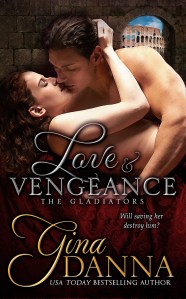
10 Questions with Author Gina Danna

For the next few weeks, my guests for “10 Questions” will be historical fiction authors. This genre is one of my favorites. Generally, a novel is considered historical if it takes place at least 50 years ago. Under the historical fiction “umbrella,” you’ll find a variety of subgenres, including multi-period epic/saga, romance, mystery, adventure, westerns, and even fantasy, time travel and alternate histories, as well as children’s and young adult. I hope you read along and enjoy these interviews. They should be fun—and interesting!

Today I welcome author and historian Gina Danna. She writes “historical fiction with romantic ties” set in different time periods and parts of the world, including Ancient Rome, Regency and the American Civil War.

Linda Covella: Gina, thank you so much for joining us today.

When and why did you decide to become a writer?

Gina Danna: That’s a hard one to answer. I’ve read all my life and during my twenties, I read a ton of historical romance novels, so much that I ran out of selection at the local drug store! I also realized I knew the plot within the first few pages. Then, my muse nudged me, saying “you can write one of these, too.” I played with it but work and grad school interfered.

Years passed, until my son was old enough to go to college and he told me his step mother wanted to talk to me about doing a program to her RWA group, since she heard I was a Civil War reenactor.

Fast forward-I’d never heard of RWA and was intrigued there was a group of people who did this. So I started writing-especially with my son at school, I had a little more time. Of course, my tales are historic – I am a historian with my BA & MA in History and I’ve always been in love with the past. Now, that also means that I just don’t write a story that isn’t researched, because I want to read something that’ll make me put the book down and investigate is that true? So my historical romances have turned to historical fiction with romantic ties.

LC: What is your writing process: where do you write, how often do you write, are you a full-time or part-time writer, do you outline or do you plot as you go, etc.?

GD: I write as often as I can and wherever I can sit with my computer! I work a full-time, rather time-consuming/involved job so I try to write on my breaks, which can be hard to impossible. But mostly I write at home, after work and on days off. I’ve plotted and I’ve outlined – both work. Its more plotting verses other because outlining consumes time and my muse usually won’t let me waste time since I have a limited writing opportunity.

LC: Where do you find your inspiration for your stories? Do you draw from your own experiences?

GD: As a historian, many things of the past intrigue me. Ancient Rome, Regency and the American Civil War in particular. I am a Sicilian-American so my pull to Rome is big but so is the Civil War. My mother’s family fought and died in it. I am also a Civil War reenactor/living historian. The War calls to me and my muse loves it!

LC: Who is one of your favorite characters from your story(ies), one that you enjoyed creating and writing about, and why?

GD: Probably the most entertaining was Caroline in The Wicked North, Book 1 of my Hearts Touched by Fire Civil War series. She was the heroine’s wicked sister, as it was. To write a devious, narrow-minded, self-centered character was invigorating, especially when my critique partners each, individually, wanted to drop her in a vat of boiling oil….think I made a mark on their conscious. LOL

LC: Do you incorporate (or inadvertently find) any of your own personality traits into your characters?

GD: Perhaps. Some of my emotions and reactions certainly. But I’ve never plotted to do that deliberately.

LC: Do you find your stories are more plot driven or character driven? Please explain.

GD: That is hard to define. For instance, the Civil War push the plot more, yet the characters are more driven by it, to find/define themselves, live/survive through the horrors, and love in a world in chaos. While we know how the War ended, they don’t, so that also helps to explain their character ARC.

LC: Did you read much as a child?

GD: Oh, yes!

LC: How important do you think reading is for writers?

GD: I think reading helps expand your horizons, teases with your muse and helps you refine your writing style, by giving you examples of great writing to scenarios you don’t want to fall for to grammar issues that you pray don’t happen in your writing!

LC: Who are some of your favorite authors and/or books? What draws you to them?

GD: Right now, that’s hard to decide. I adore Kate Quinn and Meredith Duran, as well as Eileen Dryer and Bob Mayer. They write in deep plots and characters and will lead the reader down a path you think you know when wham! They twist the plot or the character and I often do a double read, thinking did they really do that????

LC: Anything new in the works?

GD: Yes, I am currently working on the 4th in the Civil War series and trying to quiet my muse which presented the plot for book 5! Yikes!!

LC: Well, I imagine your muse will win out. J Thanks again, Gina! It was a pleasure learning more about your writing.

Author Bio:

A USAToday Bestselling author, Gina Danna was born in St. Louis, Missouri, and has spent the better part of her life reading. History has always been her love and she spent numerous hours devouring historical romance stories, always dreaming of writing one of her own. After years of writing historical academic papers to achieve her undergraduate and graduate degrees in History, and then for museum programs and exhibits, she found the time to write her own historical romantic fiction novels.

Now, under the supervision of her dogs, she writes amid a library of research books, with her only true break away is to spend time with her other lifelong dream – her Arabian horse – with him, her muse can play.

Connect with Gina:

Website: www.ginadanna.com

Facebook:  www.facbook.com/GinaDannaAuthor

Twitter:  www.twitter.com/GinaDanna1

Amazon: https://www.amazon.com/Gina-Danna/e/B00DPWUZI2

Posted in Uncategorized | 3 Comments

10 Questions with Author Sarah Ashwood

Let’s welcome author Sarah Ashwood to answer 10 Questions about her writing. Besides her fantasy books with historical settings, Sarah’s other claim to fame is she’s a “genuine Okie from Muskogee.”

Linda Covella: So glad you could join us today, Sarah.

When and why did you decide to become a writer?

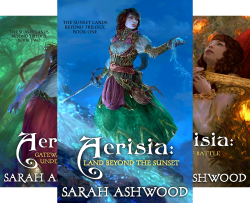
Sarah Ashwood: I’d written short stories off and on for years as a kid before I finally decided to take the plunge and write a full length novel at age 18. This turned out to be the start of my Sunset Lands Beyond fantasy trilogy. It’s gone through several drafts and multiple revisions since then, but the basic storyline has remained the same.

LC: What is your writing process: where do you write, how often do you write, are you a full-time or part-time writer, do you outline or do you plot as you go, etc.?

SA: I am very much a pantser. I start with a basic outline and basic ideas, which I usually write down, then my plots tend to explode as I write. I usually have a file titled “Notes on Such & Such Project…(whatever the book is called)” where I jot down a jumble of notes that help me sort out my plot when I revise the rough draft. I can’t say I’d recommend this method to anyone, but it seems to work for me.

As to the other questions, I try to write daily when I’m working on a project. However, I’m a homeschooling, stay-at-home mom of three young boys, so I’m basically regulated to writing whenever I can!

LC: I imagine homeschooling three boys keeps you pretty busy!

Where do you find your inspiration for your stories? Do you draw from your own experiences?

SA: Inspiration comes from everywhere. The people around me, life events, music, art, movies, poetry, other books I’ve read…

I don’t necessarily draw on my own experiences often, but sometimes I do. My short story, The Hero of Emoh: A Parent’s Fairytale (in the free Fellowship of Fantasy anthology, Hall of Heroes) was very much drawn from my own experiences as a mother!

LC: Who is one of your favorite characters from your story(ies), one that you enjoyed creating and writing about, and why?

SA: My favorite characters I’ve ever created are the Simathe, a race of non-human immortal warriors who live in the land of Aerisia. They’re featured in my Sunset Lands Beyond trilogy and in my new release, Aerisian Refrain. At first glance, they seem very cold and dispassionate. However, as you get to know them, you see they have a really noble side, and are committed to the safety and preservation of their homeland…even if their methods are considered a little suspect by their fellow Aerisians.

LC: Do you incorporate (or inadvertently find) any of your own personality traits into your characters?

SA: Sometimes. The female MC in my Sunset Lands Beyond trilogy, Hannah Winters, is pretty much me in book form, as far as her sense of humor and her boldness go. She’s a little more emotional than I am, but she has my quick temper. Which isn’t necessarily a good thing for either one of us, but, hey—we’re all human. Nobody’s perfect.

LC: That’s right! And, actually, we want our fictional characters to be somewhat imperfect.

Do you find your stories are more plot driven or character driven? Please explain.

SA: I would say probably character driven. When I think up a story, the characters always appear in my head first. Everything else centers around them.

LC: Did you read much as a child?

SA: Absolutely! I was homeschooled, and my dad taught me to read when I was four years old. My parents heavily stressed reading as an important part of both recreation and education. I have a very broad range of literary interests, a lot of which come together when I write fantasy. I love fantasy because I can incorporate a little bit of everything into my worlds!

LC: How important do you think reading is for writers?

SA: Very, I think. It broadens and sharpens the mind. It can also provide inspiration. Furthermore, well-written books can help teach you the craft of writing.

LC: Who are some of your favorite authors and/or books? What draws you to them?

SA: Well, I love portal fantasy, so Julie Kagawa’s Iron Fey Series is a favorite. I love fairytales and fairytale fantasy: Juliet Marlillier’s Daughter of the Forest is a standout book in that genre. I love the strong, silent male figure, so the old classic Lorna Doone, by R.D. Blackmore, has long been a favorite novel of mine. I love historical books, and my favorite of these is Empire of Blue Water by Stephen Talty. It’s a fascinating look at piracy and buccaneers in the 17th century. Lastly, I adore historical fiction, and Francine Rivers’ A Voice in the Wind is a favorite in that genre. Those are just a few.

LC: Anything new in the works?

SA: Thank you for asking! Aerisian Refrain, the first book of a brand new fantasy series, debuted July 13, 2018. Although this series is related to my Sunset Lands Beyond trilogy, you don’t have to have read those books to understand Aerisian Refrain.

Quick description: “On Earth, Annie’s voice brought her fame and fortune. In the land of Aerisia, it brings her magic, but the cost of that power may mean the destruction of Aerisia itself.”

I’m also working on a fun YA Fantasy/Fairytale novel, Knight’s Rebirth, which is set to debut before Christmas 2018. It’s the story of a famous knight, Sir Buckhunter Dornley, who is content to live alone until he meets the charming and outrageous Princess Mercy. When he discovers Mercy lives under a deadly curse, how far will he go to break it?

LC: Bonus question! Do you have anything you’d like to add?

SA: Just a thank you to you for having me here, and to everyone else who takes the time to read this interview. If you check out my books, I hope you enjoy them!

LC: Thanks, again, Sarah. It was a pleasure to have you on my blog.

Author Bio:

Don’t believe all the hype. Sarah Ashwood isn’t really a gladiator, a Highlander, a fencer, a skilled horsewoman, an archer, a magic wielder, or a martial arts expert. That’s only in her mind. In real life, she’s a genuine Okie from Muskogee who grew up in the wooded hills outside the oldest town in Oklahoma and holds a B.A. in English from American Military University. She now lives (mostly) quietly at home with her husband and three sons, where she tries to sneak in a daily run or workout to save her sanity and keep her mind fresh for her next story.

Sarah’s works include the Sunset Lands Beyond trilogy and the fantasy novella Amana.

Connect with Sarah:

Newsletter: https://www.subscribepage.com/g3o4p8

Website: https://sarahashwoodauthor.com/

Facebook: https://www.facebook.com/1SarahAshwood/

Pinterest: https://www.pinterest.com/Sarah_Ashwood/

Instagram: https://www.instagram.com/runnerwritermom/

Twitter: https://twitter.com/1sarahashwood

Posted in Uncategorized | Leave a comment

10 Questions with Author Heather Trim

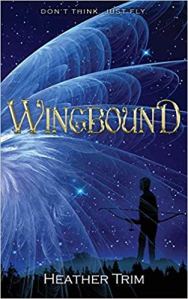
Heather Trim is the author of the award-winning novel Wingbound, and the next book in the series, Wingless, releases today.

Linda Covella: Welcome, Heather. I’m so happy you could join us today.

When and why did you decide to become a writer?

Heather Trim: I’m a natural born daydreamer. Stories run through my mind and I’ve been writing since I learned how to lift a pencil. I have files of weird old stories. I wrote a lot of poetry in high school and college. Then went dark when I got married and had five kids. Now they are all in school and I have my brain back! My first novel was released in March 2018 with the second releasing today.

Why? It started out as an escape. Raising kids, married life, and ministry are all too serious sometimes. So I’d write stories to dive deeper into my daydreams.

LC: What is your writing process: where do you write, how often do you write, are you a full-time or part-time writer, do you outline or do you plot as you go, etc.?

HT: My writing process is a bit herky-jerky. I always have stories drifting around in my head and I think about them at the grocery store or sitting in the waiting room of a doctor’s office. I am a full-on outliner. I figure out where the story is going with an outline (which I think counts as a first draft.) Then I set a word count per day/week to complete it for a personal deadline. When I’m not writing, I’m editing.

I write in my home office, which is currently located in my master bedroom. I have three screens open, one with music playing, another with Scrivener open, and the last with a browser open to Thesaurus.com.

LC: You’re a very disciplined writer!

Where do you find your inspiration for your stories? Do you draw from your own experiences?

HT: I draw from a variety of strange sources: daydreams, nightmares, my own experiences, experiences of other people I know, and sometimes a response to stories that annoyed me that I’ve decided to “fix” by writing my own stories.

My first book, called Wingbound, was a result of daydreaming. I may have been driving and cloud gazing at the same time. (Don’t worry, no one was harmed in the having of this daydream!) But I saw a cloud that looked like an island floating in the sky. I imagined it circling the world as it drifted by. Big. Ominous. And there had to people aboard. People with wings. Those people fly down and fight us. Then I imagined a winged girl, full of curiosity, sneaking down and meeting a village boy. They are fast friends and meet up each year the island revolves around the world. I had to write it!

LC: That is true inspiration, and I love the premise.

Who is one of your favorite characters from your story, one that you enjoyed creating and writing about, and why?

HT: I like writing normal, totally average characters who have no personal drive or motivation to be anything more than an ordinary human. To me it is more realistic. I would not have done what Harry Potter did, I would never do what Bella did (ie. fall in love with a vampire), and for goodness sake, I would never survive the Hunger Games. So I like to take that complete wimpiness and do what normal people would do in a totally amazing way. Ledger, my 17 year old main character from Wingbound is that guy.

LC: Do you incorporate (or inadvertently find) any of your own personality traits into your characters?

HT: What started off inadvertent ended in purposeful. As I wrote Ledger’s character, to give the world a mild-mannered protagonist, he ended up with my personality, fears, and laziness.

For example, I am not an animal person. For many reasons, they freak me out. Dogs, cats, horses, lizards—everything. So Ledger is terrified of the dragon in the story even though his friend, Hollis, loves it and rides it. I enjoy laughing at myself through Ledger’s weirdness.

LC: Do you find your stories are more plot driven or character driven? Please explain.

HT: The plot poured out of my characters. I love watching people, seeing what they do and why. Ledger befriends a girl with wings from the enemy island in the sky. One day the island returns empty and she is gone. He’s not brave in anyway, but in a panic decides to board the island to ride it around the world in search of her. What will this wimpy guy do, how will he survive? I had to know. Character driven all the way!

LC: Did you read much as a child?

HT: I was a big time reader. I had more adventures than most kids. Through books. I still read a lot and mostly young adult fiction because growing up is for old people. 😉

LC: How important do you think reading is for writers?

HT: I think reading should be number one on the list of 3 things writers do: read, write, and edit. Reading is the best source of learning all the rules of writing. Your eye gets more and more keen when spotting errors in your own work. It helps you word things correctly as well as spelling and grammar. Keep reading, keep learning.

LC: Great advice!

Who are some of your favorite authors and/or books? What draws you to them?

HT: I read a lot of young adult I have about four books in the #1 spot in my heart. I don’t know how to cut that down! Caraval (and Legendary) by Stephanie Garber is so awesome because I still haven’t stopped thinking about the storyline, and even better are her descriptions. They are so colorful and rich! The whole Lunar Chronicles series (especially Cress) by Marissa Meyer is amazing! She writes the coolest characters and gives them each a unique voice. I also love a lot of Maggie Stiefvater’s stuff (Shiver and The Scorpio Races) because she writes so poetically. It’s almost beautiful, even though it’s a werewolf story!

LC: Anything new in the works?

HT: Wingless, Book Two of the Wingbound Series, is releasing today, November 8th, 2018 and Book Three is already in the works and will release in 2019. It’s hard to stop writing when a series gets rolling. I need to know what happens to Ledger!

After that, I have a half-finished stand-alone fantasy coming next. Living the dream!

LC: Congratulations on your new release! Readers, below is a synopsis of the story. Thank you, again, Heather. I enjoyed learning more about your writing life!

Author Bio:

Heather Trim, an award-winning author, conference speaker and cookie eater, inspires with her unique perspective of spirituality and the world. She lives in Georgia with her husband, Kevin, and five lively children. Heather enjoys bullet journaling, movies, and reading too many young adult novels. She can be found on Facebook, Instagram, Twitter and her website.

Connect with Heather:

Website: www.heatheraine.com

Facebook: facebook.com/heatherainetrim
Instagram: instagram.com/heatheraine5
Amazon: amazon.com/author/heathertrim

Newsletter: http://eepurl.com/cLd0D1

Synopsis of just-released WINGLESS by Heather Trim:

“I must get home before someone else I love dies.”

Imprisoned on a floating island, four wingless friends need to get home before an assassin strikes at the heart of Balfour. Facing the dangers of the land and sky, young Ledger must help them escape and lead them home.

But his adopted brother, Tolliver, can’t leave just yet. He is determined to find his winged family, the ones who threw him away at birth. Will they accept him or execute him? Either way, Tolliver intends to try.

Heather Trim’s limitless imagination takes flight once more revealing that your most daunting limitation can be your greatest weapon.

Posted in Uncategorized | Leave a comment

10 Questions with Author Beth Rodgers

Today I’m pleased to welcome author Beth Rodgers to share her writing life with us. Beth writes contemporary novels for young adults. She’s also an editor and college English instructor.

Linda Covella: Welcome, Beth!

When and why did you decide to become a writer?

Beth Rodgers: I have wanted to be an author since I was a little girl. It sounds cliché, but I honestly have journal entries from first grade that say just that. I used to write stories, mainly about animals, and over time, I started to write about kids and then teens. I think writing is a great way to explore so many different modes of thinking, and so many different types of stories and people. You can make the story whatever you want it to be, and adapt it however you please. It’s hard work, but thrilling at the same time, because you never know quite what you’ll come up with, but you can be sure it’ll be worth it in the end!

LC: What is your writing process: where do you write, how often do you write, are you a full-time or part-time writer, do you outline or do you plot as you go, etc.?

BR: I tend to write while sitting on the couch or at the kitchen table. Sometimes when ideas come to me, I write while sitting in bed at night. I like typing my thoughts, since I type 90 words per minute, and therefore can get the words down very quickly, but I also find it soothing and incredibly rewarding to write my thoughts down pen to paper. It’s really incredible to me how different ideas come from both of those modes of writing.

I don’t write as often as I’d like, but there are so many other things going on in my life that I find it difficult to set aside the time as often as I really want to. Yet, I’m always thinking of ideas and writing down words and thoughts to bide the time until I start delving full force into my writing again. It is invigorating to think of something new, and that makes me want to get back to it all the more. So, I guess you can say I’m a part-time writer, but I think about it on a full-time basis.

In terms of outlining or plotting as I go, I do a little of both. I used to be more of a plot-as-I-go type author, but as I’ve written more and more, especially about the same characters from book to book, I find that outlining in a manner I call “character mapping” allows me to see my characters for who they are, what they know, who they know, what they’ve learned, and so much more. It brings to light how their experiences and the ways in which I’ve written them have shaped them into unique and powerful individuals for whom I am responsible and excited to share with my readers.

LC: Where do you find your inspiration for your stories? Do you draw from your own experiences?

BR: Some of the ideas for my stories comes from personal experience, but that is a very limited amount. The beginning idea for my two novels was for main character Margot to be a little bit like me when I was in high school. She is not too sure of herself, always has unrequited crushes, and things don’t always go perfectly for her, but that is where the similarities end. The conflicts I used in my writing, and the issues that plague Margot, were totally made up and not at all what happened to me. I just used myself as the basis for her beginning personality and then explored how she was a unique person that I could have grow in her own way.

LC: Who is one of your favorite characters from your story(ies), one that you enjoyed creating and writing about, and why?

BR: I really loved writing Mrs. Gribble, Walter’s mom from my first two novels. Walter is kind of dorky and not popular. He really likes my main character, Margot, and she does like him back, but just as a friend. However, his mom, Mrs. Gribble, is not having any of that, and she is determined to make them work together as a couple no matter what it takes. She doesn’t take no for an answer, but she does it all in such an annoying, yet obviously loving way that Margot can’t bring herself to say anything about it. The way she talks to Margot and Walter was fun for me to write because she’s really overprotective of Walter, but the humor of each situation she finds herself in comes out and makes me chuckle each time I read her. Honestly, though, even though she was so fun to write and enjoyable to read, if I had to deal with someone like her on a regular basis, I think I’d go crazy!

LC: She sounds like a fun character, and I love the name!

You mentioned some of the inspiration for your stories comes from your own experiences. Do you incorporate (or inadvertently find) any of your own personality traits into your characters?

BR: Sometimes I see myself in the story, especially when Margot is writing in her journal or acting extremely uncertain about something. When she likes someone but isn’t sure they like her back and is trying to figure that out by overthinking the situation, I can definitely relate. I think I also take characteristics from people I know, or even people I watch on television shows or in movies. Creatively speaking, it is important to observe the world around you and see it for more than it is – finding the extraordinary in the ordinary is a vital component of being creative and being a writer. It’s just that little something extra that can make your writing stand out and feel even more special!

LC: Such great advice!

Do you find your stories are more plot driven or character driven? Please explain.

BR: If I had to choose, I’d say they are more character driven. I always start with the characters and try to find the plot. However, as a creative writing presenter, I make sure to share the other side of the coin, too, and that is starting with a plot and shaping a character around it. Sometimes you may have an idea for a plot and you want to fit a character you’ve already created into it, but it just doesn’t work. They would never do that certain something or be caught dead in that situation. It is definitely a worthwhile tool to look at both character and plot when conceiving your writing. In Freshman Fourteen and Sweet Fifteen, I started with Margot as my main character and then did my best to place her around people she liked, wasn’t too keen on, envied, was annoyed with, and more. Having a little bit of each type of personality injected into the story helped me to come up with further plots and subplots to help drive the story in a positive, and hopefully not-too-predictable way.

LC: Did you read much as a child?

BR: I have always loved reading. I used to sit on the couch and read a whole book in one morning, just because it was fun for me to do that. I really enjoyed the Babysitter Club books when I was in elementary school, and eventually I started reading more middle grade and young adult type stories. In high school, I also loved reading the classics, like The Great Gatsby, One Flew Over the Cuckoo’s Nest, etc.

LC: How important do you think reading is for writers?

BR: Reading is a vital component of being a great writer, in my opinion. I read constantly, and I review books constantly, because I think that it is essential to know your craft in a way that isn’t just about writing. It is about reading, interpreting, and gauging why different writers choose to write in their own unique ways. Learning how other authors write twists and use certain words to get their point across can be extremely illuminating and powerful as other writers work to hone their own craft.

LC: Yes, I also believe reading is essential for writers; you explained why so eloquently!

Who are some of your favorite authors and/or books? What draws you to them?

BR: I adore Sonya Sones’ novels-in-verse. What My Mother Doesn’t Know is the first one I read by her, and I still highly recommend it to anyone looking for a great young adult read. I also love J.K. Rowling and the entire Harry Potter series, most especially her seventh one, Harry Potter and the Deathly Hallows. The way she answers each and every question that I had about the entire series before that book ends is one of the most amazing and worthwhile aspects of her writing, and has helped shape who I am as a writer, in my opinion.

LC: Anything new in the works?

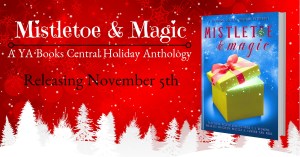
BR: I am so excited to announce that TODAY (November 5th, 2018) is the day I am releasing a short story in a young adult anthology with eleven other authors. The anthology is a product of YA Books Central, a book review website that I work for as a staff reviewer. I am super excited about my short story, “Hearts & Homes,” because it follows a character I’ve already written about in my first two novels. Cassie Shearer is one of my main character, Margot Maples’, best friends, and this short story allows her the opportunity to shine when she takes a trip over winter break and meets some new friends. It is a sweet contemporary romance, and even though it follows one of the same characters as my first two novels (with a cameo from Margot), it can also be read as a standalone story.

I’m also working on a children’s holiday picture book with an illustrator friend of mine that we are planning to publish in 2019. I’m very excited about that because I’ve always wanted to write a picture book, and since I am not someone who draws well, it is very thrilling to be able to work with such a talented and great friend who is able to capture my words in his illustrations!

LC: Congratulations on today’s release of the anthology!

Bonus question: Do you have anything you’d like to add?

BR: Besides my writing, I also work as an editor (developmental and line editing, as well as proofreading), creative writing presenter, and college English instructor. You can find more information about all of these topics on my website at www.BethRodgersAuthor.com. Check out my blog while you’re there, too, and read through some of the book reviews of young adult, middle grade, and children’s books.

LC: Thanks so much, Beth. I enjoyed having you and learning about your work!

Author Bio:

Beth Rodgers is the author of two contemporary young adult novels, Freshman Fourteen and Sweet Fifteen, as well as “Hearts & Homes,” a short story that follows her second novel, but can be read as a standalone story. It can be found in Mistletoe & Magic; A YA Books Central Holiday Anthology. She also works as an editor and creative writing presenter.

In her free time, Beth loves to watch binge-worthy TV shows, travel with her family, and read plenty of good books that she spends time reviewing for her blog and as a staff reviewer for YA Books Central. She lives in Michigan with her husband and children.

Connect with Beth:

Facebook: www.facebook.com/bethrodgersauthor

Twitter: @bethrodgersauth

Pinterest: www.pinterest.com/brodgersauthor/

Goodreads: www.goodreads.com/author/show/6824040.Beth_Rodgers

Instagram: www.instagram.com/bethrodgersauthor/

Amazon links for:

Freshman Fourteen: http://amzn.com/B00PIWYU92

Sweet Fifteen: http://amzn.com/B01MTSHL0H

Mistletoe & Magic: A YA Books Central Holiday Anthology: http://amzn.com/B07K23DV7G

Posted in Uncategorized | Leave a comment

10 Questions with Author Alex McGilvery

Today author Alex McGilvery joins us to answer 10 Questions about his writing. Alex started writing novels at a young age, but promises never to publish any of those books.

LC: Welcome, Alex!

When and why did you decide to become a writer?

AM: I don’t think I decided to become a writer, more like writing mugged me in a back alley and took over my life. I’ve been writing stories of one kind or another since middle school, so that’s almost five decades.

LC: What is your writing process: where do you write, how often do you write, are you a full-time or part-time writer, do you outline or do you plot as you go, etc.?

AM: I’m a binge writer most of the time. I use the three NaNo month (November and the two camps, April and July) to write my novels. The rest of the year I fit in revision in the cracks of editing for my clients. I make enough from my editing to pay for my writing habit. I’ve written books with outlines and without. They each have their strong points and drawbacks.

LC: Where do you find your inspiration for your stories? Do you draw from your own experiences?

AM: I write the stories that claw their way out of my head. I’m sure when they autopsy me, they’ll find scratch marks on the inside of my skull. The most direct draw from my own experience tend to be short stories, novels are too complex with too many different characters and settings.

LC: Who is one of your favorite characters from your story(ies), one that you enjoyed creating and writing about, and why?

AM: Calliope is the heroine of my steampunk series. The newest Calliope and the Royal Engineers is coming out at the end of October. She’s a very competent person, but she has her weaknesses and soft spots too. She showed up in a short story which got rejected, then grew into a novel, Calliope and the Sea Serpent, then informed me I was going to write a series.

LC: Rejection can often lead to inspiration! Do you incorporate (or inadvertently find) any of your own personality traits into your characters?

AM: Probably, I don’t try to include my personality, nor exclude, but there are pieces of me floating about in different ways.

LC: Do you find your stories are more plot driven or character driven? Please explain.

AM: When you read them, they are more character driven, but I tend to start with a single image and build the story around that image and the emotion it evokes. I work hard on plot, but break a lot of rules because I’m more interested in doing the story and character justice than being technically correct.

LC: Did you read much as a child?

AM: I never stopped reading. I read at home, in class, anywhere I wasn’t actively involved in something else. It was my escape from reality. My family was great, the schools I went to were brutal for me.

LC: How important do you think reading is for writers?

AM: It is important to read, and read broadly. Even if I don’t plan to write romances, I’ve read a few of them, so I know how to work with the romantic elements of my stories, same with horror and the rest. Just about every genre has elements which will appear in every story.

LC: Who are some of your favorite authors and/or books? What draws you to them?

AM: I always find this difficult. I could rattle off a list of authors or books, but the truth is my favourite author is most often the one I’m reading at the moment. Every book I’ve read has taught me something.

LC: Anything new in the works?

AM: As I mentioned Calliope and the Royal Engineers is coming out at the end of October, and I’ll be releasing book 2.5 in the series in January or February, and book 3 in late spring. They’re already written, just need beta reading and editing.

LC: Bonus question 🙂 Do you have anything you’d like to add?

AM: As an editor, I often get asked if I think a person’s story is any good. I don’t like to make that judgement, what I will say is whether I think it is ready yet. I don’t believe in bad stories, only ones which need work. So if you have a story to write, write it, then get people to help you make it ready for the world.

LC: Great advice. Thanks again for sharing your writing story with us, Alex!

Author Bio:

Alex lives in Kamloops with his dogs near his son and grandchildren. He’s been writing for decades, and has published 16 books and numerous short stories. Writing gets him up in the morning and the dogs get him out of the house. He’s also passionate about helping other authors succeed through his freelance editing work.

You can connect with Alex at:

http://alexmcgilvery.com/

https://www.books2read.com/ap/x2o0ZR/Alex-McGilvery

Posted in Uncategorized | Leave a comment